We're celebrating World Shorebird Day this year by highlighting some of the key places in our geography that shorebirds rely on - WHSRN sites, or Western Hemisphere Shorebird Reserve Network sites.
Learn more about these sites below, and celebrate their designation in honor of World Shorebird Day!
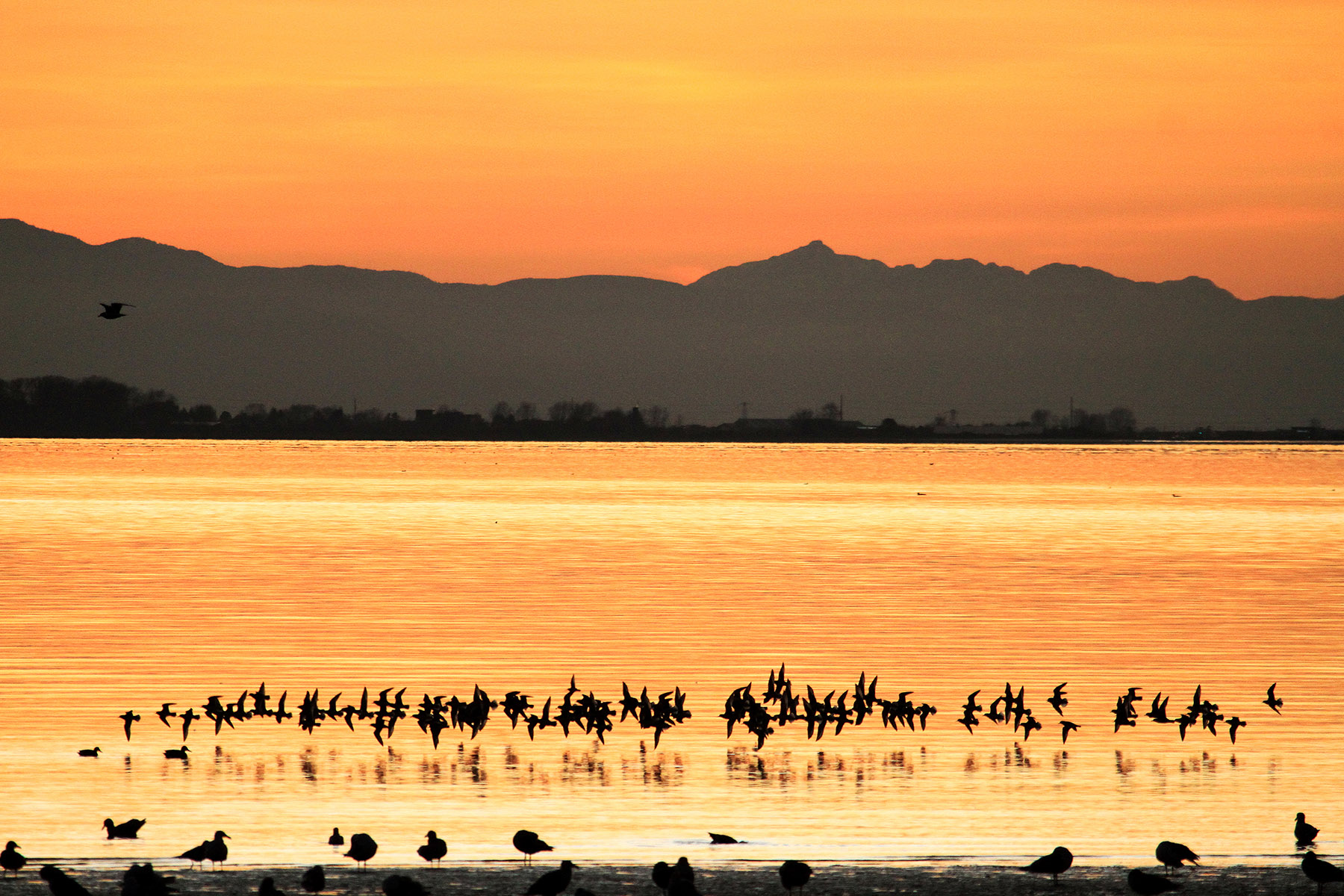
Fraser River Estuary, 20 Years of WHSRN Designation
The Fraser River Estuary is a sprawling network of tidal marshes, channels, mudflats, sandflats, and eelgrass meadows in British Columbia, running through the Delta, Richmond, and Vancouver area.
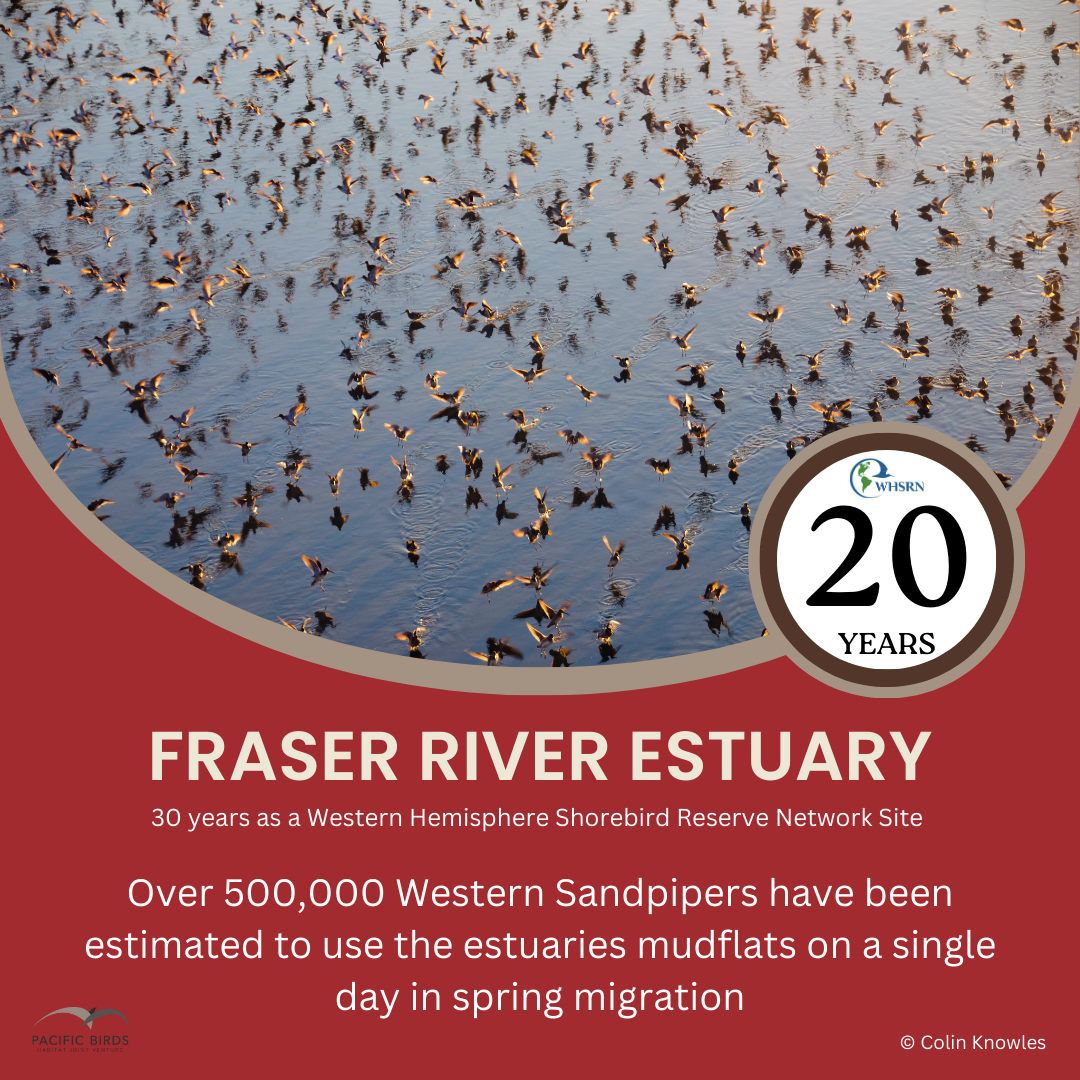
Covering around 32,000 ha, the estuary provides an abundance of habitats and food resources that attract an estimated 250,000 waterfowl and one million shorebirds annually. It’s also a refuge for birds to winter, rest, and refuel during their migration journeys. Around 150,000 Western Sandpipers have been estimated to use the mudflat on a single day in spring migration. This is just one of the MANY things that make this WHSRN site so important.
In addition to the WHSRN designation, the site is also classified as an Important Bird Area given its outsized role in supporting shorebirds. It’s been estimated that between 42 and 64% of all Western Sandpipers rely on mudflat habitats in the Fraser River to rest and refuel. This is not only due to the incredible biodiversity and vast wetlands, but also because of the type of mudflats in the estuary.
Sandpipers use unique barbs on their tongues, kind of like a toothbrush, to scrape a thin layer of microbes, organic matter, and sediment, called biofilm, off the surface of the mud. The species is so dependent on the biofilm in the Fraser River, specifically, that it makes up over 45-59% of the mass in their diet.
Western Hemisphere Shorebird Reserve Network sites are critical in so many ways. They support millions of shorebirds (and other species) as they navigate across oceans and continents on their annual migrations, providing safe refuges for them to rest, refuel, and breed. Along the Pacific, this includes places such as the Fraser River Estuary, where over 500,000 sandpipers can gather on a single day during spring migration. Each WHSRN site is the product of partnerships, such as with the Pacific Birds Habitat Joint Venture, and reflect the vital role partners play in our collective efforts to support bird conservation.
- Rob P. Clay, Director, WHSRN Executive Office, Vice President, Flyways, Manomet, Inc.
Despite the WHSRN designation and protections by the British Columbia Wildlife Act and the federal Migratory Bird Convention Act, the estuary is still at risk. Urban and industrial expansion threatens the habitat through pollution, habitat destruction, and increased human and industrial activity in the estuary. Research by Ducks Unlimited Canada and the University of British Columbia has found that 102 species are at risk of extinction in the estuary. Outside the Fraser River Delta, we see similar patterns. When looking at trends across North America, a study of 28 shorebird species found that more than half the species surveyed experienced a population decline of over 50% between 1980 and 2019.
To combat this, our partners are working to protect and restore critical stopover sites – like the Fraser River Estuary – all along the Pacific Coast, ensuring migratory birds always have a place to land. This includes restoring tidal marshes, mudflats, and estuaries to improve habitat for birds and migrating salmon, acquiring lands to protect and enhance key parts of the estuary, removing harmful invasive species, and leading key monitoring programs.
Keep reading to learn more about a few other important WHSRN sites, all along the Pacific!
The Copper River Delta, 35 Years
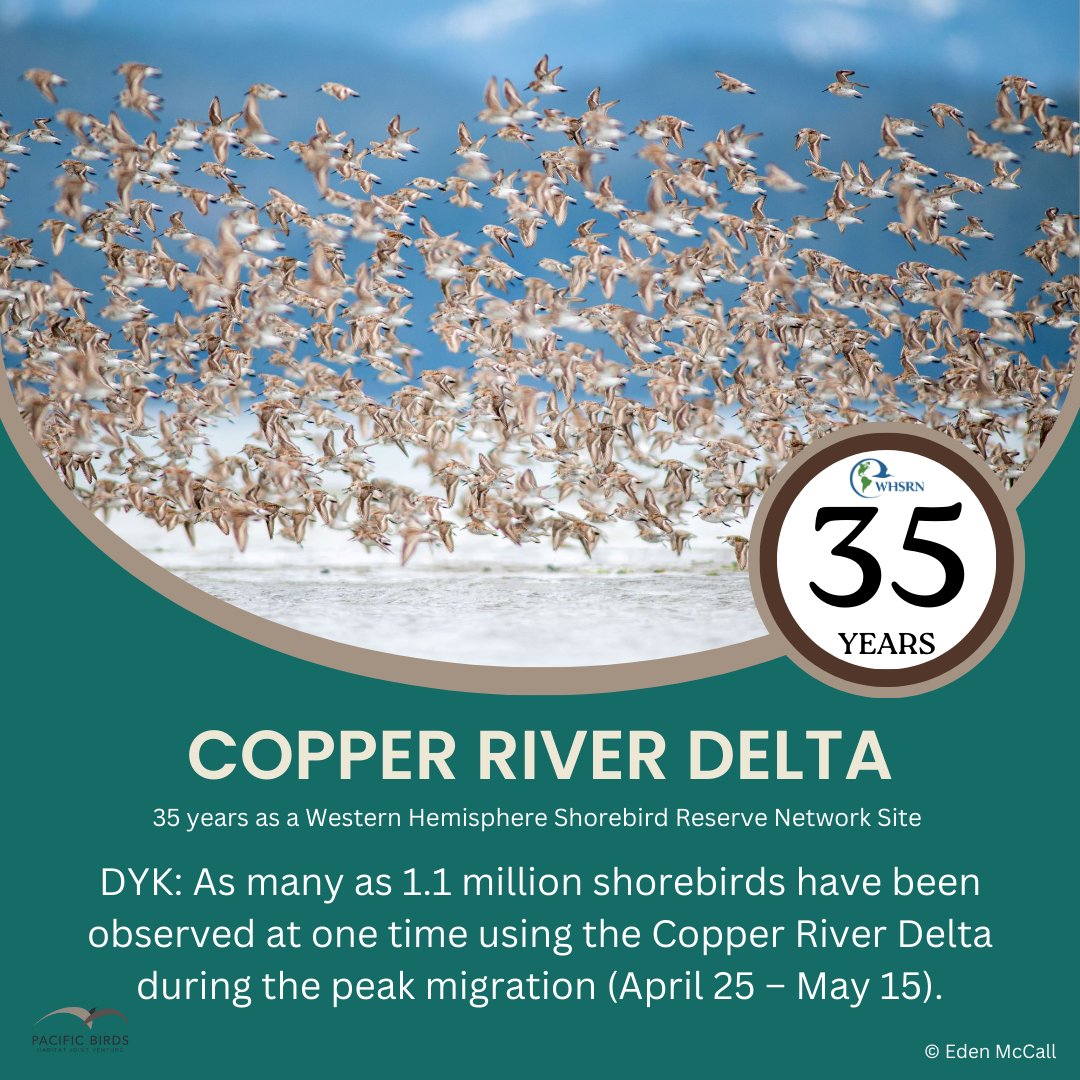
35 years ago, the Copper River Delta was designated a WHSRN site, due to the outsized role this beautiful, remote, and thriving wetland has in the journey of migratory birds. It’s estimated that each year, nearly five million migratory birds fly to the Copper River Delta as part of their spring journey to the breeding grounds. Celebrate the anniversary with us by getting to know the Delta in this incredible video.
Grays Harbor, 30 Years
Every Spring, the Grays Harbor community holds a Shorebird and Nature Festival to celebrate the migratory birds and wildlife in their community. Grays Harbor is a major staging area for migrating shorebirds, with over 500,000 birds and 24 bird species using the habitats during spring and fall.
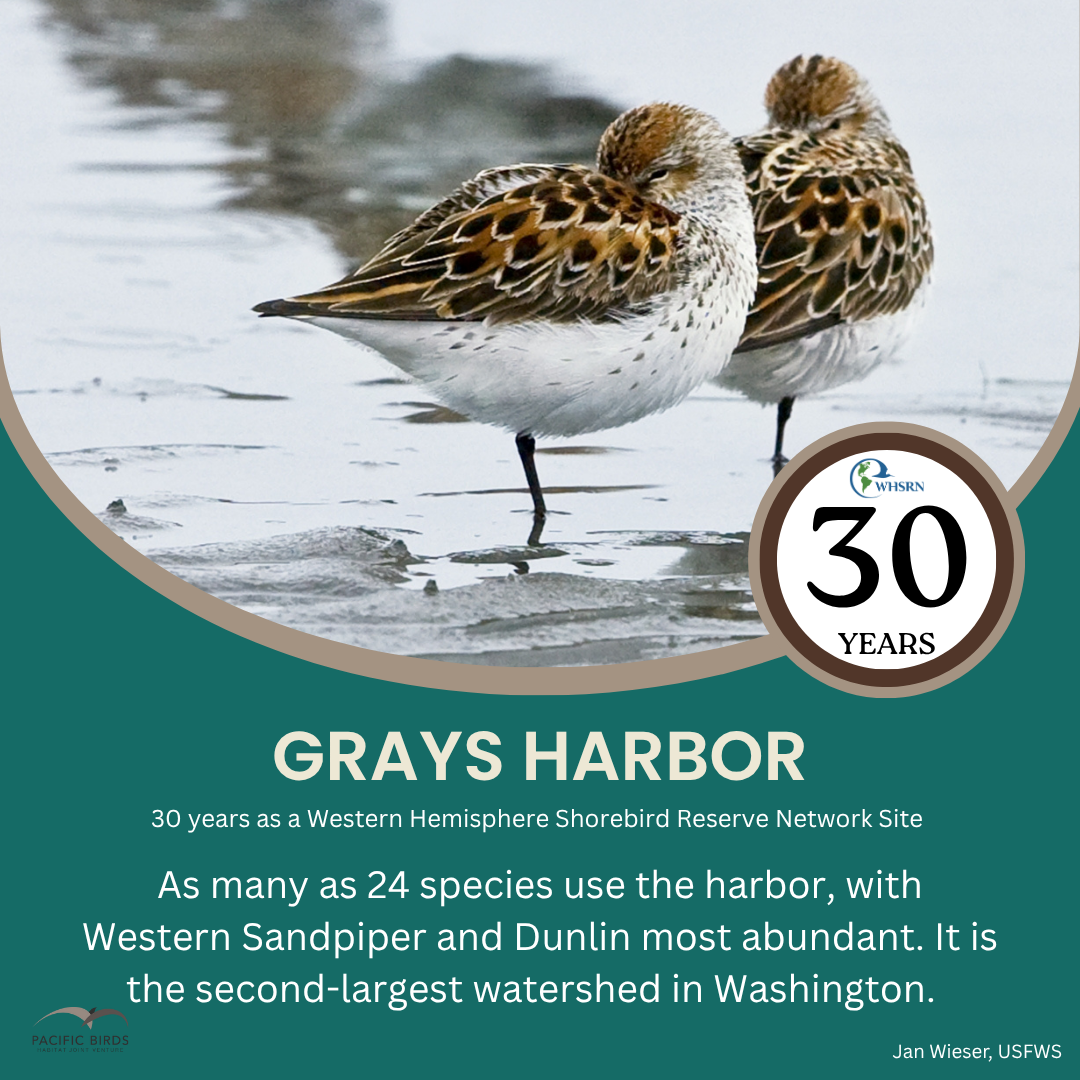
"Grays Harbor is one of the great estuarine treasures of the often-rugged coastline of Washington. More than two dozen species of shorebirds use the intertidal mudflats, estuary, and marsh in Grays Harbor during northbound and southbound migration each year. The size of the estuary makes it hard to take in, but each spring, the community comes together to celebrate these tiny migrants with a Shorebird Festival and share a little bit of this magic with visitors and community members."
- Monica Iglecia, U.S. Coordinator, Pacific Birds Habitat Joint Venture
Kachemak Bay, 30 Years
Kachemak Bay Reserve WHRSN is 30! With over 300 miles of shoreline and a 30-foot tidal range, this massive intertidal area brings in 36 species of shorebirds, and in total, over 200 bird species. Places like Kachemak Bay are critical for migratory birds, providing a place to rest and refuel during their migration journey.
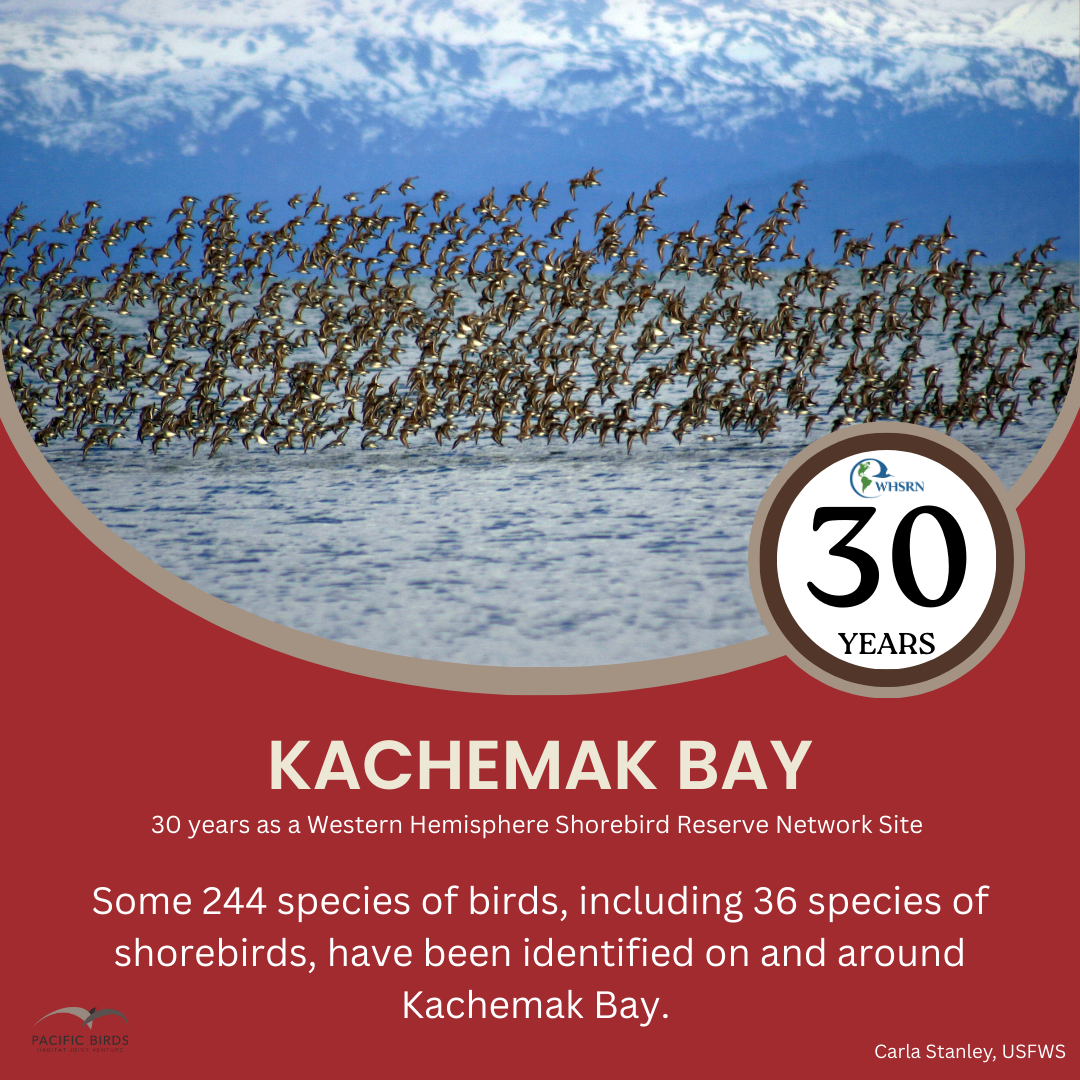
"As birds migrate to breed and raise their young, Kachemak bay provides a safe haven of shoreline, marshlands, and intertidal habitats along the way. The diversity of resources and habitats attracts over 30 species of shorebirds that come to rest and refuel before continuing north. Ensuring this site remains protected is critical to supporting the100,000 plus shorebirds that visit each year, and the WHSRN dedication and the 30th anniversary reflects the commitment of the conservation community to that."
- Ingrid Harrald, Education Coordinator at Kachemak Bay National Estuarine Research Reserve
Yukon Delta National Wildlife Refuge, 25 Years
Home to over 30% of the global population of Bar-tailed Godwits and Bristle-thighed Curlews, the Yukon Delta is a unique place. It also serves as one of two breeding sites in Alaska for the Spectacled Eider, another migratory species. National Wildlife Refuges like the Yukon Delta are critical habitat for shorebirds and other migratory birds, and together, the network of Refuges, WHSRN sites, and other conservation areas creates a haven for birds flying along the Pacific Flyway. When we protect these sites, we ALSO protect these species.
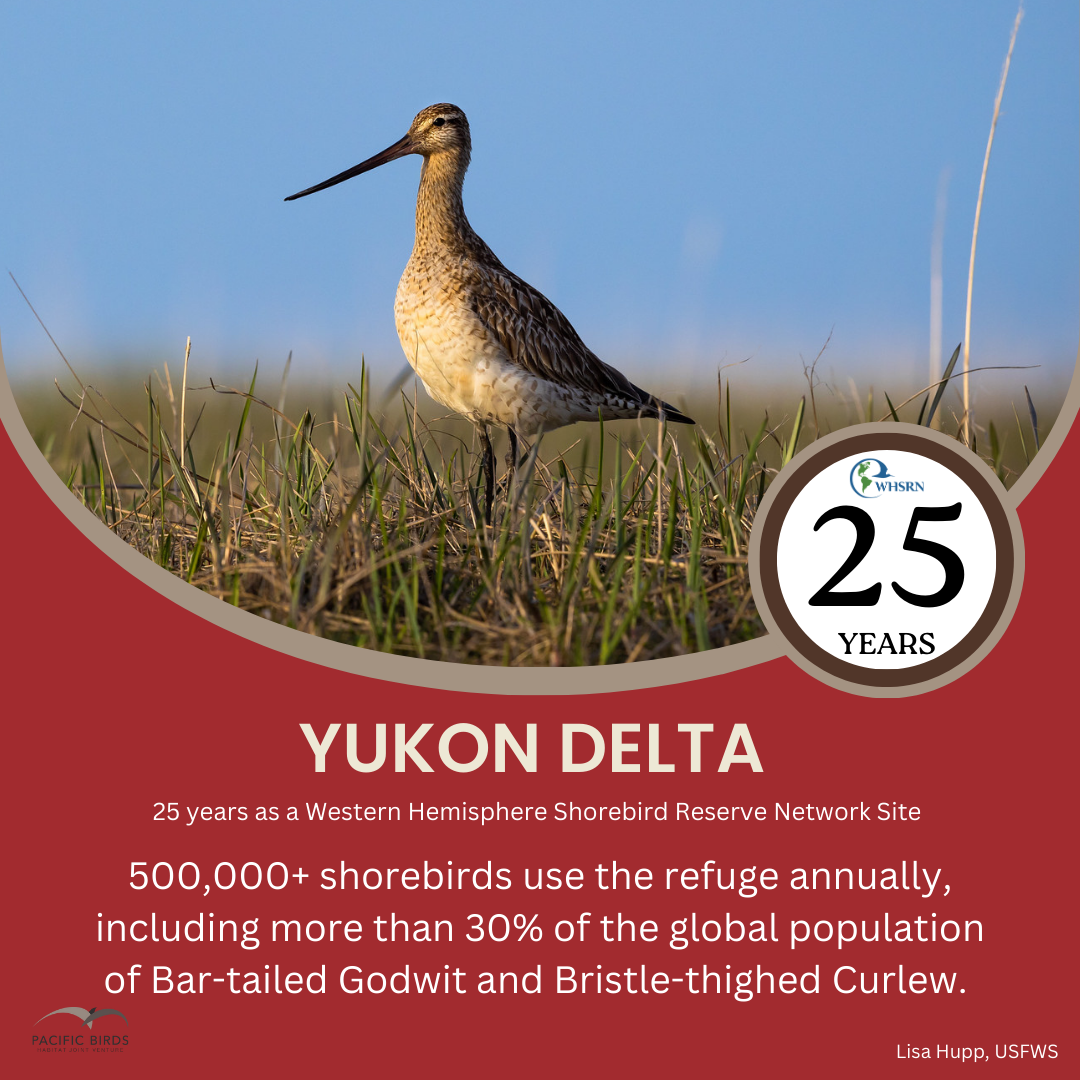
“The Yukon-Kuskokwim Delta during the nesting season is an experience unlike any other. The sights, the sounds, the slow build-up from a quiet, seemingly endless ice-covered world to the raucous chorus of millions of shorebirds, waterfowl, and other migratory birds making use of a unique matrix of wetlands, mudflats, estuaries, ponds, rivers, and lakes dotted across a vast and remote tundra landscape is spectacular and humbling!
The realization that these birds are returning from incredible journeys along flyways that literally span the globe is awe-inspiring! Millions of shorebirds, representing at least 21 species, rely on the delta between the mighty Yukon and Kuskokwim rivers, making this one of the most important shorebird habitats in the Americas and one of the most important sites for migratory birds in the world; The YK-Delta is a figurative headwaters for birds migrating across the global flyways!”
-Kyle Spragens (former Yukon Delta NWR waterfowl biologist 2011-2014, current PBHJV Management Board chair)
Nushagak Bay, 25 Years
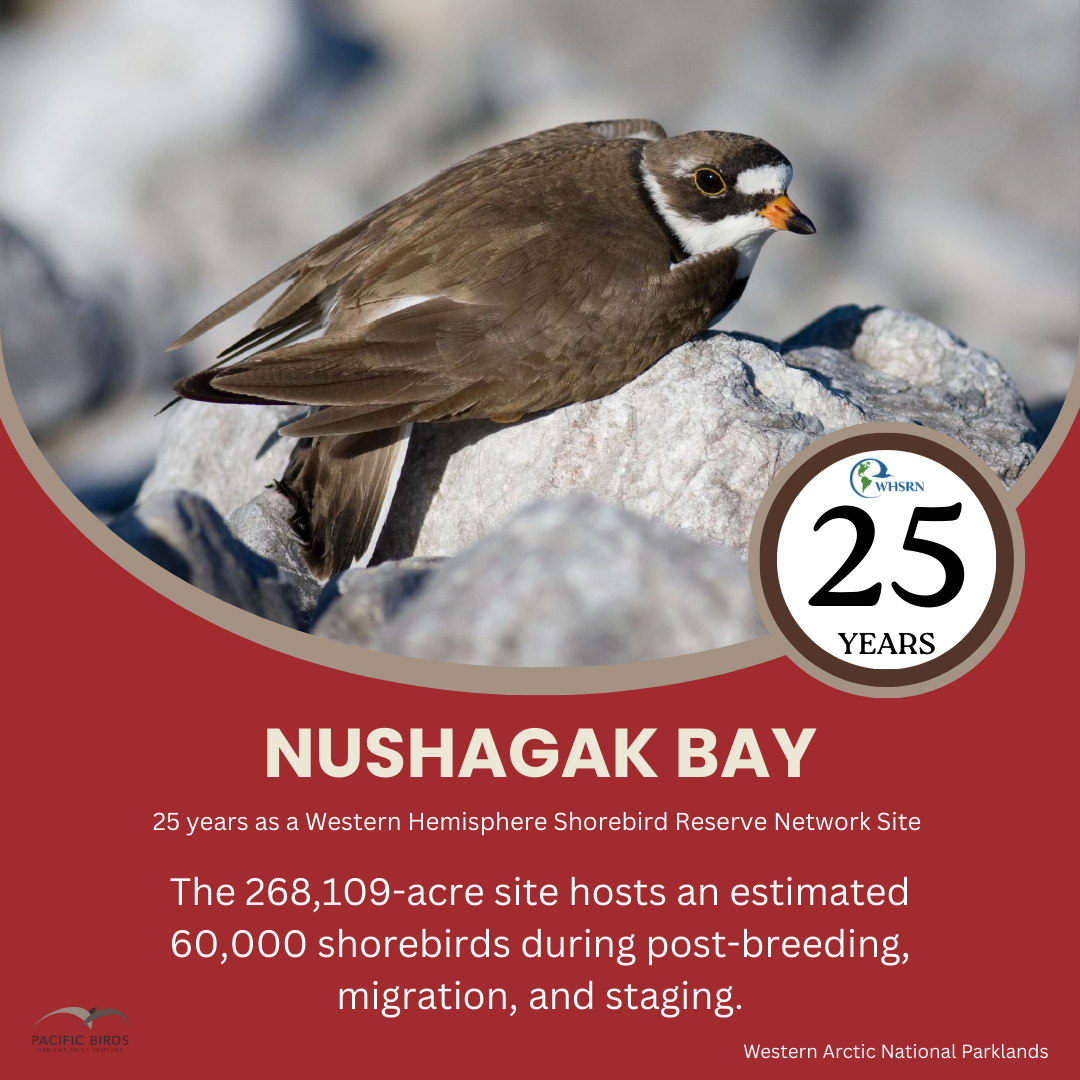
In southwest Alaska, near Bristol Bay, is a massive estuary where aggregations of over 20,000 birds have been observed, called Nushagak Bay. This WHSRN site hosts over 33 species of shorebirds, in addition to over 75% of the Black Scoter populations, along with other migratory birds. This site is one of many places that birds need to rest and refuel. Together, WHSRN sites create a network along the Pacific Flyway, ensuring birds have somewhere to stop every step of their migration journeys.