Our Diverse Bird Life

The Pacific Birds region encompasses many habitats and multiple migratory flyways. Our boundaries are expansive because of the rich and diverse birds that travel our migratory flyways.
From endemic waterbirds in Hawai'i, and threatened oak and prairie woodland species, to the millions of migratory birds in wetlands from Alaska to California, our partnership works on all fronts – keeping common species common and taking strategic action for endangered or threatened species.
Priority Species
Our priority species were selected by reviewing the status of each bird species occurring within the Pacific Birds geography in each of our priority habitats and establishing a list of priority species for conservation action alongside partners. Specific criteria vary across priority habitats and locations. Please see the Strategic Plan for each region for further information.
Coastal Wetlands in the Pacific Northwest and Alaska
American White Pelican (Pelecanus erythrorhynchos)
Black Oystercatcher (Haematopus bachmani)
Black Scoter (Melanitta americana)
Black Swift (Cypseloides niger)
Bristle-thighed Curlew (Numenius tahitiensis) - AK
Cassin's Auklet (Ptychoramphus aleuticus)
Clark's Grebe (Aechmophorus clarkii)
Common Murre (Uria aalge)
Harlequin Duck (Histrionicus histrionicus)
Horned Grebe (Podiceps auritus)
Horned Lark* (Eremophila alpestris strigata)
Ivory Gull (Pagophila eburnea) - AK
King Eider (Somateria spectabilis) - AK
Kittlitz's Murrelet (Brachyramphus brevirostris) - AK
Long-billed Dowitcher (Limnodromus scolopaceus)
Long-tailed Duck (Clangula hyemalis)
Marbled Murrelet (Brachyramphus marmoratus)
Olive-sided Flycatcher (Contopus cooperi)
Pacific Brant* (Branta bernicla nigricans)
Pectoral Sandpiper (Calidris melanotos) - AK
Pelagic Cormorant (Urile pelagicus)
Red Knot* (Calidris canutus roselaari)
Rock Sandpiper* (Calidris ptilocnemis)
Ross's Gull (Rhodostethia rosea)
Sandhill Crane* (Antigone canadensis)
Short-billed Gull (Larus brachyrhynchus)
Snowy Plover* (Anarhynchus nivosus)
Spectacled Eider (Somateria fischeri) - AK
Steller's Eider* (Polysticta stelleri) - AK
Tricolored Blackbird (Agelaius tricolor) - CA
Tufted Puffin (Fratercula cirrhata)
Upland Sandpiper (Bartramia longicauda) - AK
Wandering Tattler (Tringa incana)
White-winged Scoter (Melanitta deglandi)
Yellow-billed Loon (Gavia adamsii)
Aleutian Tern (Onychoprion aleuticus) - AK
American Golden-Plover (Pluvialis dominica) - AK
Ancient Murrelet (Synthliboramphus antiquus)
Bald Eagle (Haliaeetus leucocephalus)
Bank Swallow (Riparia riparia)
Bar-tailed Godwit (Limosa lapponica) - AK
Barn Swallow (Hirundo rustica)
Barrow's Goldeneye (Bucephala islandica)
Black Turnstone (Arenaria melanocephala)
Black-bellied Plover (Arenaria melanocephala)
Black-legged Kittiwake (Rissa tridactyla) - AK
Brandt's Cormorant (Urile penicillatus)
Brown Pelican* (Pelecanus occidentalis)
Buff-breasted Sandpiper (Calidris subruficollis) - AK
California Gull (Larus californicus)
Canada Goose* (Branta canadensis)
Common Loon (Gavia immer)
Emperor Goose (Anser canagicus) - AK
Glaucous Gull (Larus hyperboreus)
Glaucous-winged Gull (Larus glaucescens)
Greater White-fronted Goose* (Anser albifrons)
Greater Yellowlegs (Tringa melanoleuca)
Horned Puffin (Fratercula corniculata) - AK
Hudsonian Godwit (Limosa haemastica) - AK
Least Sandpiper (Calidris minutilla)
Lesser Yellowlegs (Tringa flavipes)
Long-billed Curlew (Numenius americanus)
McKay's Bunting (Plectrophenax hyperboreus) - AK
Northern Pintail (Anas acuta)
Pacific Loon (Gavia pacifica)
Peregrine Falcon (Falco peregrinus)
Pigeon Guillemot (Cepphus columba)
Red-faced Cormorant (Urile urile) - AK
Red-legged Kittiwake (Rissa brevirostris) - AK
Red-necked Grebe (Podiceps grisegena)
Ruddy Turnstone (Arenaria interpres)
Sanderling (Calidris alba)
Semipalmated Sandpiper (Calidris pusilla)
Short-billed Dowitcher (Limnodromus griseus)
Snowy Owl (Bubo scandiacus) - AK
Stilt Sandpiper (Calidris himantopus) - AK
Surf Scoter (Melanitta perspicillata)
Surfbird (Calidris virgata)
Thick-billed Murre (Uria lomvia)
Trumpeter Swan (Cygnus columbianus)
Western Grebe (Aechmophorus occidentalis)
Western Gull (Larus occidentalis)
Western Sandpiper (Calidris mauri)
Whimbrel (Numenius phaeopus)
White-rumped Sandpiper (Calidris fuscicollis) - AK
American Avocet (Recurvirostra americana) - CA
American Dipper (Cinclus mexicanus)
American Wigeon (Mareca americana)
Arctic Tern (Sterna paradisaea)
Black-crowned Night Heron (Nycticorax nycticorax)
Black-necked Stilt (Himantopus mexicanus)
Bonaparte's Gull (Chroicocephalus philadelphia)
Bufflehead (Bucephala albeola)
Cackling Goose* (Branta hutchinsii)
Cinnamon Teal (Spatula cyanoptera)
Dunlin (Calidris alpina)
Forster’s Tern (Sterna forsteri)
Greater Scaup (Aythya marila)
Heermann's Gull (Larus heermanni)
Least Auklet (Pagophila eburnea) - AK
Lesser Scaup (Aythya affinis)
Mallard (Anas platyrhynchos)
Marbled Godwit (Limosa fedoa)
Pacific Golden-Plover (Pluvialis fulva)
Parasitic Jaeger (Stercorarius parasiticus) - AK
Pomarine Jaeger (Stercorarius pomarinus) - AK
Purple Martin (Progne subis)
Red Phalarope (Phalaropus fulicarius) - AK
Red-breasted Merganser (Mergus serrator)
Red-necked Phalarope (Phalaropus lobatus)
Rhinoceros Auklet (Cerorhinca monocerata)
Ross’s Goose (Anser rossii)
Snowy Egret (Egretta thula)
Solitary Sandpiper (Tringa solitaria) - AK
Tundra Swan (Cygnus columbianus)
Western Flycatcher (Empidonax difficilis)
Whiskered Auklet (Larus occidentalis) - AK
Willow Flycatcher (Empidonax traillii)
Wilson's Phalarope (Phalaropus tricolor)
Wilson's Snipe (Gallinago delicata)
Alder Flycatcher (Empidonax alnorum) - AK
American Pipit (Anthus rubescens)
Arctic Loon (Gavia arctica) - AK
Baird's Sandpiper (Calidris bairdii) - AK
Belted Kingfisher (Megaceryle alcyon)
Black Guillemot (Cepphus grylle) - AK
Black Tern (Chlidonias niger)
Blue-winged Teal (Spatula discors)
Canvasback (Aythya valisineria)
Caspian Tern (Hydroprogne caspia)
Common Eider (Somateria mollissima) - AK
Common Goldeneye (Bucephala clangula)
Common Merganser (Mergus merganser)
Common Tern (Sterna hirundo)
Common Yellowthroat (Geothlypis trichas)
Crested Auklet (Aethia cristatella) - AK
Eared Grebe (Podiceps nigricollis)
Elegant Tern (Thalasseus elegans)
Franklin’s Gull (Sterna forsteri)
Gadwall (Mareca strepera)
Great Blue Heron (Ardea herodias)
Green Heron (Butorides virescens)
Green-winged Teal (Anas crecca)
Herring Gull (Larus argentatus)
Hooded Merganser (Lophodytes cucullatus)
Iceland Gull (Larus glaucoides)
Killdeer (Charadrius vociferus)
Long-tailed Jaeger (Cistothorus palustris) - AK
Marsh Wren (Cistothorus palustris)
Merlin (Falco columbarius)
Northern Harrier (Circus hudsonius)
Northern Shoveler (Spatula clypeata)
Northern Waterthrush (Parkesia noveboracensis) - AK
Parakeet Auklet (Aethia psittacula) - AK
Red-throated Loon (Gavia stellata)
Red-winged Blackbird (Agelaius phoeniceus)
Redhead (Aythya americana)
Ring-necked Duck (Aythya collaris)
Ruddy Duck (Oxyura jamaicensis)
Rusty Blackbird (Euphagus carolinus) - AK
Sabine's Gull (Xema sabini)
Semipalmated Plover (Charadrius semipalmatus)
Snow Bunting (Plectrophenax nivalis)
Snow Goose (Anser caerulescens)
Spotted Sandpiper (Actitis macularius)
Tree Swallow (Tachycineta bicolor)
Violet-green Swallow (Tachycineta thalassina)
Virginia Rail (Rallus limicola)
White-faced Ibis (Plegadis chihi)
Willet (Tringa semipalmata)
Wood Duck (Aix sponsa)
Yellow-headed Blackbird (Xanthocephalus xanthocephalus)
* Subspecies or subpopulation of conservation concern
AK, CA: Occurs only in Alaska or California within continental Joint Venture
Coastal Wetlands and Riparian Forests in British Columbia
American Wigeon (Mareca americana)
Barrow's Goldeneye (Bucephala islandica)
Black Scoter (Melanitta americana)
Bufflehead (Bucephala albeola)
Cackling Goose (Branta hutchinsii)
Canada Goose (Branta canadensis)
Greater Scaup (Aythya marila)
Harlequin Duck (Histrionicus histrionicus)
Hooded Merganser (Lophodytes cucullatus)
Lesser Scaup (Aythya affinis)
Lesser Snow Goose (Anser caerulescens) - Wrangel Island population
Long-tailed Duck (Clangula hyemalis)
Mallard (Anas platyrhynchos)
Northern Pintail (Anas acuta)
Pacific Brant (Branta bernicla) - including Western High Arctic Brant
Surf Scoter (Melanitta perspicillata)
Trumpeter Swan (Cygnus buccinator)
White-winged Scoter (Melanitta deglandi)
Wood Duck (Aix sponsa)
Ancient Murrelet (Synthliboramphus antiquus)
Band-tailed Pigeon (Patagioenas fasciata)
Barn Owl (Tyto furcata)
Barn Swallow (Hirundo rustica)
Belted Kingfisher (Megaceryle alcyon)
Black Swift (Cypseloides niger)
Brewer’s Blackbird (Euphagus cyanocephalus)
Bullock’s Oriole (Icterus bullockii)
California Gull (Larus californicus)
Cassin’s Auklet (Ptychoramphus aleuticus)
Cassin’s Vireo (Vireo cassinii)
Chestnut-backed Chickadee (Poecile rufescens)
Clark’s Grebe (Aechmophorus clarkii)
Common Loon (Gavia immer)
Common Murre (Uria aalge)
Common Nighthawk (Chordeiles minor)
Evening Grosbeak (Hesperiphona vespertina)
Golden-crowned Kinglet (Regulus satrapa)
Great Blue Heron (Ardea herodias fannini)
Horned Grebe (Podiceps auritus)
Lesser Yellowlegs (Tringa flavipes)
Marbled Murrelet (Brachyramphus marmoratus)
Mew Gull (Larus canus)
Northern Goshawk (laingi subspecies)
Olive-sided Flycatcher (Contopus cooperi)
Pacific Wren (Troglodytes pacificus)
Pelagic Cormorant (Urile pelagicus)
Peregrine Falcon (Falco peregrinus)
Pine Siskin (Spinus pinus)
Purple Finch (Haemorhous purpureu)
Red Knot (Calidris canutus roselaari)
Red-necked Phalarope (Phalaropus lobatus)
Rufous Hummingbird (Selasphorus rufus)
Short-billed Dowitcher (Limnodromus griseus)
Sooty Grouse (Dendragapus fuliginosusa)
Spotted Owl (Strix occidentalis)
Townsend’s Warbler (Setophaga townsendi)
Varied Thrush (Ixoreus naevius)
Vaux’s Swift (Chaetura vauxi)
Wandering Tattler (Tringa incana)
Western Grebe (Aechmophorus occidentalis)
Western Gull (Larus occidentalis)
Western Screech-Owl (Megascops kennicottii)
Western Wood-Pewee (Contopus sordidulus)
White-tailed Ptarmigan (Lagopus leucura)
Willow Flycatcher (Empidonax traillii)
Wilson’s Warbler (Cardellina pusilla)
Wetlands in Hawai‘i
Ae‘o or Hawaiian Stilt (Himantopus mexicanus knudseni)
‘Alae ke‘oke‘o or Hawaiian Coot (Fulica alai)
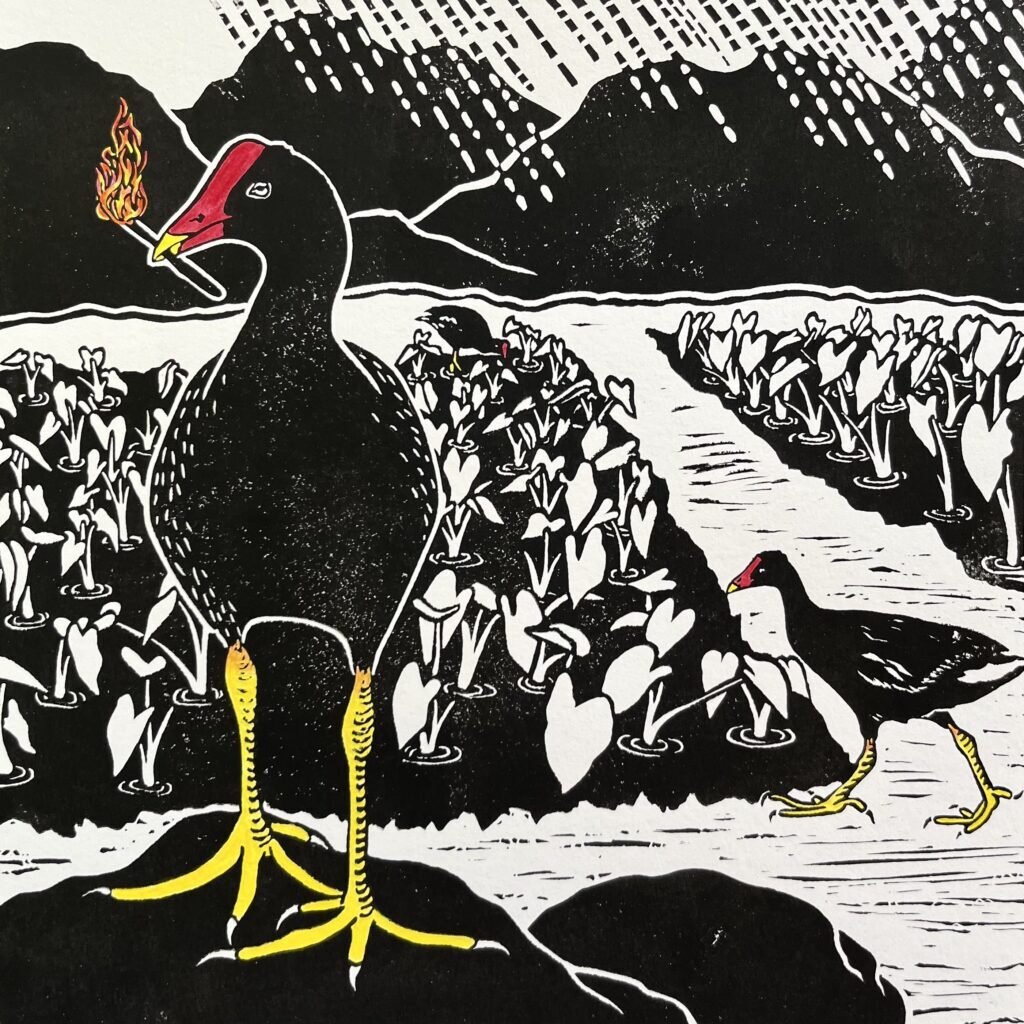
‘Alae ‘ula or Hawaiian Common Gallinule (Gallinula galeata sandvicensis)
Koloa maoli or Hawaiian Duck (Anas wyvilliana)
Nēnē or Hawaiian Goose (Branta sandvicensis)
American Wigeon (Mareca americana)
Koloa māpu or Northern Pintail (Anas acuta)
Koloa mōhā or Northern Shoveler (Spatula clypeata)
Lesser Scaup (Aythya affinis)
‘Akekeke or Ruddy Turnstone (Arenaria interpres)
Hunakai or Sanderling (Calidris alba)
Kioea or Bristle-thighed Curlew (Numenius tahitiensis)
Kōlea or Pacific Golden-Plover (Pluvialis fulva)
ʻŪlili or Wandering Tattler (Tringa incana)
Oak and Prairie in the Pacific Northwest
Acorn Woodpecker (Melanerpes formicivorus)
Ash-throated Flycatcher (Myiarchus cinerascens)
Bell's Sparrow (Artemisiospiza belli belli)
Black-throated Gray Warbler (Setophaga nigrescens)
Cassin's Vireo (Vireo cassinii)
Chipping Sparrow (Spizella passerina)
Common Nighthawk (Chordeiles minor)
Golden Eagle (Aquila chrysaetos)
Grasshopper Sparrow (Ammodramus savannarum)
Horned Lark (Eremophila alpestris strigata)
Lark Sparrow (Chondestes grammacus)
Lewis's Woodpecker (Melanerpes lewis)
Loggerhead Shrike (Lanius ludovicianus)
Northern Harrier (Circus hudsonius)
Oak Titmouse (Baeolophus inornatus)
Oregon Vesper Sparrow (Pooecetes gramineus affinis)
Purple Finch (Haemorhous purpureu)
Short-eared Owl (Asio flammeus)
Western Bluebird (Sialia mexicana)
Western Meadowlark (Sturnella neglecta)
Western Screech Owl (Megascops kennicottii)
Western Wood-Pewee (Contopus sordidulus)
White-breasted Nuthatch (Sitta carolinensis aculeata)
White-tailed Kite (Elanus leucurus)
The State of Our Birds
The North American Bird Conservation Initiative’s State of the Birds reports provide an overview of how North America’s birds are doing. Each of the reports has a special focus.
To learn more about regional population trends, and the conservation status of bird groups or species, visit our Resources page.
Take Action for Birds
The Pacific Birds partnership works hard to help birds. Collectively our partners are learning about migrations, population dynamics, and the habitats birds need. We follow up by helping partners conserve those habitats.
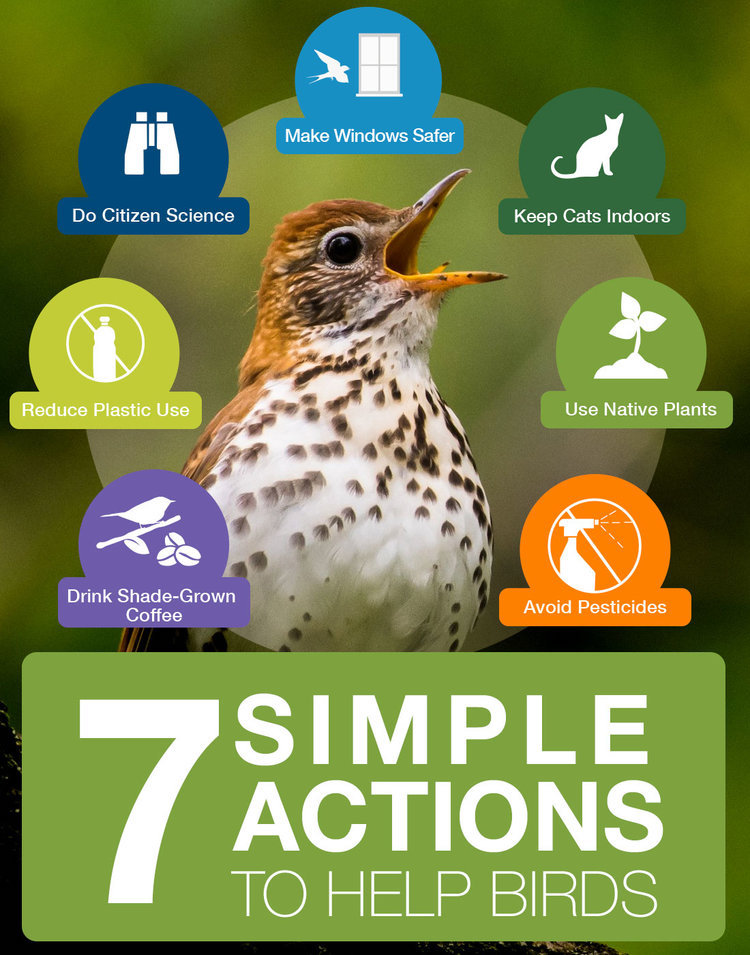
But anyone can make a difference for birds by following some bird-friendly guidelines and taking some simple actions from home.
Click on the image to learn more.
See the habitats our birds need to thrive.
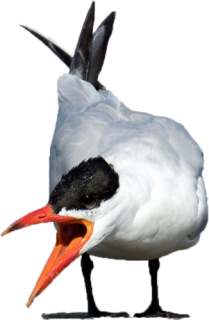
Caspian Tern
Mick Thompson © Creative Commons
Meet the Birds