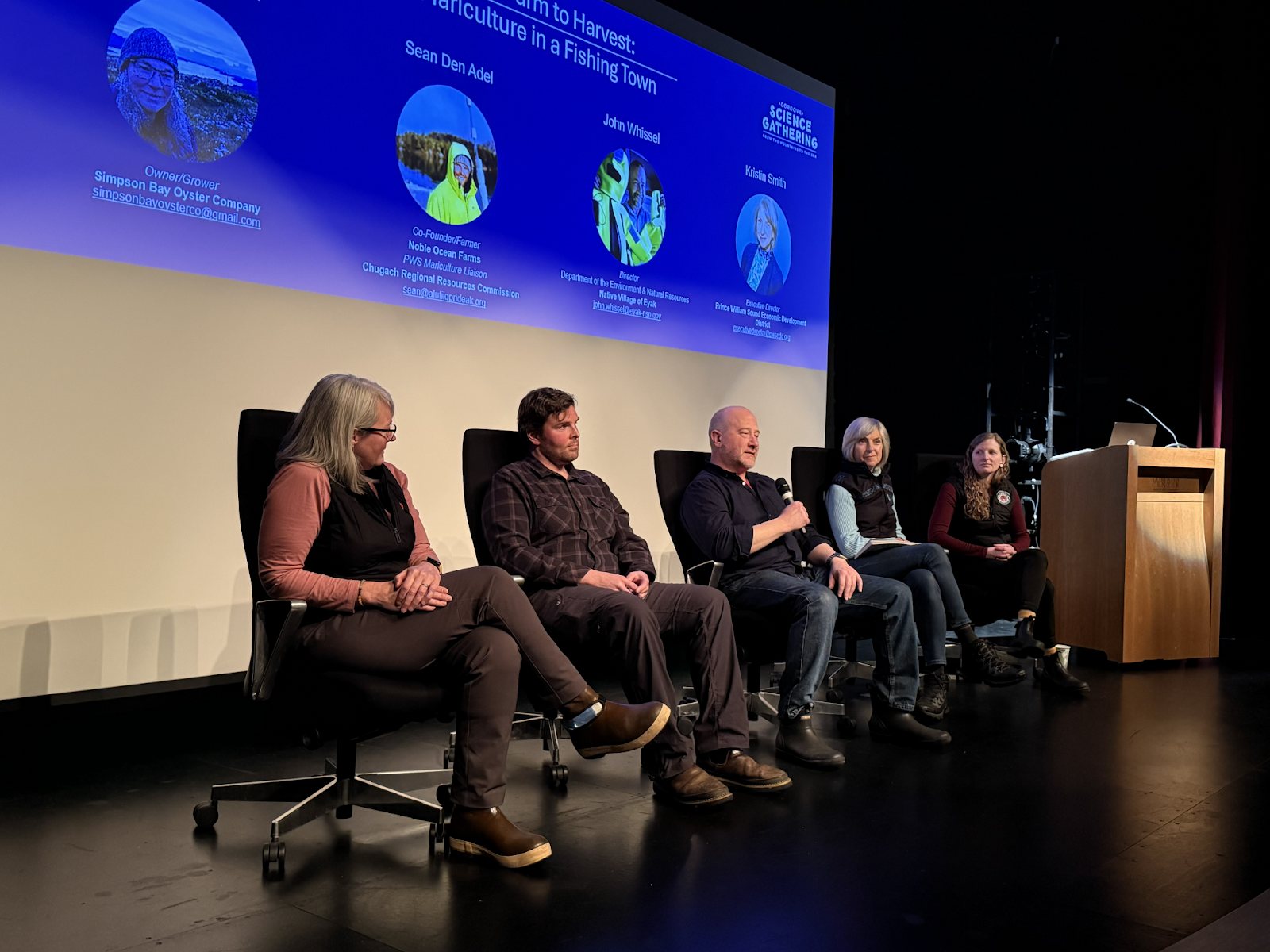
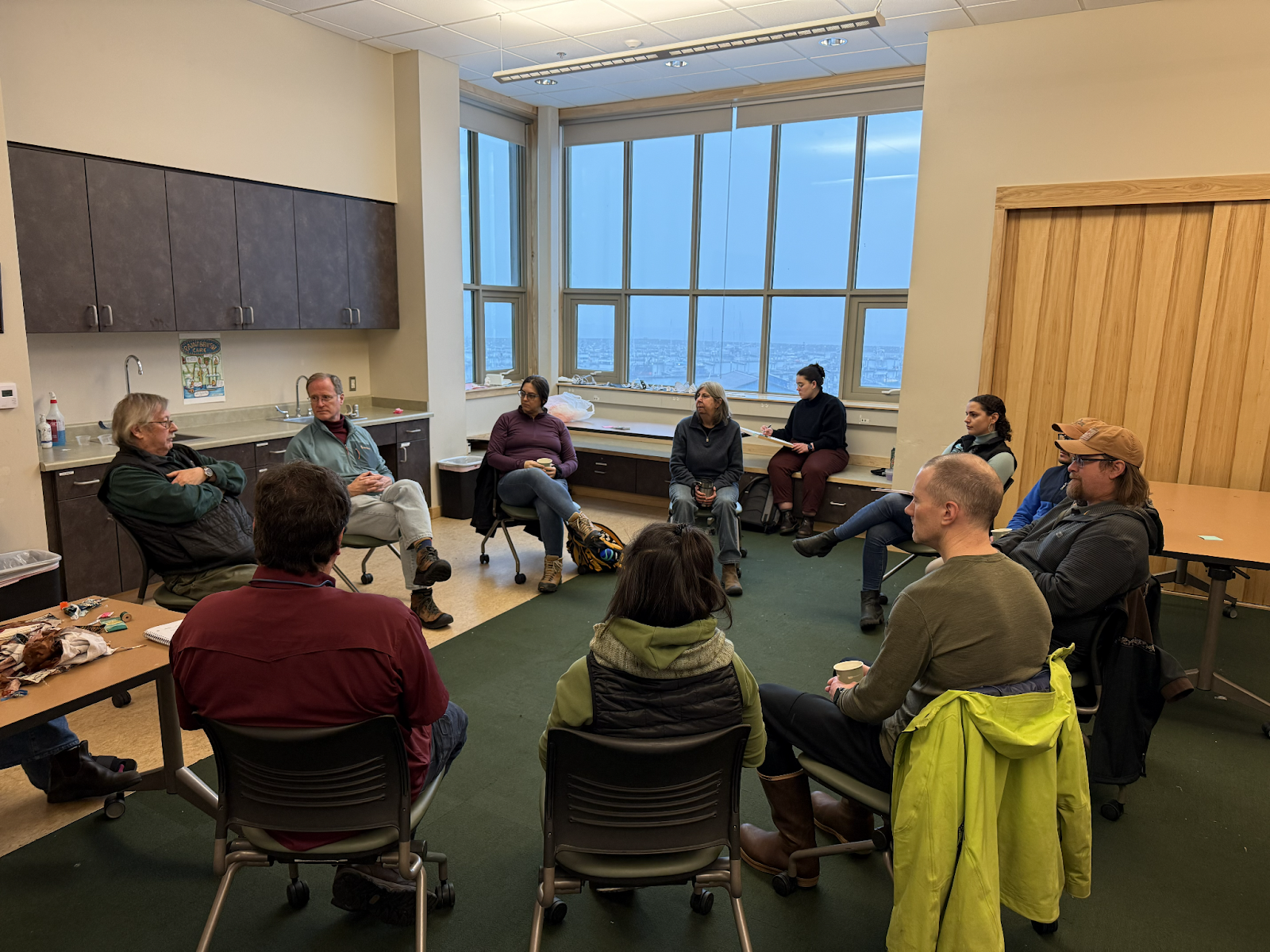
The inaugural Cordova Science Gathering was a lively forum for regional agencies, organizations, community members, and scientists to celebrate science, art, and culture. Held in Cordova, Alaska between February 12-14, the event brought together researchers and residents to deepen their understanding of Cordova’s ecosystems and promote environmental stewardship through collaboration and shared knowledge.
“We shared knowledge across disciplines, generations, and experiences. We asked hard questions, reflected on change, and strengthened the relationships that make this work possible. The gathering reminds us that science, culture, and community are not separate paths. They move together, shaped by place and guided by responsibility to those who came before us and those who will come after.”
- Cristina Reo, Prince William Sound Science Center
Cordova is located within the Copper River Delta, a vast network of intertidal mudflats and wetlands designated as a globally Important Bird Area (IBA) and a hemispherically important site in the Western Hemisphere Shorebird Reserve Network (WHSRN). The area is home to numerous species of nesting waterfowl and seabirds, and is a vital migratory stopover site for shorebirds in the Pacific Flyway. As many as 1.1 million shorebirds have been observed at one time using the Copper River Delta during peak spring migration.
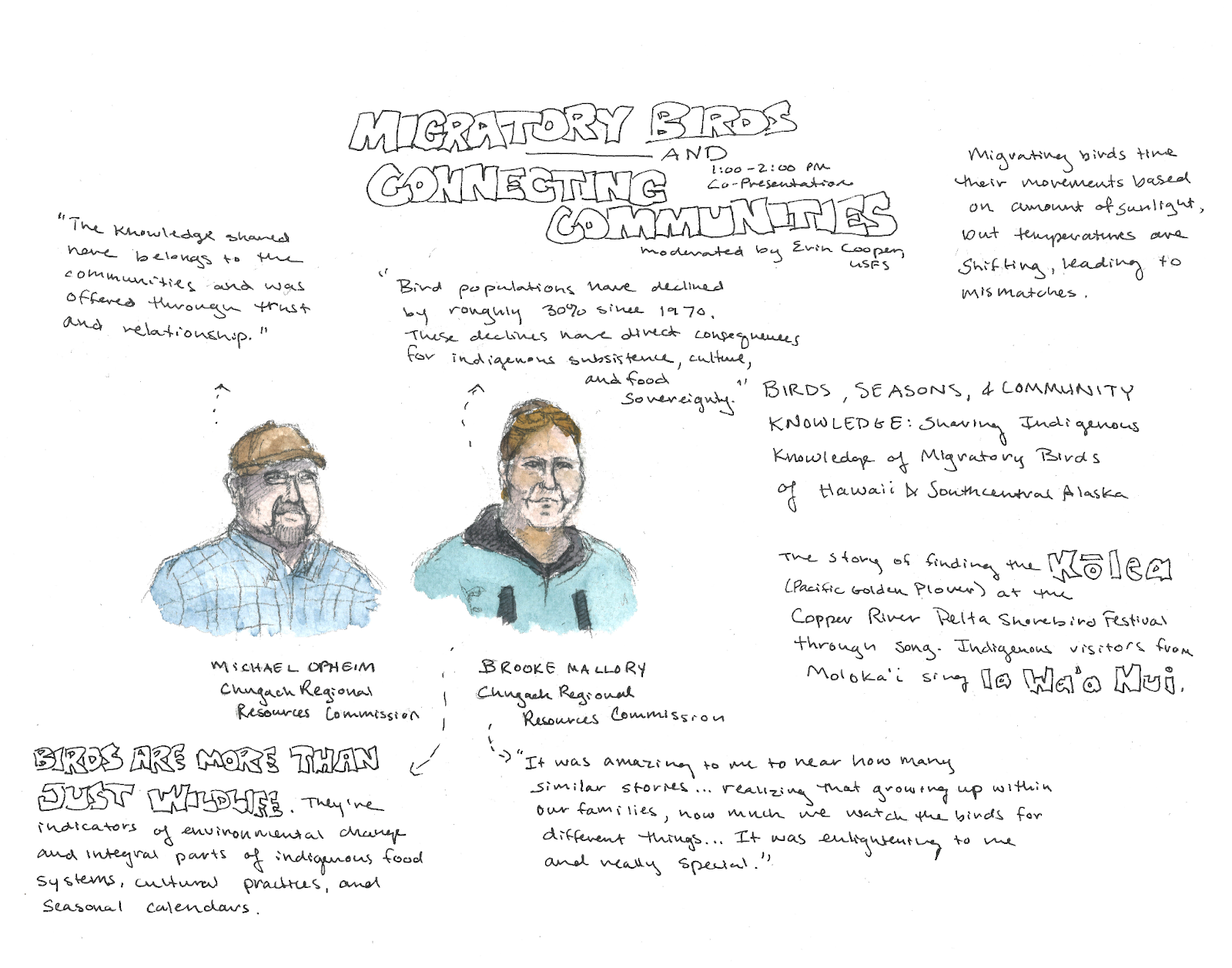
"Birds are more than just wildlife. They're indicators of environmental change and integral parts of Indigenous food systems, cultural practices, and seasonal calendars.”
- Brooke Mallory, Chugach Regional Resources Commission and Native Village of Eyak
This event was made possible with support from partnering organizations, including Chugach Regional Resources Commission, Native Village of Eyak, Prince William Sound Science Center, U.S. Forest Service, Alaska Sea Grant, National Park Service, and Pacific Birds Habitat Joint Venture.