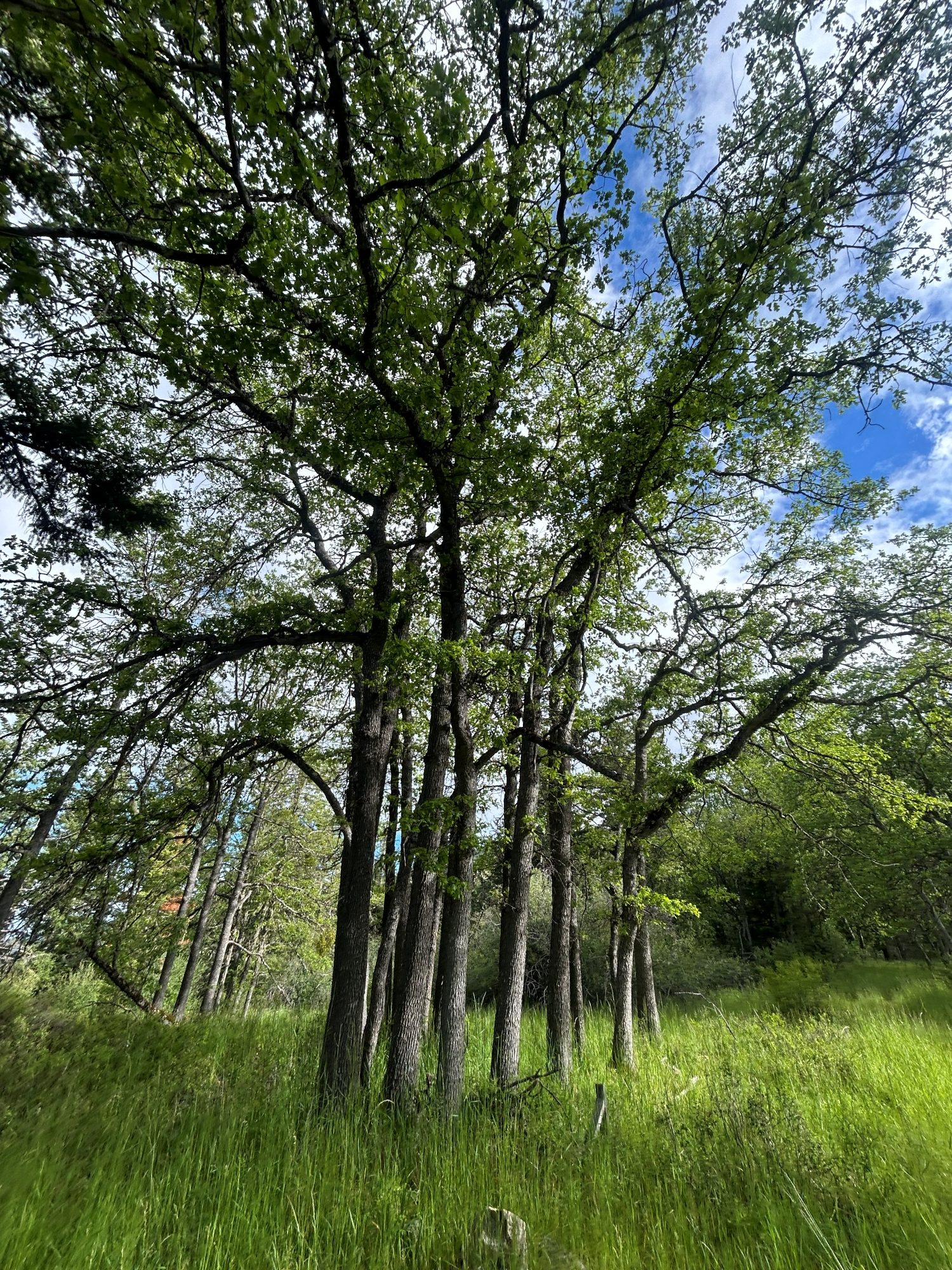
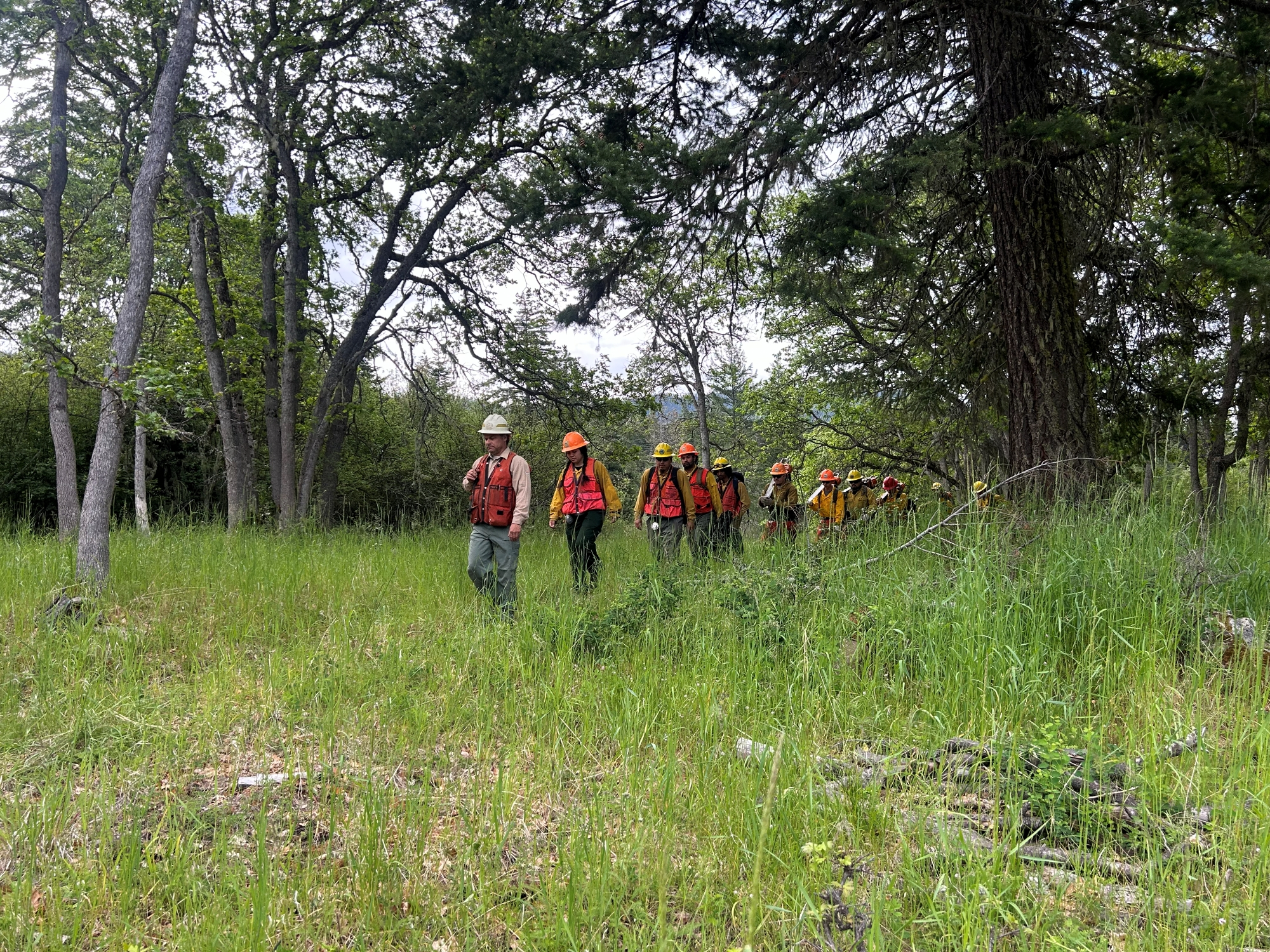
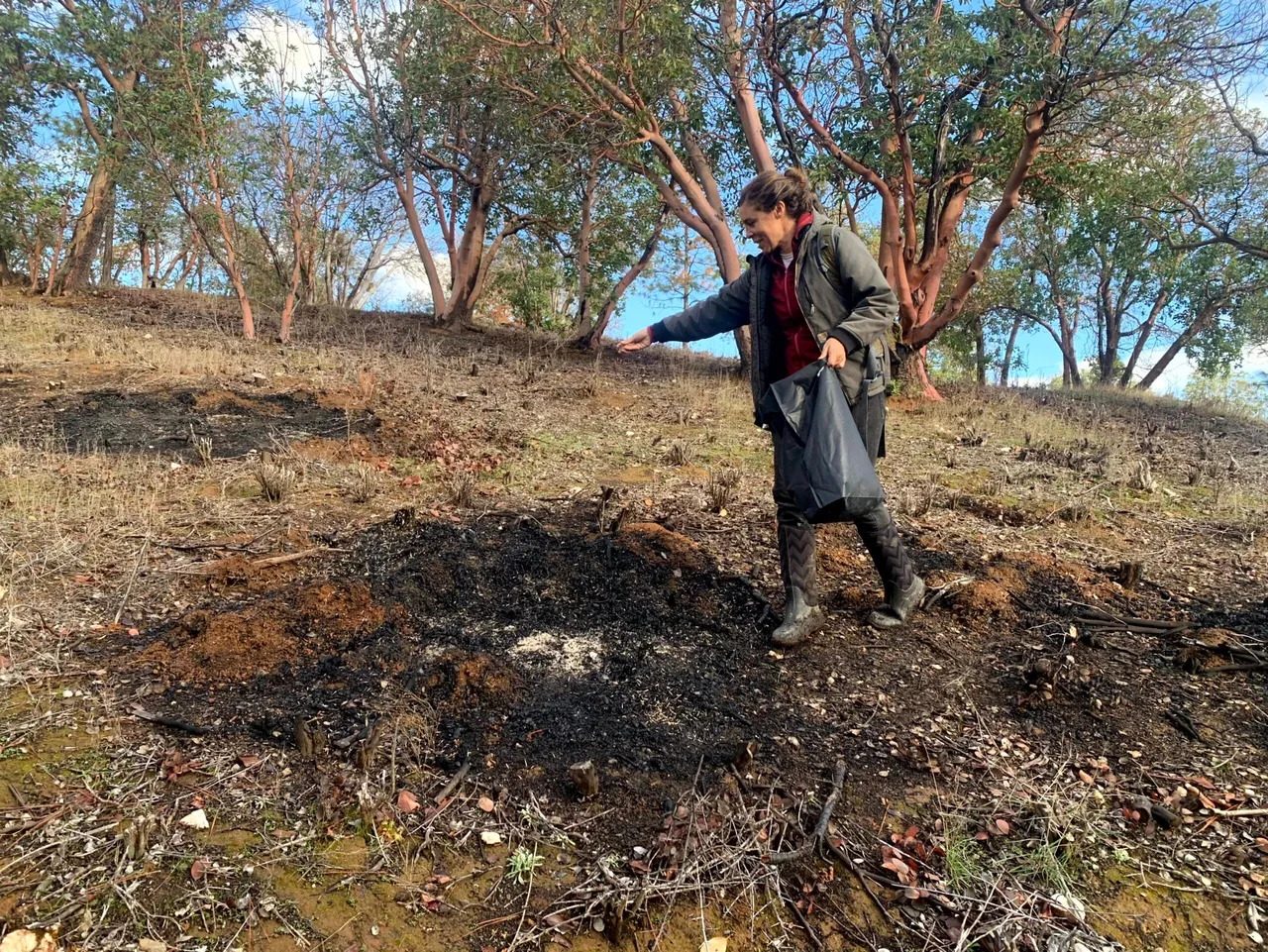
In June 2026, Pacific Birds staff and Board members traveled to southwest Oregon to see habitat restoration in action. We spent a day with our partner, Lomakatsi Restoration Project and a crew of 10 inter-tribal young adults in their 4.5-month-long Tribal Ecological Forestry Training Program funded by Oregon Conservation Corps. The crew was restoring an oak woodland, using chainsaws to cut down dozens of small conifer trees and prepare piles of woody debris to burn at a later date.
Oak trees that had previously been hidden by weed-like conifers and overgrown serviceberry became visible. This oak woodland was once again open and intermixed with meadows, with widely spaced oak trees interspersed with native bunchgrasses and flowers. The crew aimed to restore the land closer to its historical, more fire-resilient state, when it was maintained by regular low-intensity fires from lightning and indigenous burning.
Across the Pacific Northwest, oak savannas, woodlands, and prairies are disappearing at an alarming rate due to human development and fire exclusion. Oak and prairie landscapes currently span only 10% of their historic range from British Columbia to northern California, with negative impacts on the many bird species that depend on this ecosystem for habitat. This makes oak systems a top regional conservation priority.
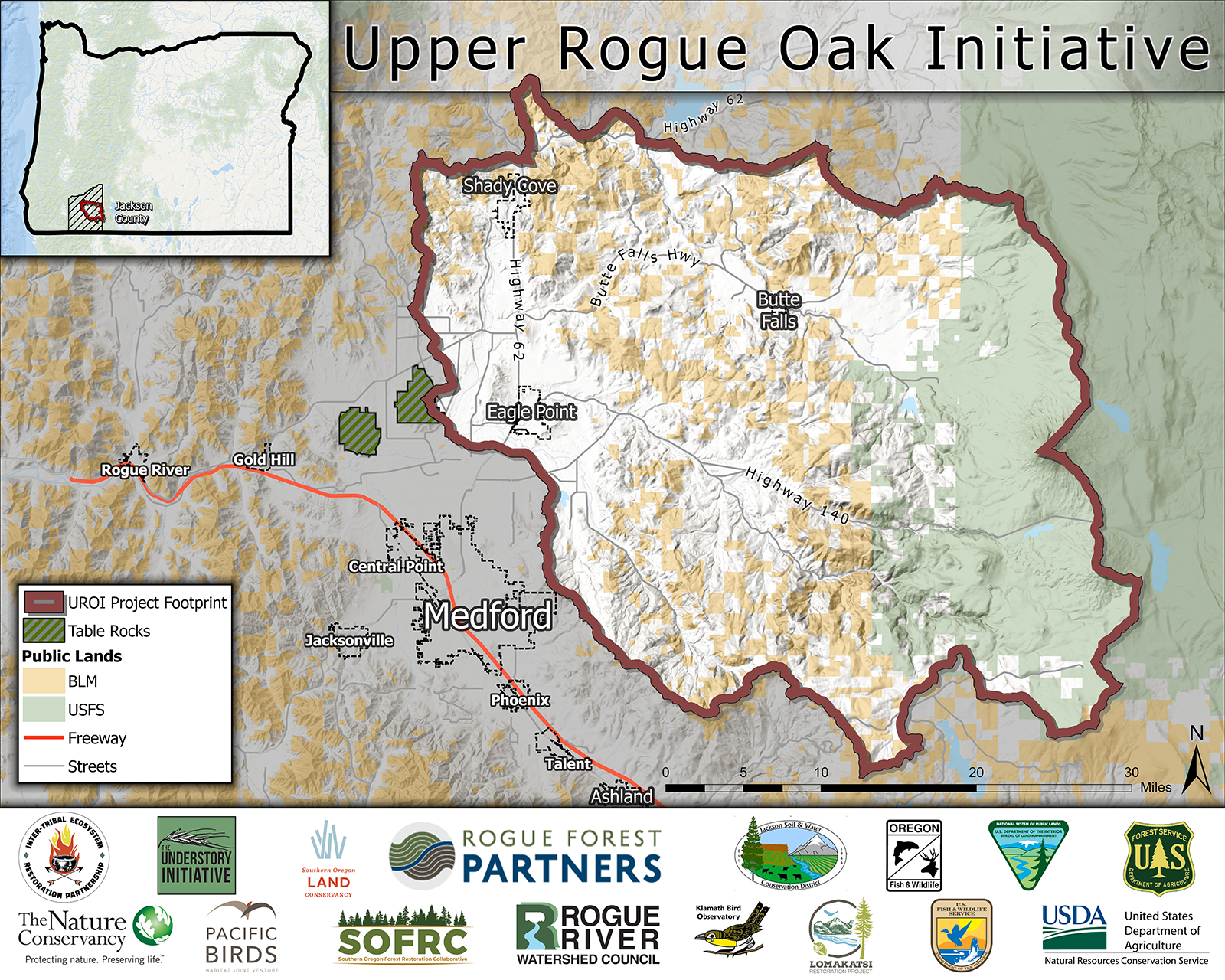
The work completed by Lomakatsi’s inter-tribal crew members is part of the Upper Rogue Oak Initiative (UROI), one of several oak restoration projects in the Pacific Northwest. UROI is a six-year collaborative restoration effort led by the Klamath Siskiyou Oak Network (KSON). It will restore around 3,850 acres of oak habitat near Medford, Oregon, across public, private, and Tribal land.

About the Upper Rogue Oak Initiative
Launched in 2022, UROI is now in the middle of its fourth year. Across multiple project sites, field crews are restoring oak habitat by thinning out conifers, using prescribed fire when feasible, removing invasive weeds, and reestablishing a native understory. These actions will strengthen legacy oaks, promote forest heterogeneity, and reintroduce a historic natural pattern of regular disturbance by fire.
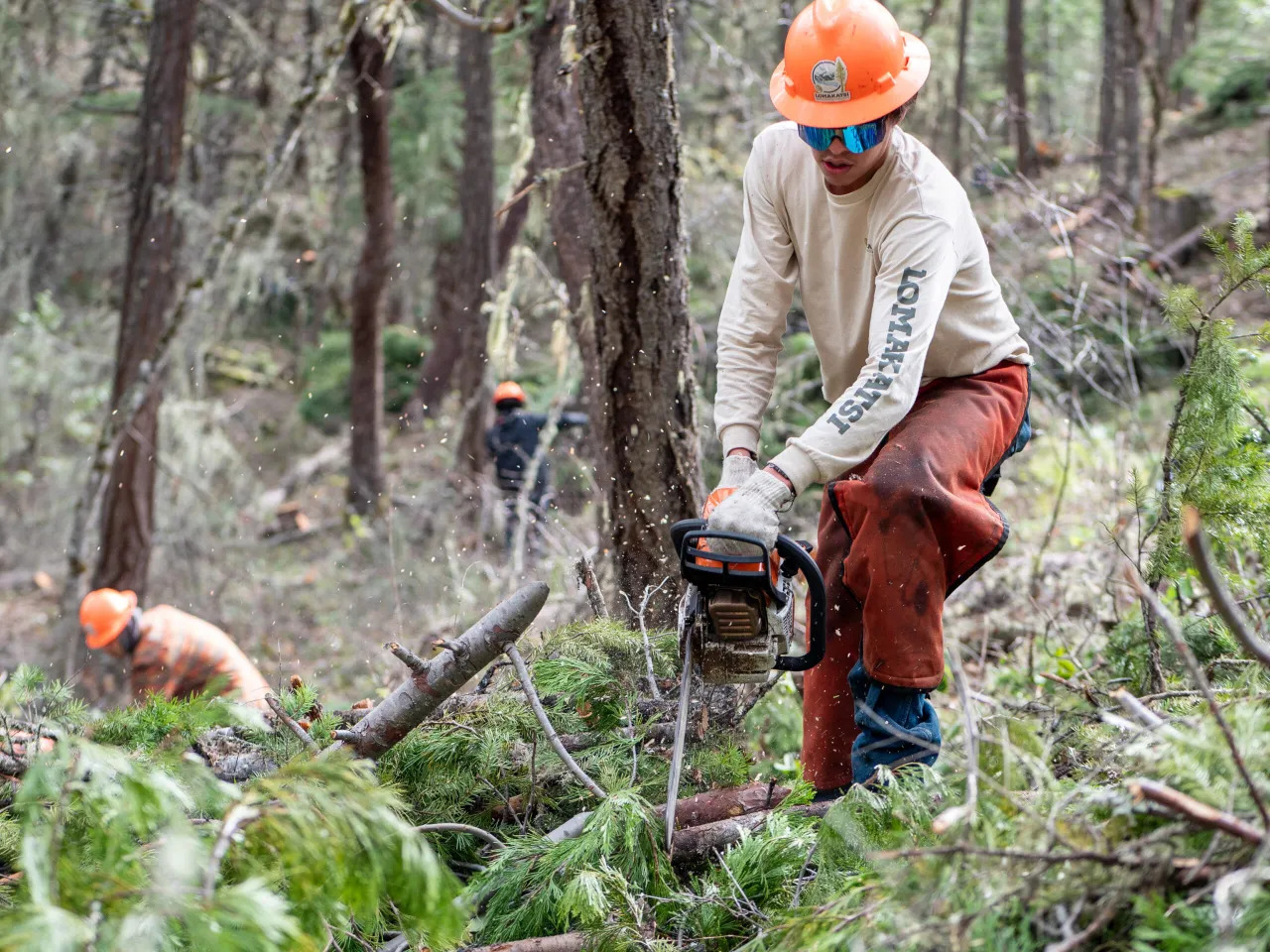
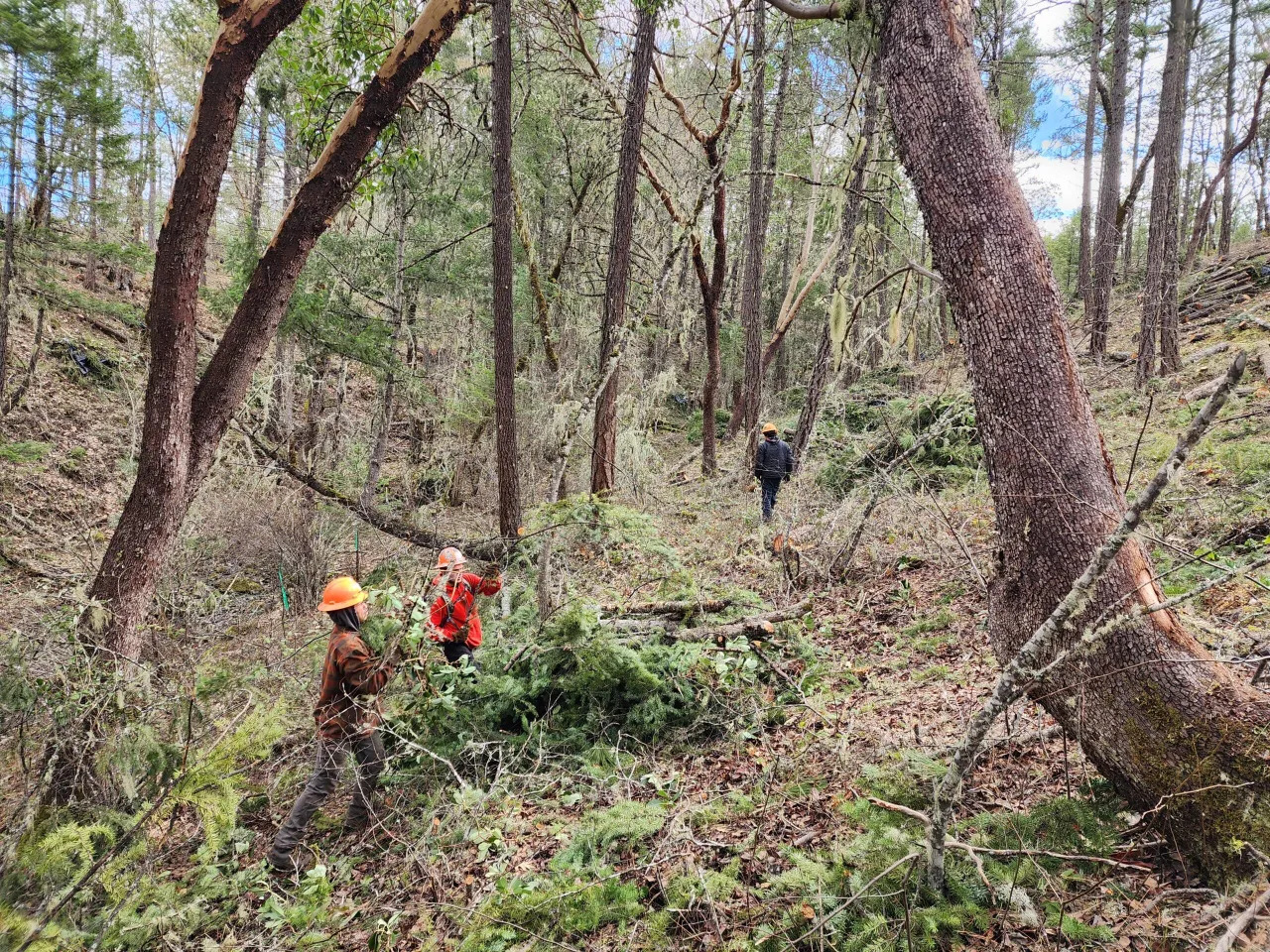
Which treatment is prescribed for each UROI project site depends upon the best available science, Indigenous Traditional Ecological Knowledge as recommended through the initiative’s Inter-Tribal Advisory Committee, operational feasibility, and landowner objectives. Generally, the land is restored in this order: thinning out small conifers, piling the woody debris, burning these piles, seeding the understory with native plants, and ongoing biological monitoring. When possible, prescribed underburning is used to reintroduce fire for ecological benefits and to further reduce wildfire risk. KSON also conducts extensive tribal and landowner engagement before beginning project implementation.
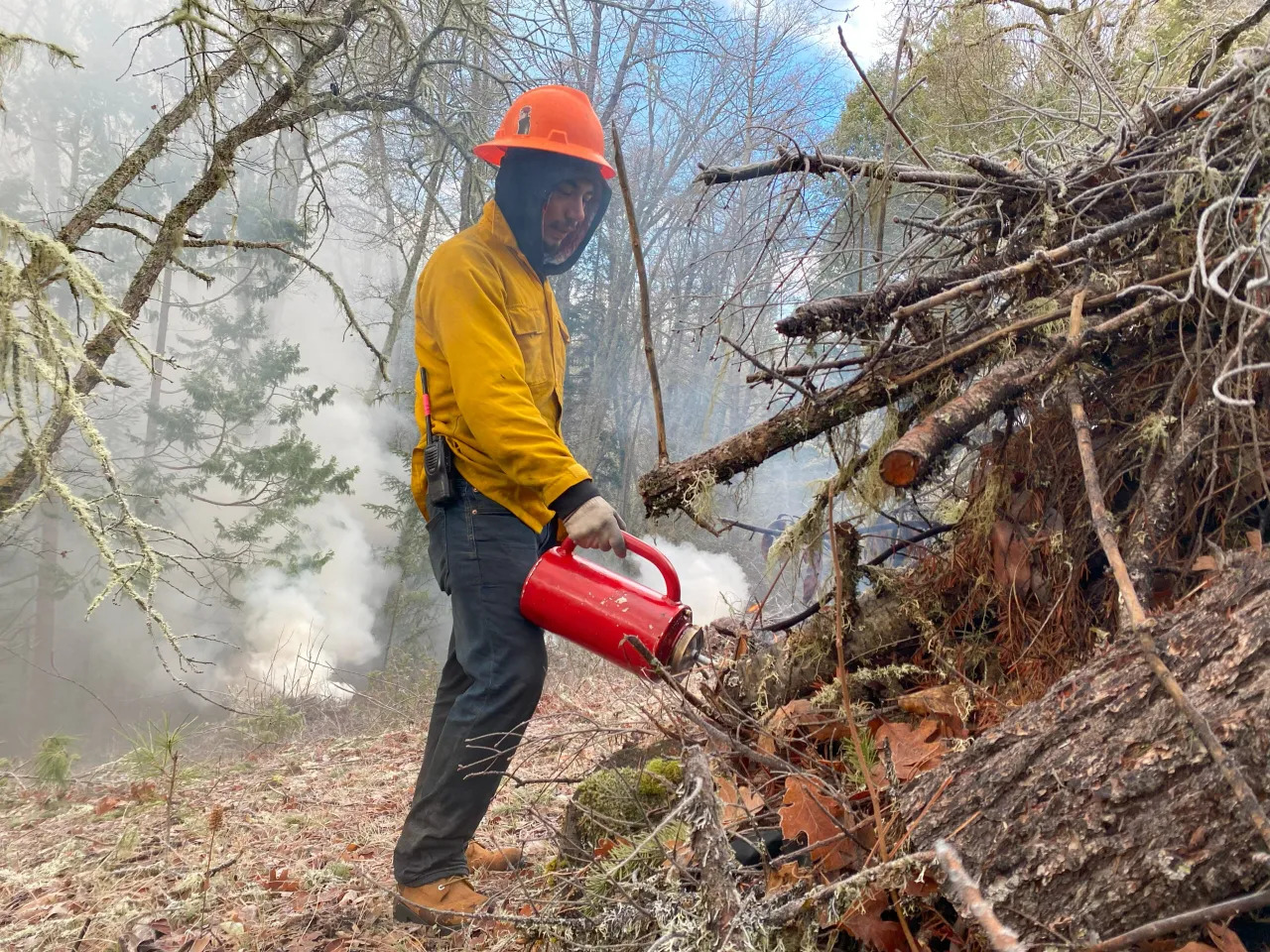
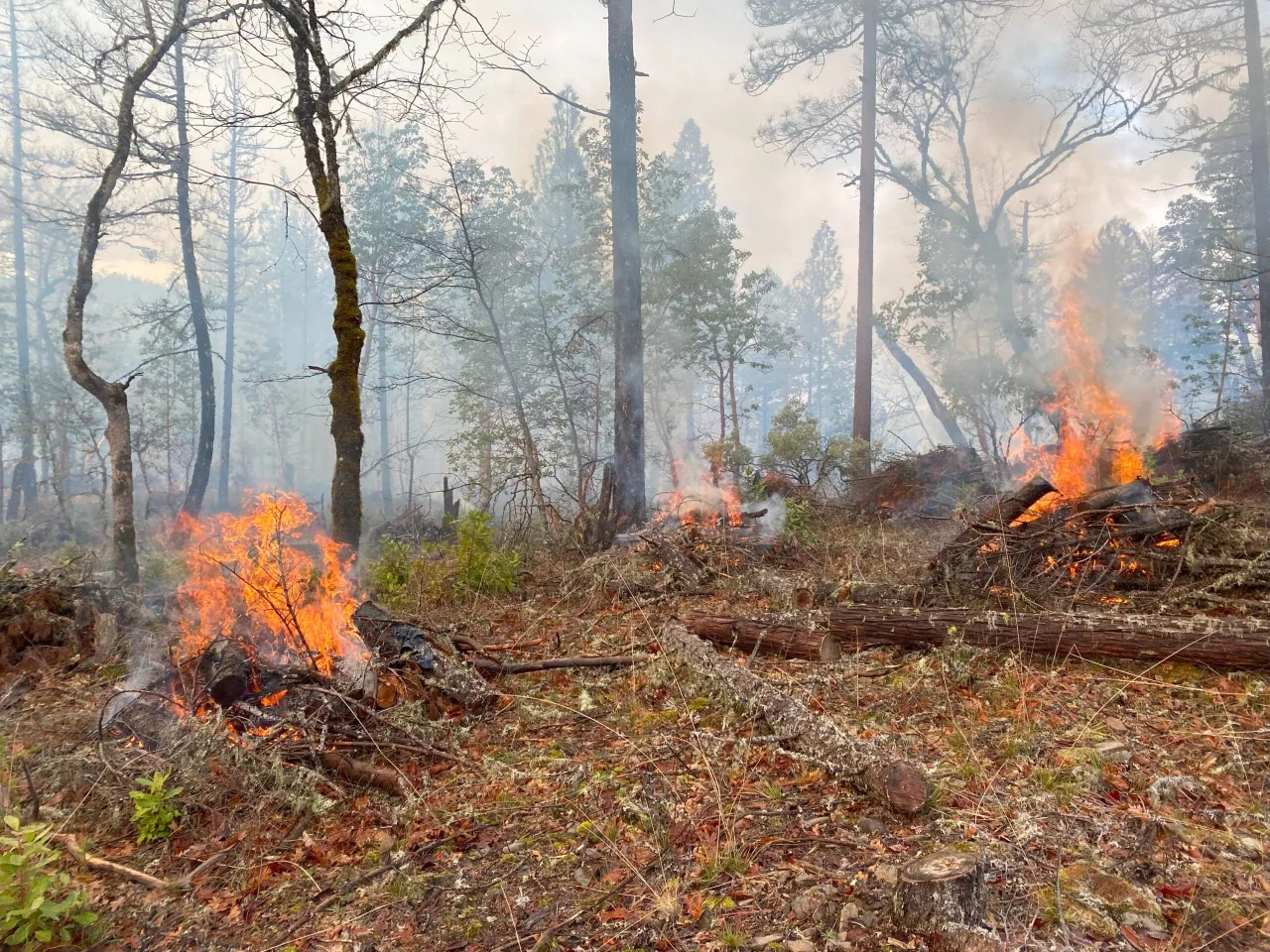
UROI has received $14.5 million in funding, including a National Fish and Wildlife Foundation (NFWF) America’s Ecosystem Restoration Initiative grant that is administered by Pacific Birds. Other funds include a grant from the Oregon Watershed Enhancement Board (OWEB) and matching dollars from the Bureau of Land Management (BLM) and other partners.
Why Oak Matters
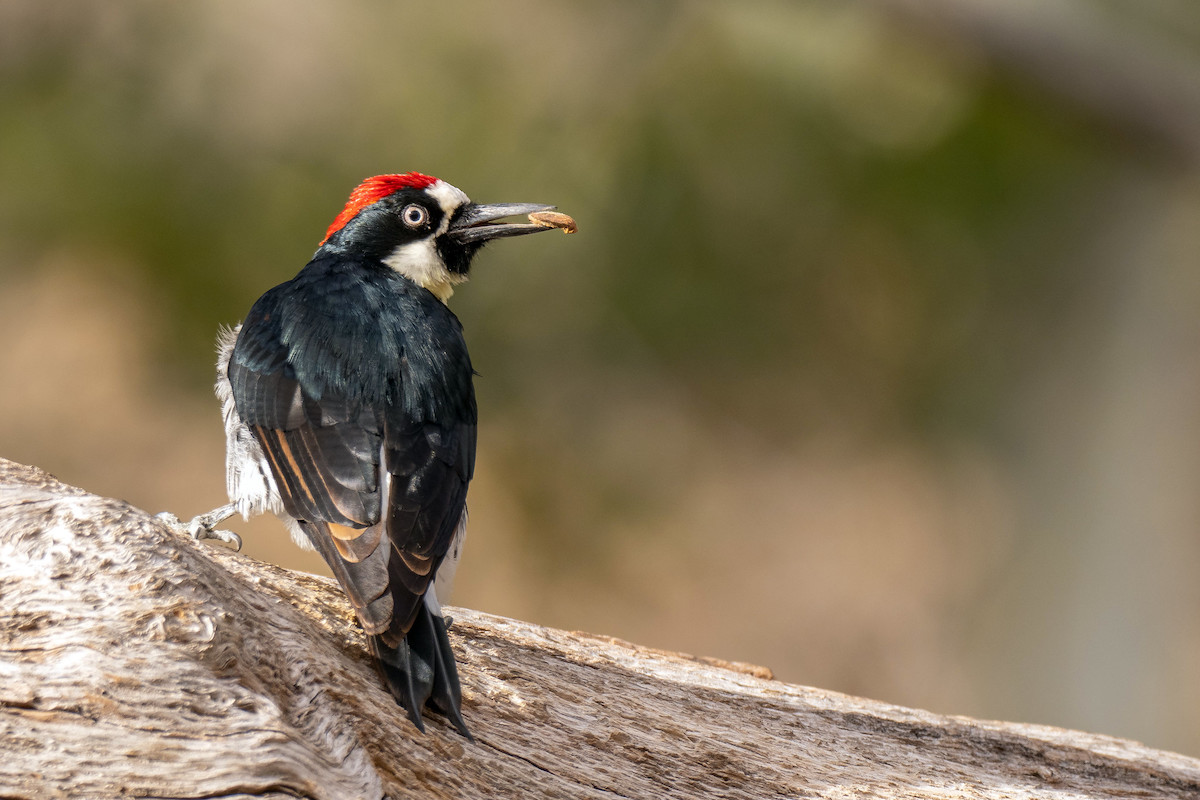
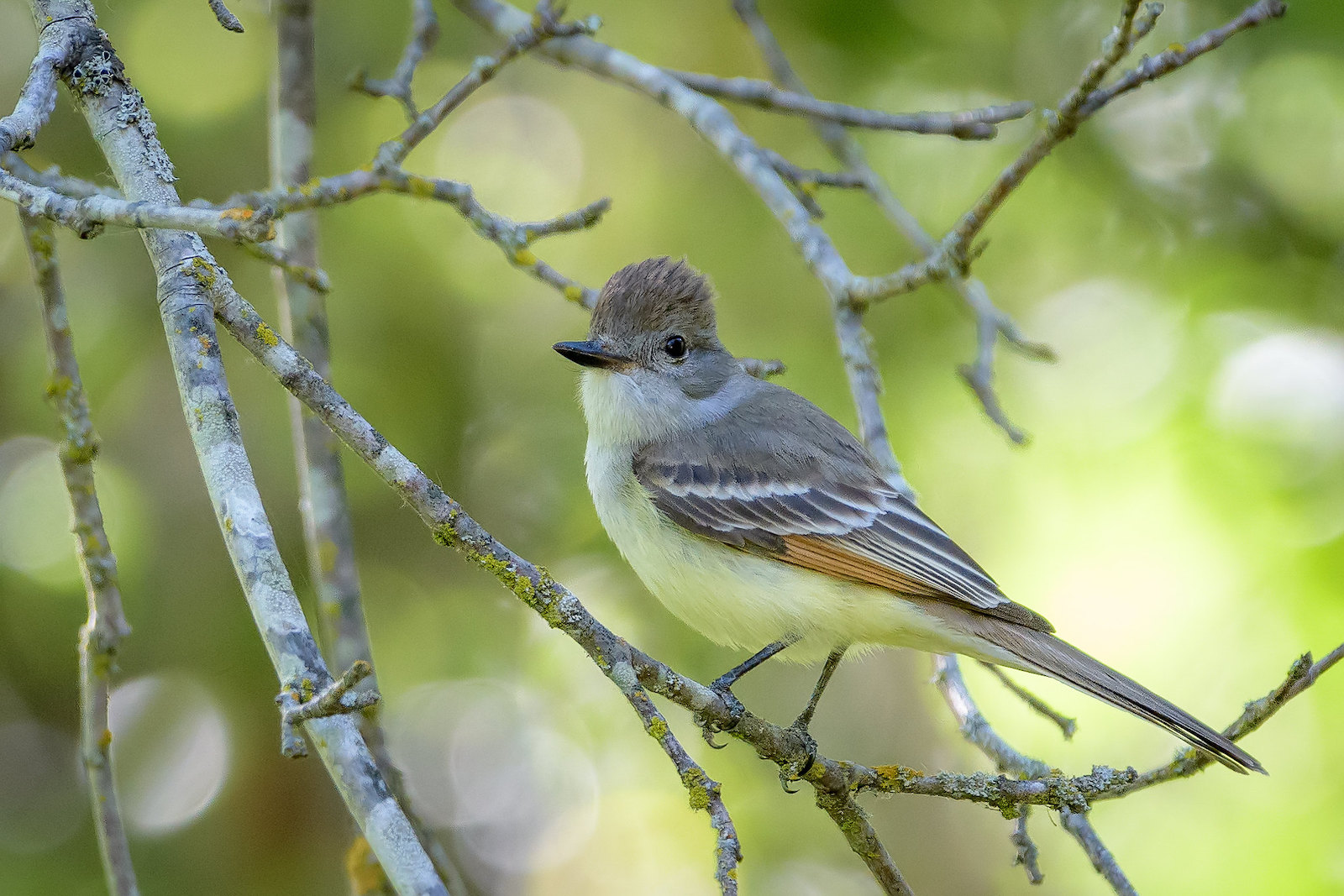
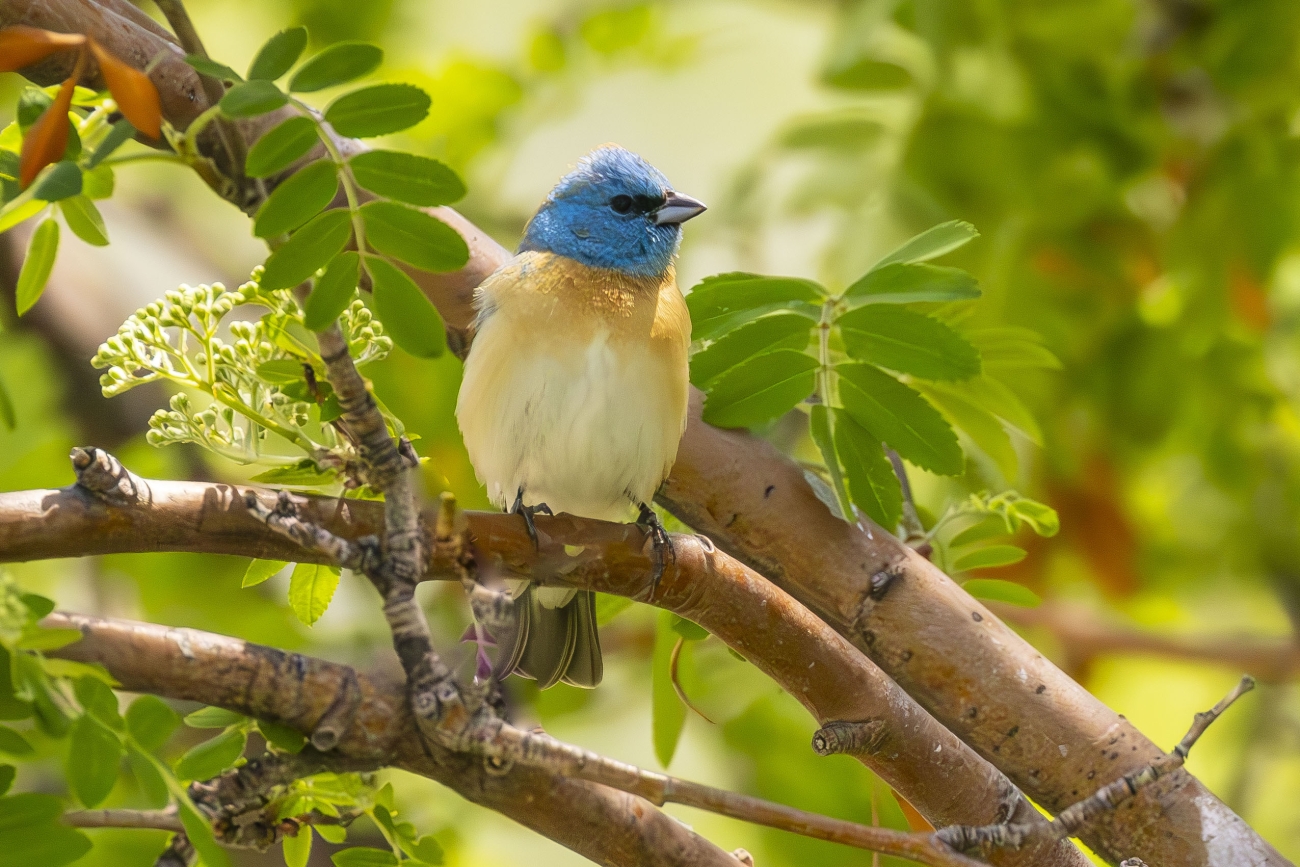
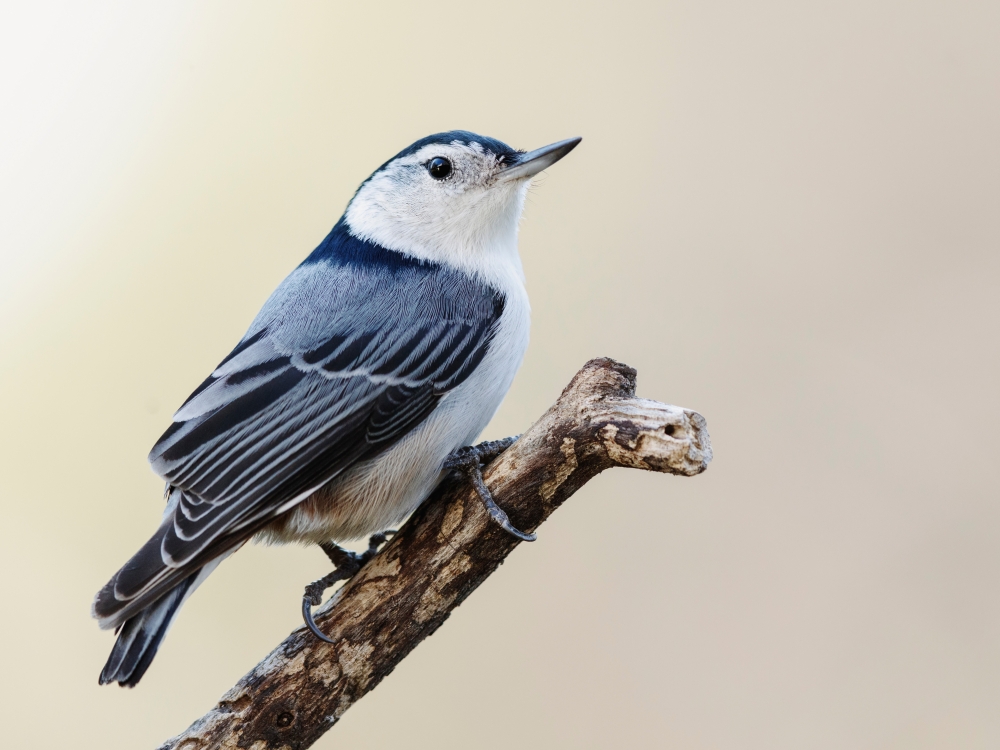
Oak restoration also has many positive effects on the broader ecosystem. Oaks act as a keystone species, providing biologically rich habitat for over 300 other wildlife species. Oak-associated birds, in particular, benefit from restoration. Over 50% of western forest birds are declining due to habitat degradation from fire suppression and industrial timber management, according to the 2025 State of the Birds Report. Oak restoration projects such as UROI tie closely into regional bird conservation plans, including landbird population objectives in Oregon and Washington and the Prairie, Oaks, and People Investment Strategy.

Oak restoration also increases wildfire resilience for nearby communities. Due to fire exclusion, conifers have spread from higher elevations into oak savannas, outcompeting oaks for space and shading out the native understory. These dense forests also increase the risk of dangerous high-intensity wildfires.
In contrast, oak trees are naturally adapted to regular low-intensity wildfires. Their open canopies mean that wildfires are more likely to stay on the ground and not become fast-traveling crown fires. Additionally, oak leaf litter and native understory plants ignite and spread fire less easily than invasive grasses. In multiple ways, oak stewardship reduces the risk of catastrophic wildfire for people, property, and critical infrastructure.
KSON: A Collaborative Regional Partnership for Oaks
KSON is a collaborative regional partnership that works to conserve oak habitat on private and public lands in southern Oregon and northern California. The network formed in 2011 under a shared vision for resilient oak ecosystems, and the belief that partners can do more together.
KSON partners working on the UROI project include:
-
Pacific Birds Habitat Joint Venture
Pacific Birds is the administrator for the NFWF grant, and supports partnerships across across the Pacific Northwest Oak Alliance.
-
Klamath Bird Observatory (KBO)
KBO is the lead convenor of KSON and the lead entity for the OWEB grant. It also provides expertise on bird habitat restoration and monitoring.
-
Lomakatsi Restoration Project
Lomakatsi is the lead for technical work and implementation including restoration planning, ecological thinning, prescribed fire and facilitating tribal engagement through the Inter-Tribal Ecosystem Restoration Partnership.
-
The Understory Initiative
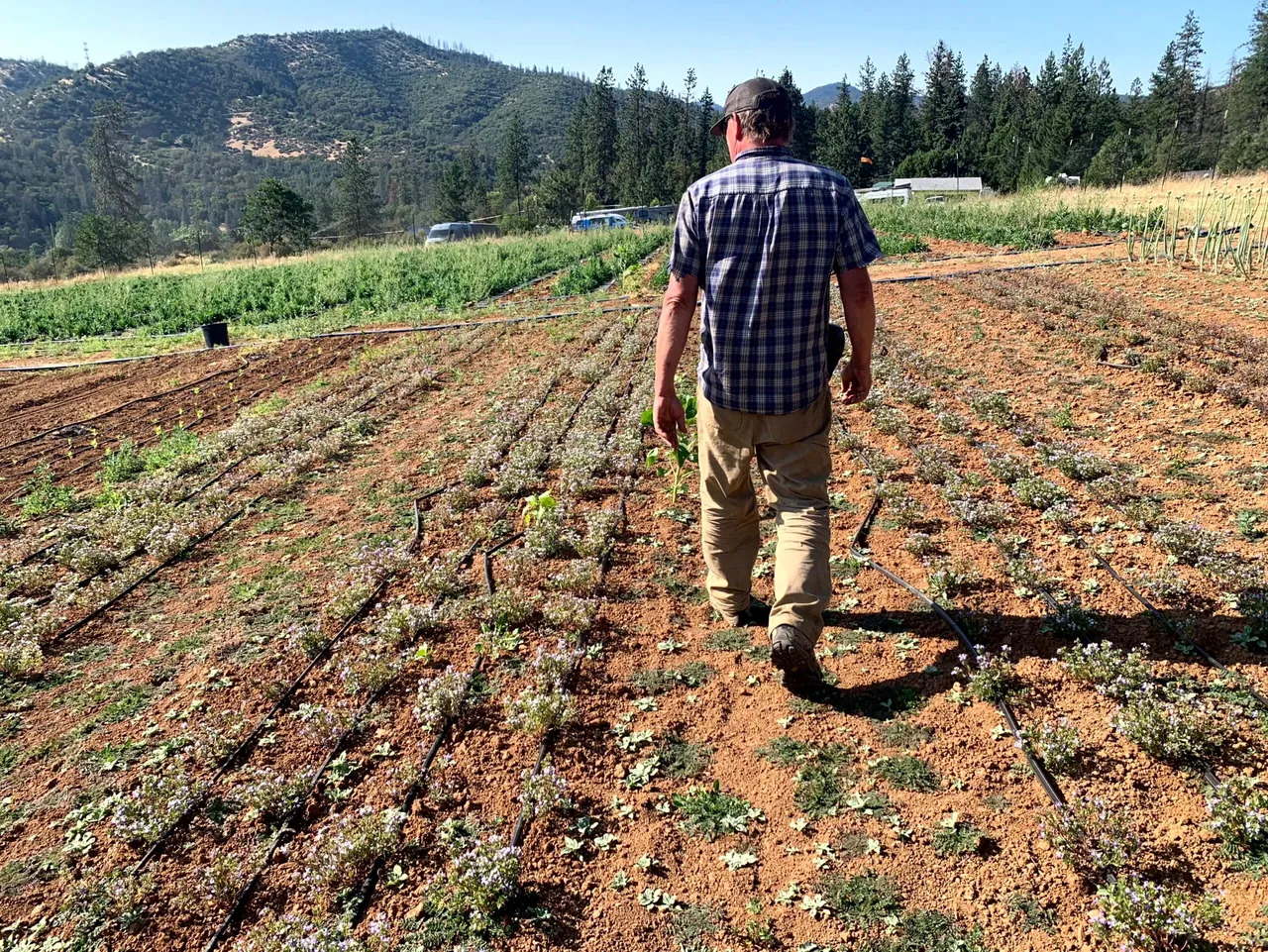
The Understory Initiative grows native seeds and plants them in restored areas.
Other KSON partners include federal agencies (BLM, Natural Resources Conservation Service, U.S. Fish and Wildlife Service, U.S. Forest Service), state agencies (OWEB, Oregon Department of Fish and Wildlife), Tribes (Confederated Tribes of Grand Ronde Community of Oregon), non-profit organizations (NFWF, the Nature Conservancy, Rogue River Watershed Council), and other collaboratives (Inter-Tribal Ecosystem Restoration Partnership, Southern Oregon Forest Restoration Collaboration).
The Oak Alliance: Revitalizing Oaks Across the Pacific Northwest
KSON is one of nine regional partnerships that comprise the Pacific Northwest Oak Alliance. The Oak Alliance unites public, private, and Tribal partners to champion landscape-scale oak and prairie conservation in southern British Columbia, Washington, Oregon, and Northern California. This coalition is spearheaded by Pacific Birds.
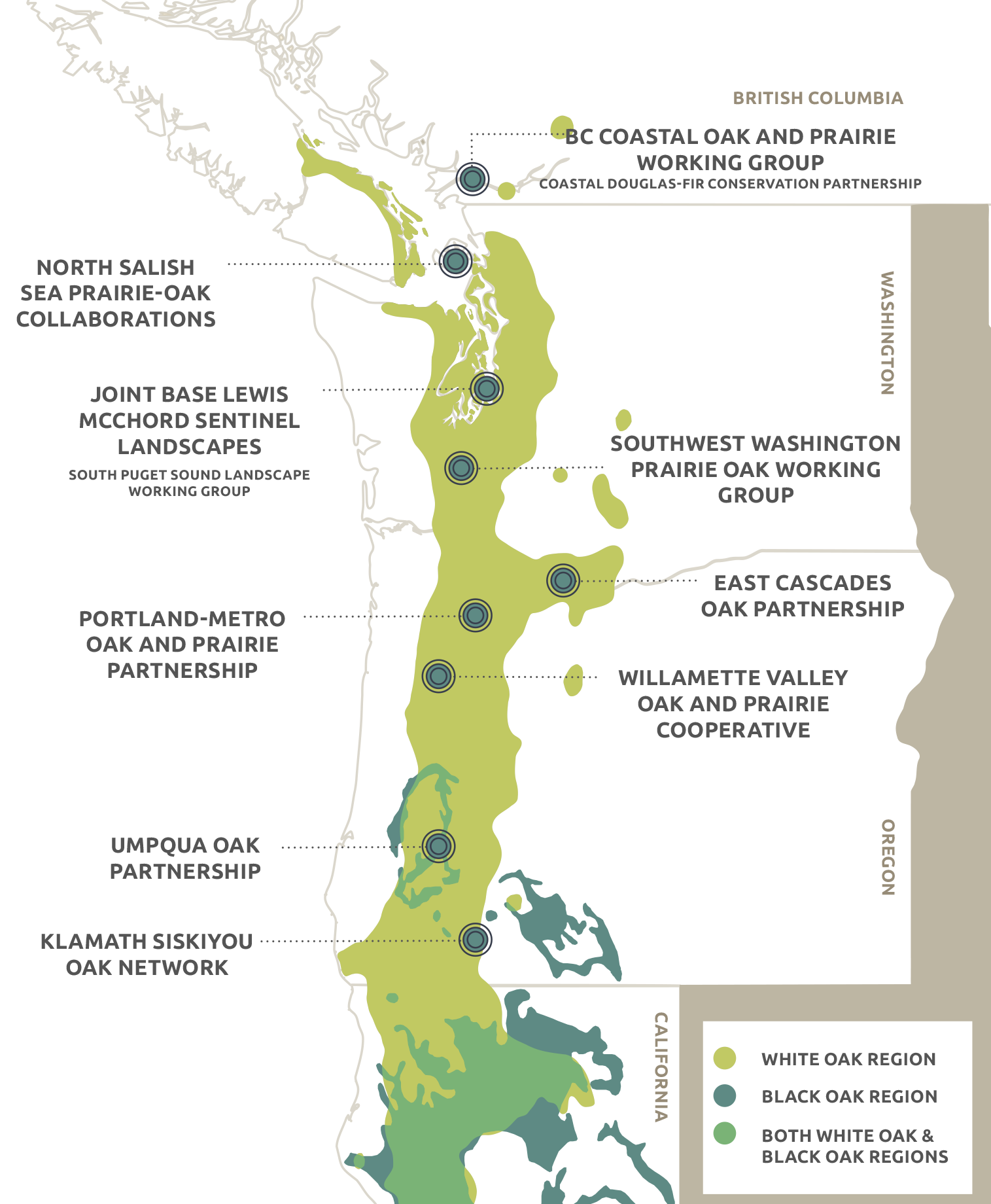
Each of these nine partnerships is making progress to protect and restore the remaining oak ecosystems in the Pacific Northwest, but they need your help. The need for this work is urgent, and it must happen on a larger scale and at a faster pace.
The Prairie, Oaks, and People Investment Strategy presents funding requests for high-priority and shovel-ready projects that can be realistically implemented within five years. With targeted, coordinated investment, we can implement projects like UROI across the region and revitalize imperiled oak ecosystems.