The British Columbia portion of Pacific Birds is entirely within Bird Conservation Region 5, the Pacific Northern Rainforest.

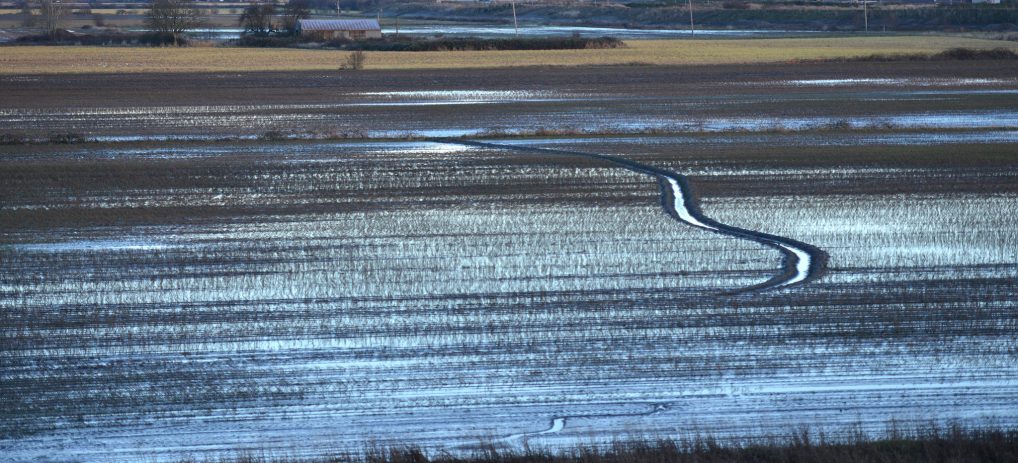
This region includes 29.1 million land hectares (54 million acres), as well as 45.8 million hectares (113 million acres) of seascape and 30,285 km (19,000 miles) of shoreline. The British Columbia coast is a complex of inlets, bays, islands, straits and fjords rising to a diversity of near-shore, intertidal and forested habitats. The coastline has more than 440 estuaries containing tidal wetlands and adjacent floodplain habitats.
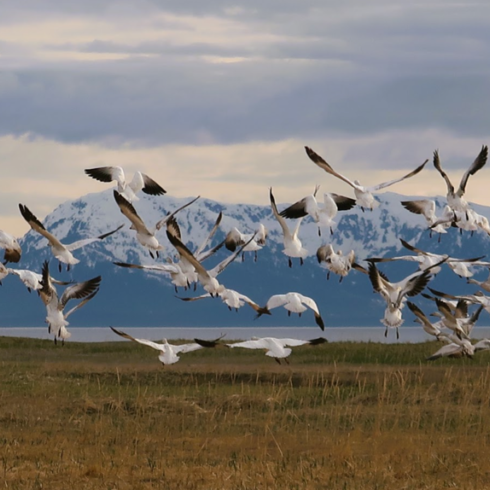
More than 1.2 million waterfowl (over 38 species) winter along British Columbia’s coastline, and another 400,000 in its estuaries.
This includes nearly half the wintering population of the Wrangel Island Snow Goose, who breed in Russia, as well as about half of the total Trumpeter Swan population. In addition to waterfowl, the public and private lands within the Pacific Birds geography provide key habitat for numerous other resident and migratory waterbirds, shorebirds and landbirds.
In British Columbia, Pacific Birds works on coastal wetlands and riparian forests.
Over 171 million dollars has been invested in Joint Venture habitat projects in British Columbia since 1993. As a result, partners have secured, restored, or enhanced almost 45,000 hectares (111, 000 acres). Conservation efforts in British Columbia have been concentrated in the Southwestern British Columbia Planning Area, where wildlife values are high and human activity pressures are greatest.
Pacific Birds Strategic Plans for British Columbia
In British Columbia, Pacific Birds partners co-developed a list of limiting factors for birds and bird habitat in the region and subsequently identified key strategies along with 5- and 10-year objectives. These include habitat securement, restoration, and management objectives to guide conservation actions in priority habitat types and for the conservation of priority species.
Human Dimension objectives were also developed to address knowledge gaps related to private landowners, governments, the general public, recreational users, and Indigenous communities. Pacific Birds partners will continue to evaluate progress through various habitat and population monitoring programs.
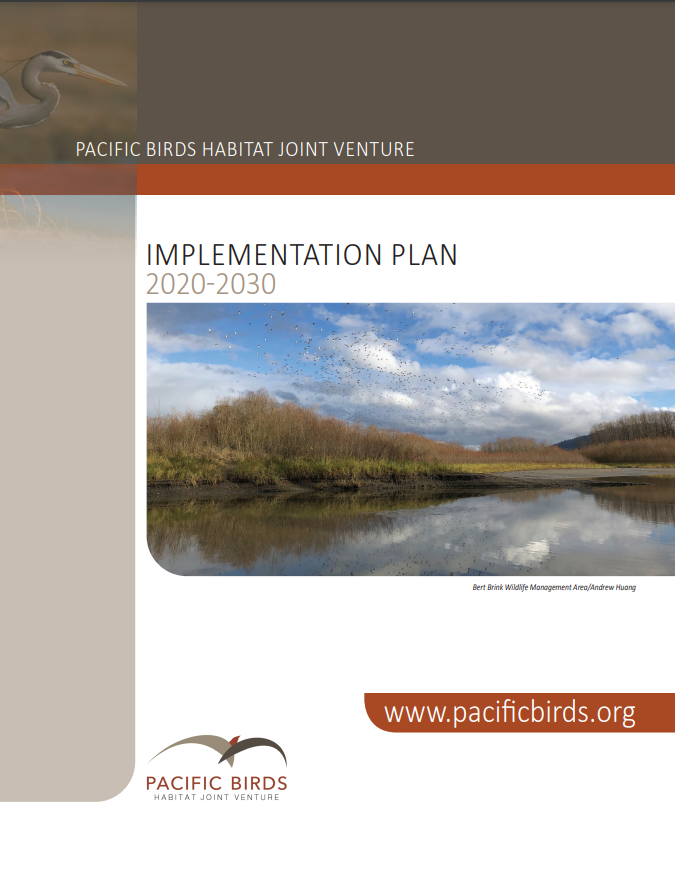
Dig deeper into the objectives, strategies, and actions needed in coastal wetlands in British Columbia in the Pacific Birds British Columbia Implementation Plan 2020-2030.
Additional Information for British Columbia Partners
EXPLORE BRITISH COLUMBIA RESOURCES Habitat Matters
Read Habitat Matters, the North American Wetlands Management Plan Annual Report in Canada, to learn about conservation activities in British Columbia and other provinces.
EXPLORE BRITISH COLUMBIA RESOURCES Geonarrative: Migratory Bird Habitat of the Fraser River Delta
Learn about some of the most ecologically significant migratory bird habitat found on the Pacific Coast of the Americas! These story maps will guide you through content from three reports produced by Pacific Birds. They provide information on the significance of the Fraser River Delta, threats to migratory bird habitat and actions that partners can undertake to protect this habitat.