Conservation Areas are critical tools to conserve biodiversity and safeguard ecosystems. But bird species of the greatest conservation concern will not thrive somewhere simply because that land is formally protected; they depend on the conservation of specific habitat types.
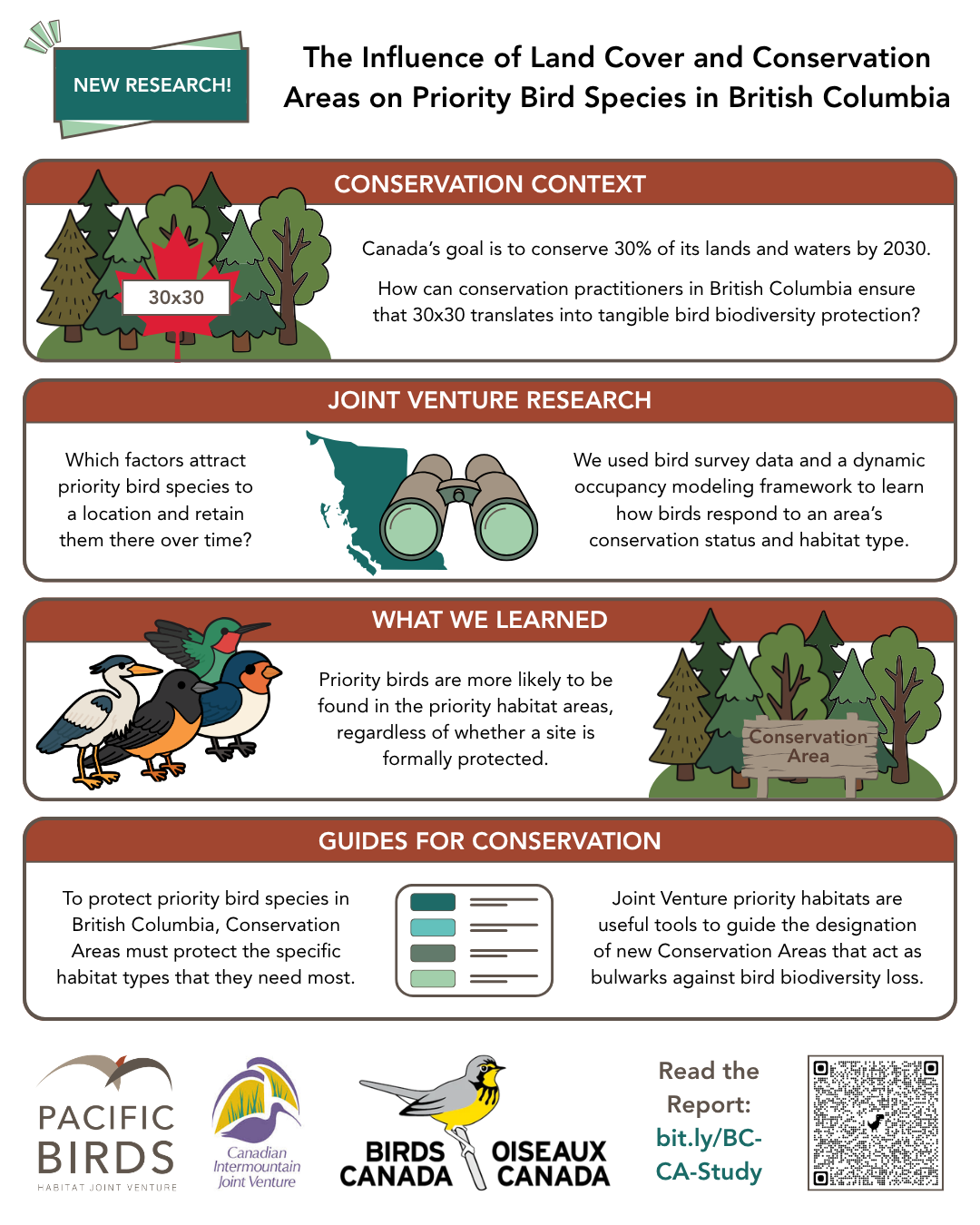
In the Implementation Plan for British Columbia, Pacific Birds has listed priority bird species for conservation action and five priority habitats to inform Conservation Area designation and management. Pacific Birds partnered with Birds Canada and the Canadian Intermountain Joint Venture to study the following questions:
Do Conservation Areas actually contain greater proportions of priority habitats compared to adjacent unprotected areas?
Do Conservation Areas have higher occupancy of priority bird species?
This research is critical to ensuring that Canada’s target to conserve 30% of its lands and oceans by 2030 translates into tangible biodiversity protection, and that Conservation Areas provide the greatest benefits to bird species of the highest conservation need.

Research Methods
First, we compared the amount of priority habitat in survey sites within Conservation Areas compared to adjacent unprotected areas across British Columbia. Next, using the bird survey data collected at these sites between 2021-2024, we applied a dynamic occupancy modeling framework to evaluate how the “occupancy” of priority bird species respond to conservation status and habitat type over time. In other words, are these factors helping attract new individuals and retain existing ones?
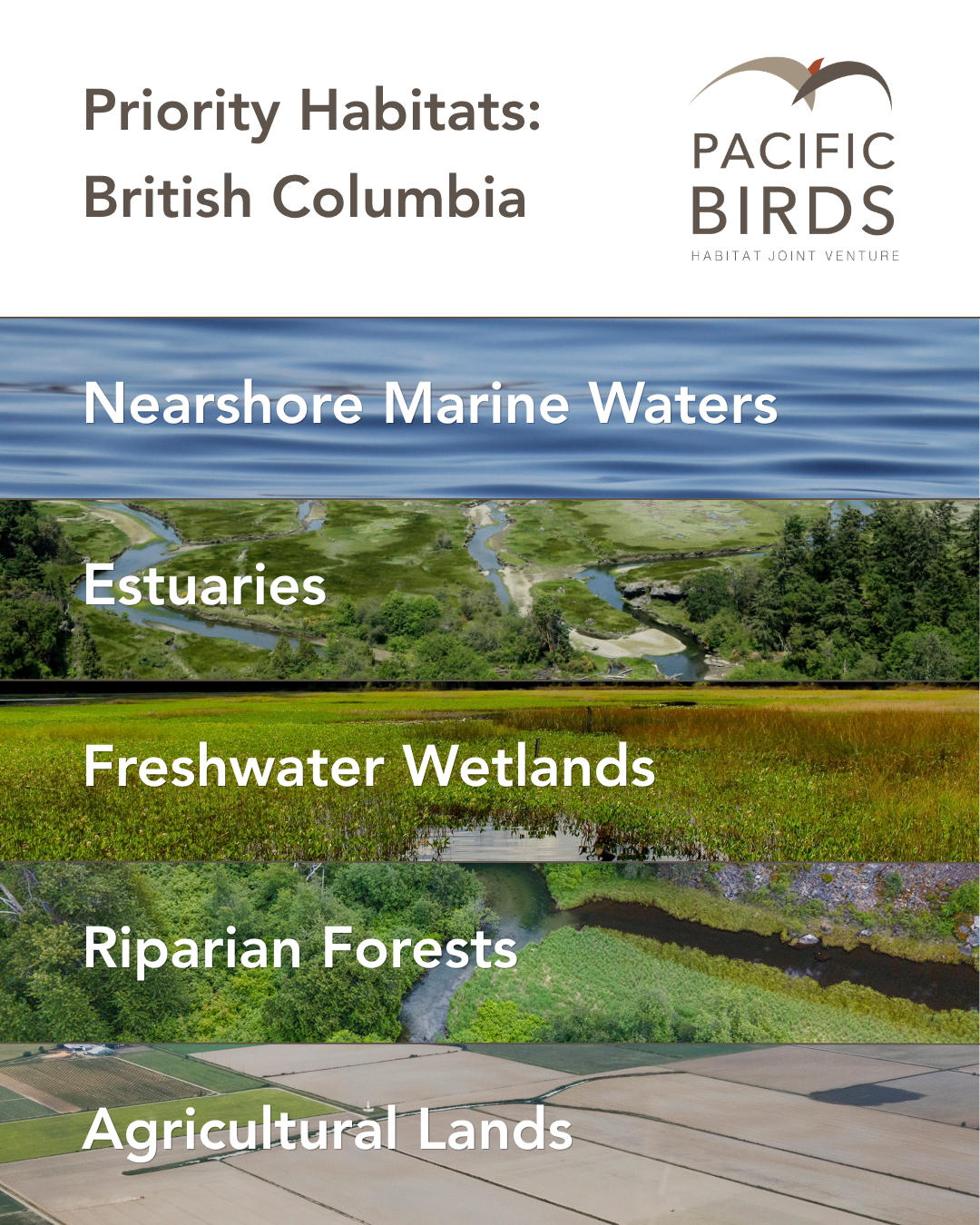
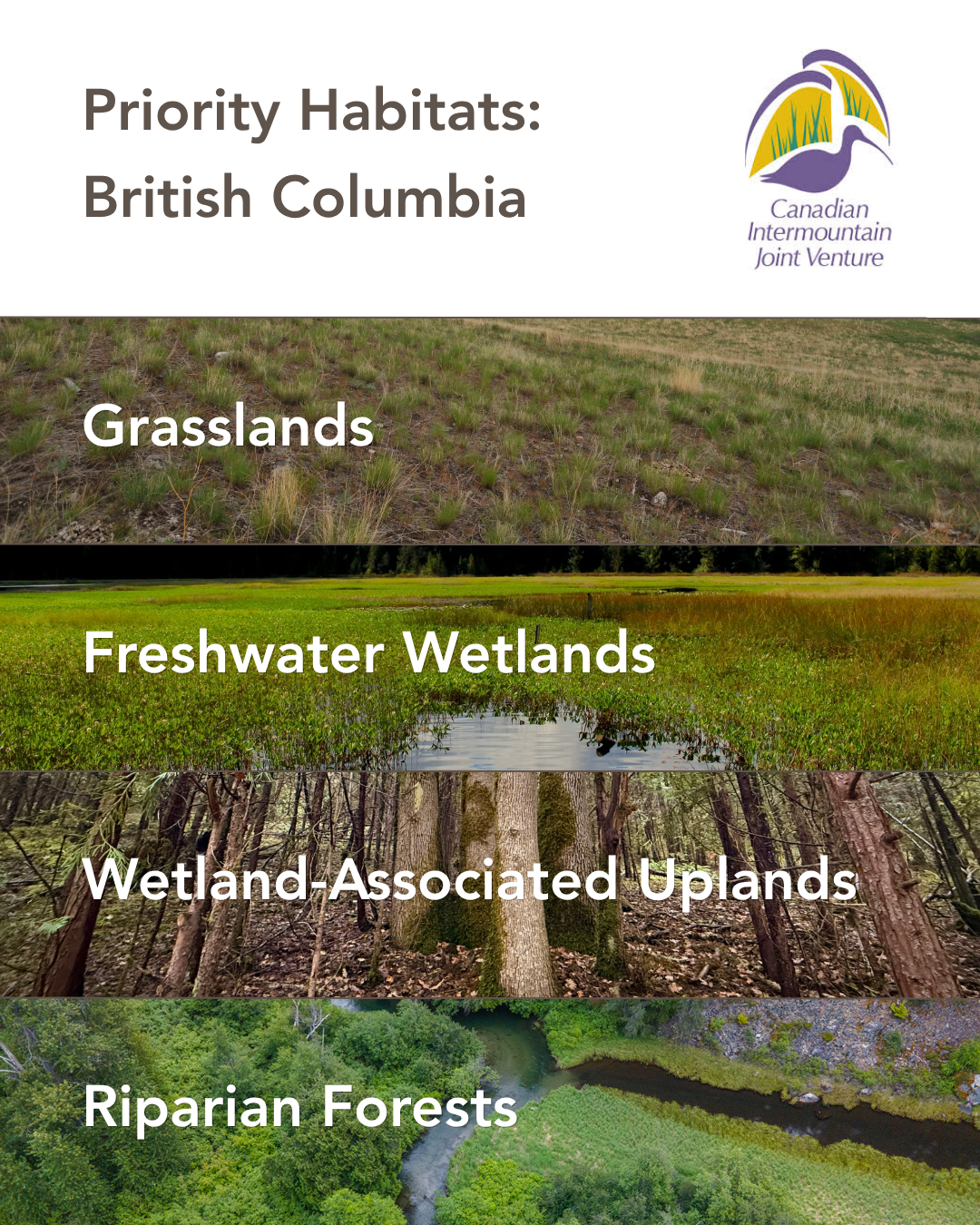
We predicted that Conservation Areas would contain greater proportions of priority habitat and higher priority species occupancy. But, if the survey sites within Conservation Areas and unprotected areas contained similar priority habitat cover, then we expected that bird occupancy patterns would be driven by habitat type regardless of formal conservation status.
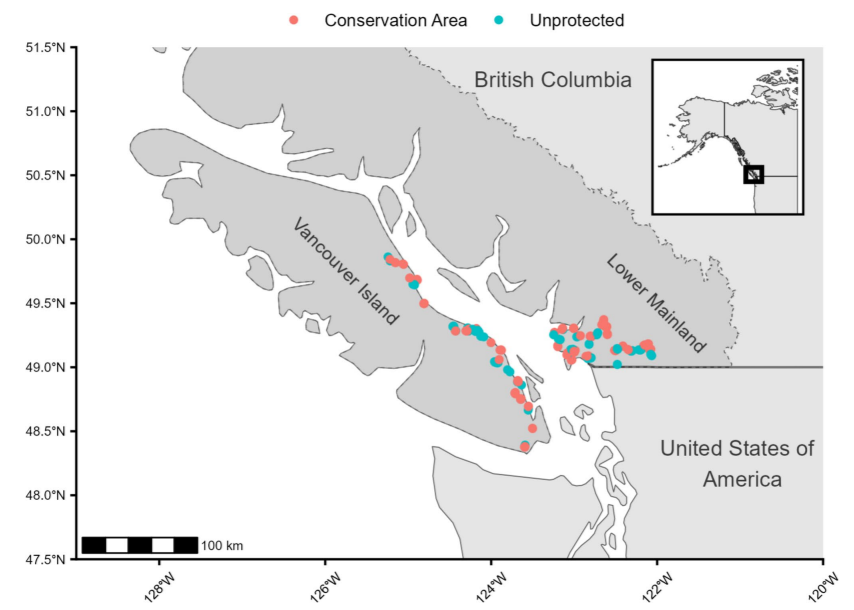
Bird Occupancy, Habitat Type, and Conservation Status
The study found that there are strong connections between priority bird occupancy and habitat conditions, but that bird occupancy differs little between sites in Conservation Areas and unprotected areas.
Whether a site was formally within a Conservation Area did not necessarily mean that it would retain or attract more priority bird species.
Priority habitat types were the strongest overall predictors of whether birds move in or out of an area.
Managing for priority land cover involves trade-offs; what attracts one bird group can simultaneously reduce habitat suitability for another.
These habitats remain influential determinants of priority bird occupancy, and therefore remain useful tools to guide the designation of additional Conservation Areas.
Below is a summary of habitat-driven tradeoffs across bird groups:
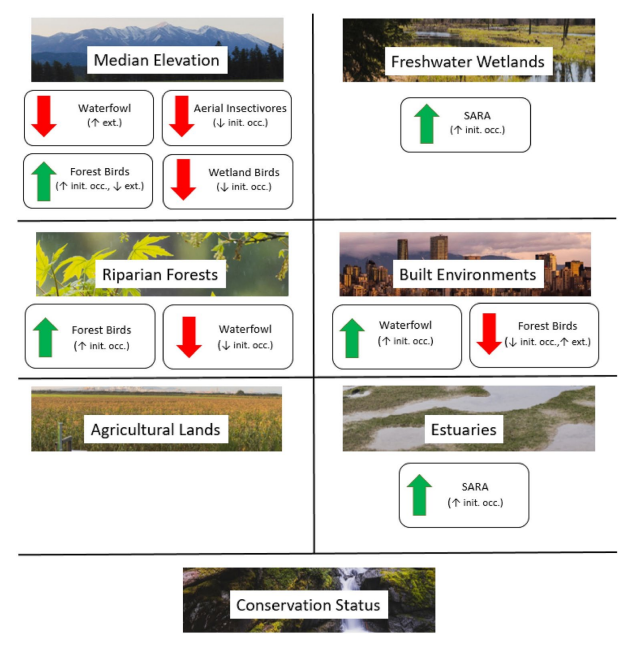
Conserving freshwater wetlands and estuaries has a positive effect on birds listed under the Species at Risk Act (SARA).
Riparian forests have a positive effect on forest birds (as did high-elevation areas dominated by forests), but negative effects on waterfowl.
Lower-elevation sites dominated by estuaries and agricultural lands have a positive effect on waterfowl, aerial insectivores, and wetland birds.
Implications for Conservation Practitioners
As new Conservation Areas are designated in efforts to achieve Canada’s 30x30 goal, this research suggests that designations should take into account the specific habitat types within future designated areas and their ability to support priority bird species. Within the Pacific Birds service area, estuaries, freshwater wetlands, riparian forests, shallow marine habitats, and bird-friendly agricultural lands have the ability to maximize these opportunities. Further, considering inclusion of a range of habitat types can help account for ecological trade-offs.