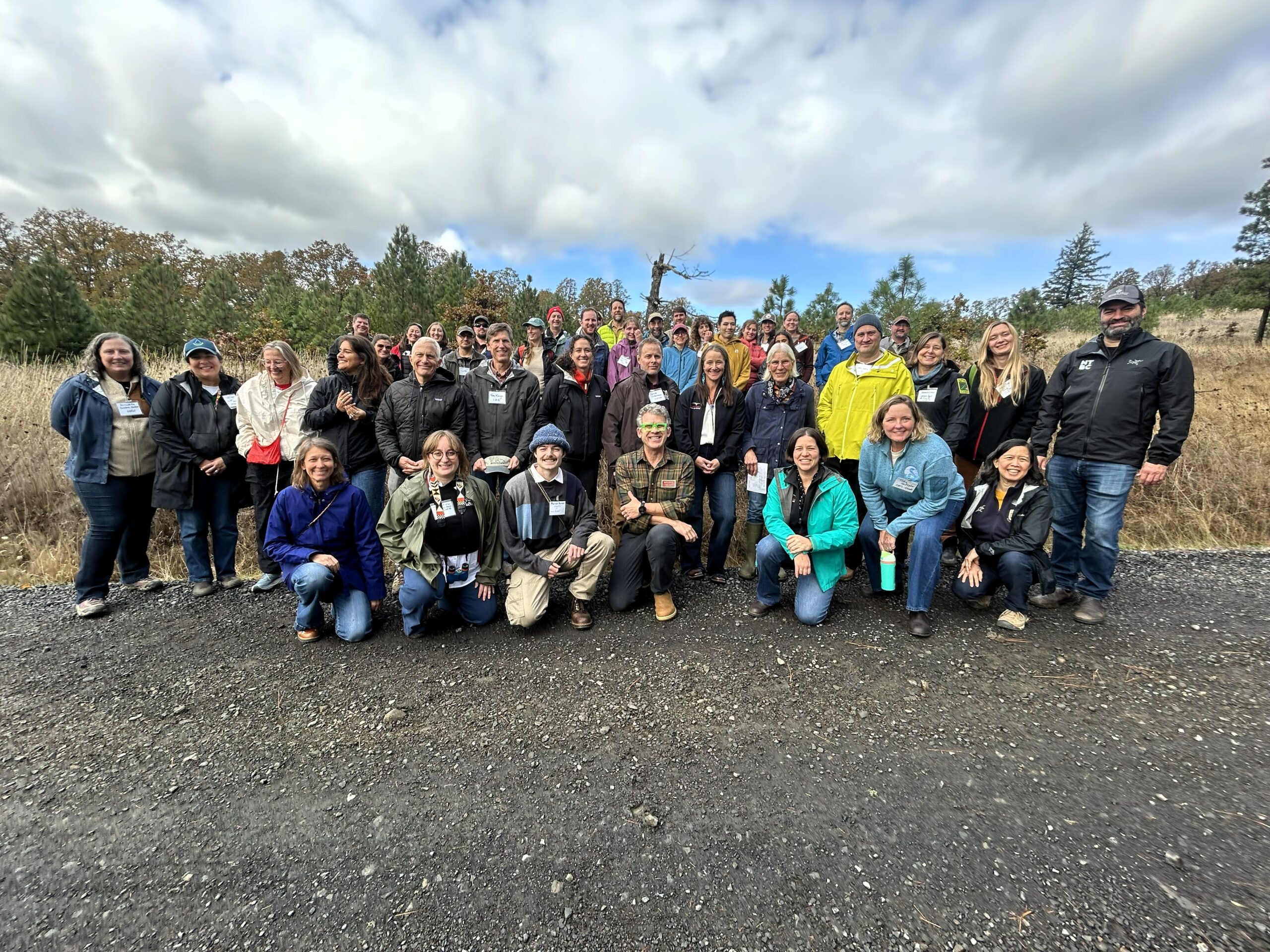
On October 27, Pacific Birds hosted its very first Partnerships in Place event in the Willamette Valley. We invited agency and non-profit leaders from across the Pacific Northwest to Independence, Oregon for a day-long celebration of oak and prairie restoration. Our goals were to showcase the progress already made through the partnerships of the Pacific Northwest Oak Alliance, as well as to inspire contributions to the implementation of the Prairie, Oaks, and People Investment Strategy.
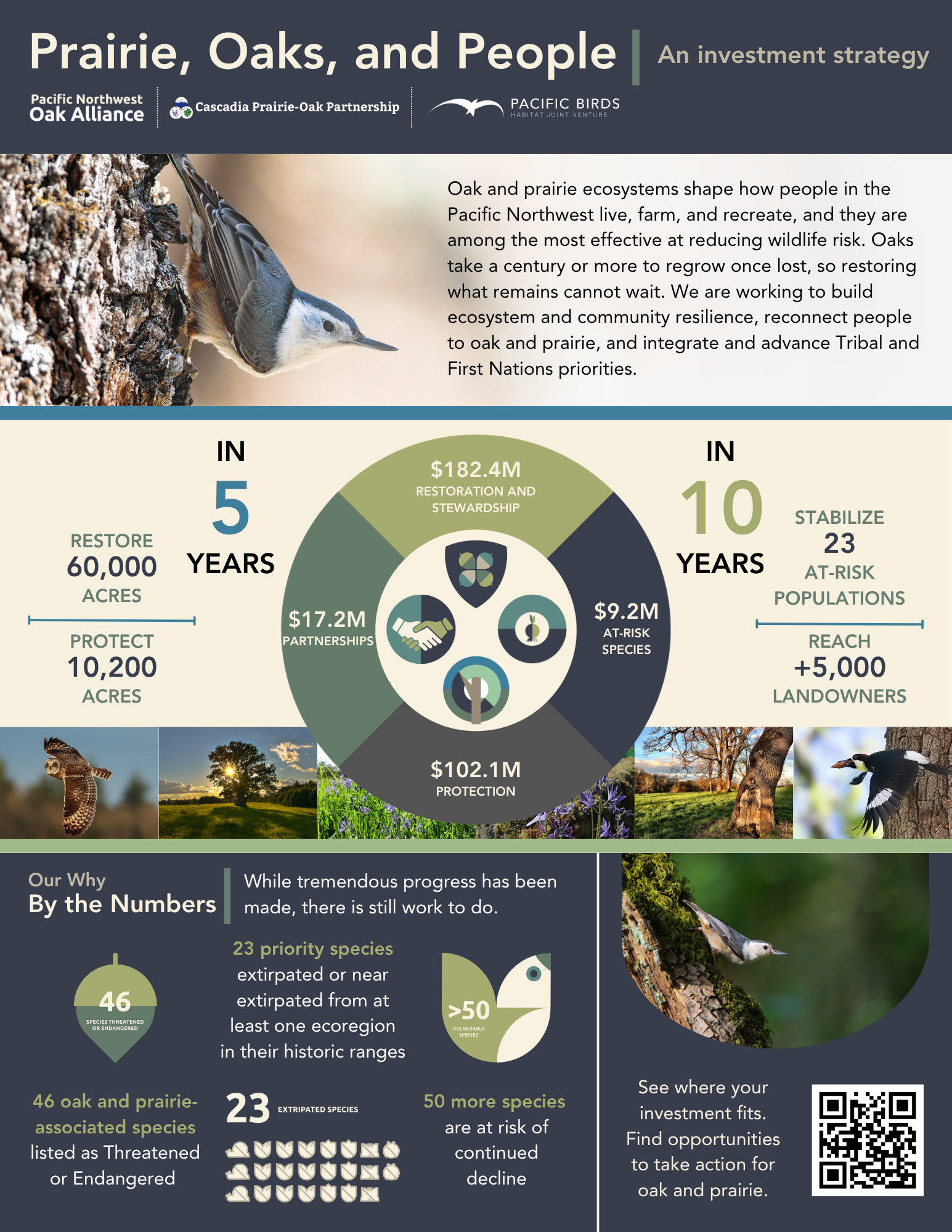
The Prairie, Oaks, and People Investment Strategy turns 20 years of conservation planning across Oak Alliance-affiliated individuals and organizations into one shared, fundable strategy. It defines the goals and outcomes for the Oak Alliance's collective work and estimates the dollar amounts needed for investment in oak and prairie protection, restoration, species recovery, and organizational capacity building.
Partnerships in Place provided a glimpse into the power of large-scale regional partnerships to deliver restoration and conservation across public, private, Tribal, and nonprofit lands. The nine Oak Alliance partnerships have already made tremendous progress, but there is significant work left to accomplish. The Prairie, Oaks, and People Investment Strategy identified over $300 million shovel-ready projects that these partnerships are ready to implement. We welcome continued conversations about how we can work together to accelerate these efforts.
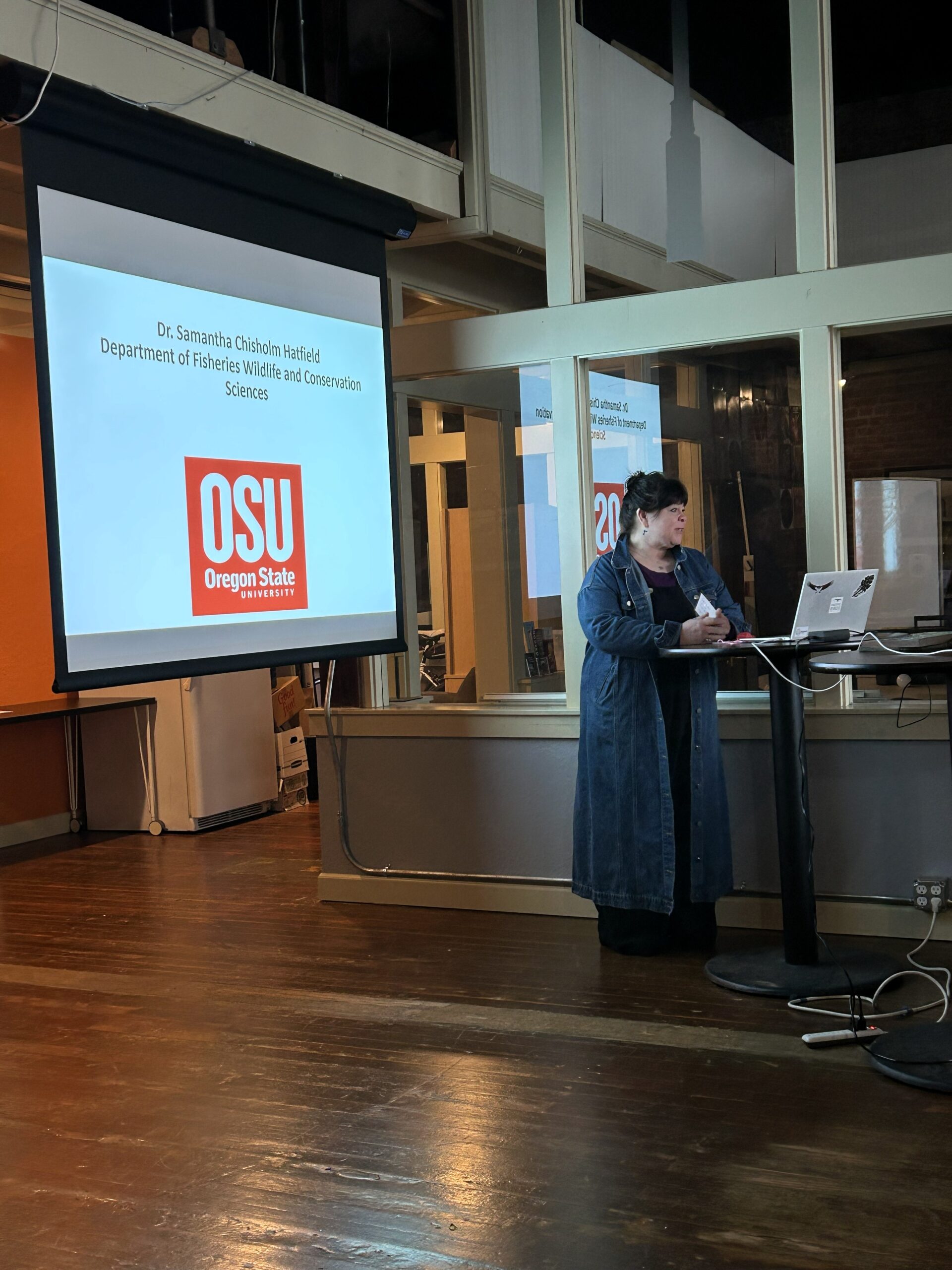
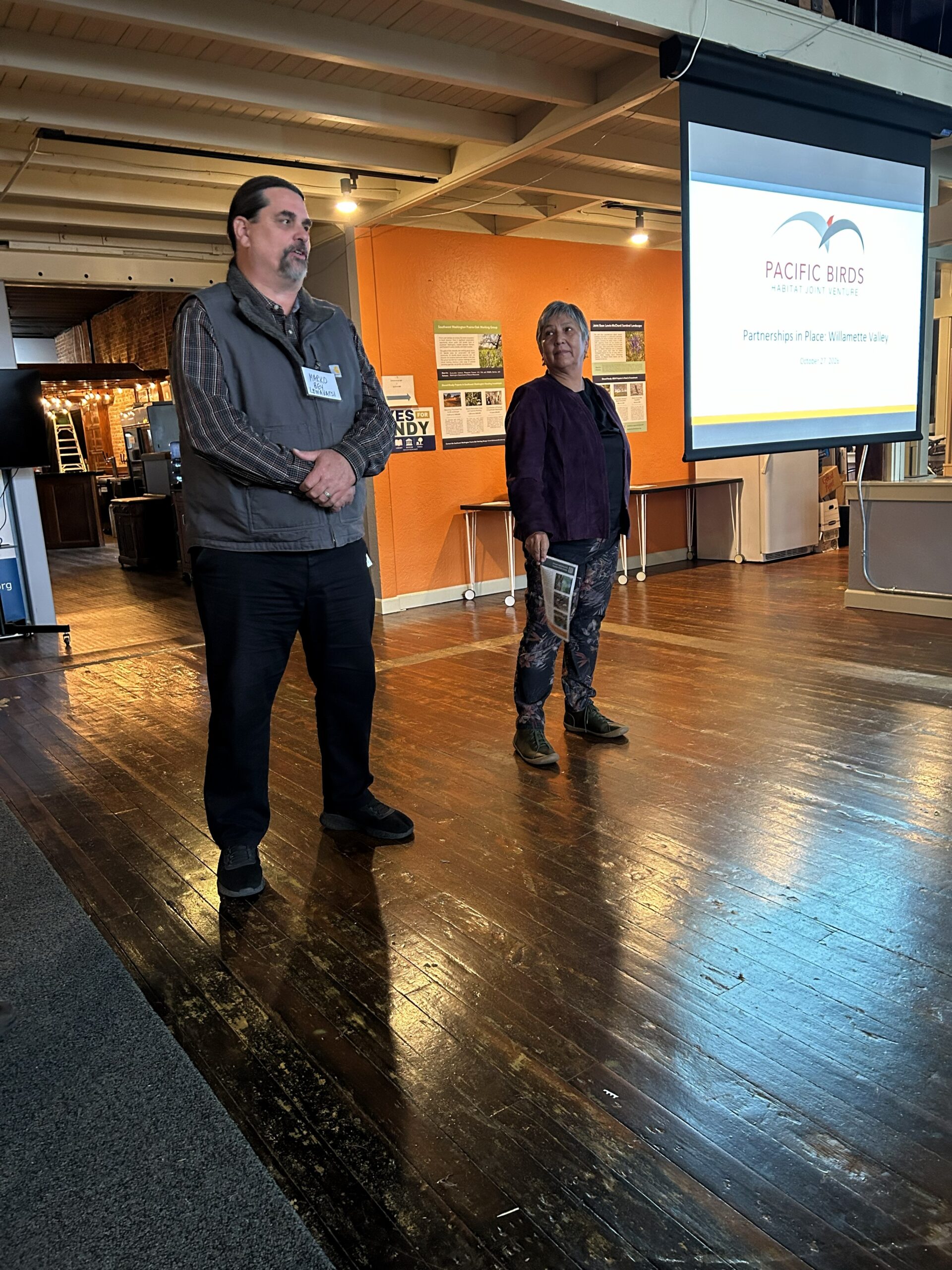
Partnerships in Place kicked off with a presentation by Oregon State University professor Dr. Samantha Chisolm Hatfield (below left) about the importance of Indigenous Traditional Ecological Knowledge for land and and natural resource management. Marko Bey and Belinda Brown of the Lomakatsi Restoration Project (both below right) then discussed the cultural and ecological importance of oak and prairie ecosystems.
We then transitioned into a World Cafe activity, in which attendees visited seven stations to learn about different Oak Alliance partnerships. The partnership coordinators shared their accomplishments to date and highlighted shovel-ready projects in need of funding. You can download handouts from the Partnerships in Place World Cafe to learn more about projects and partnerships in your region!
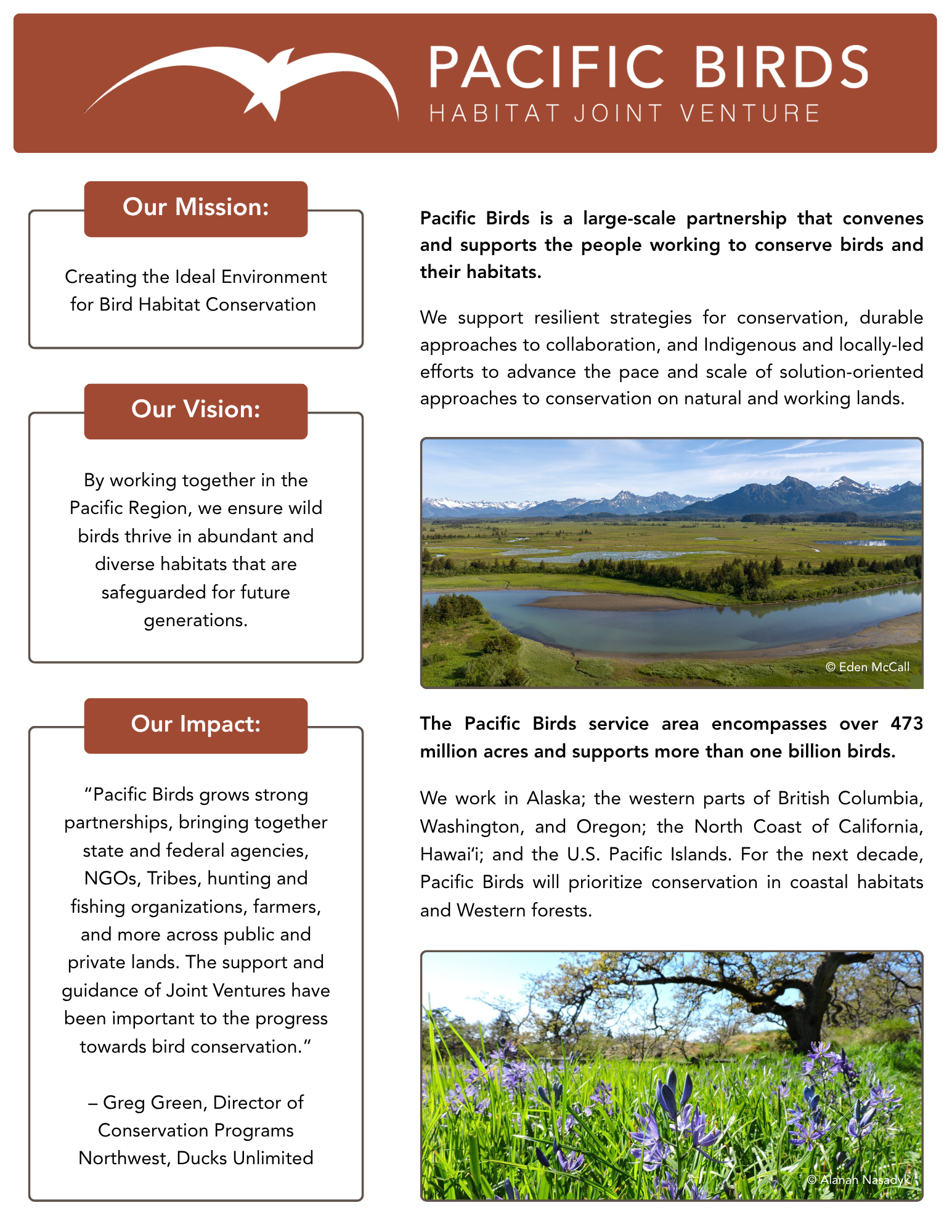
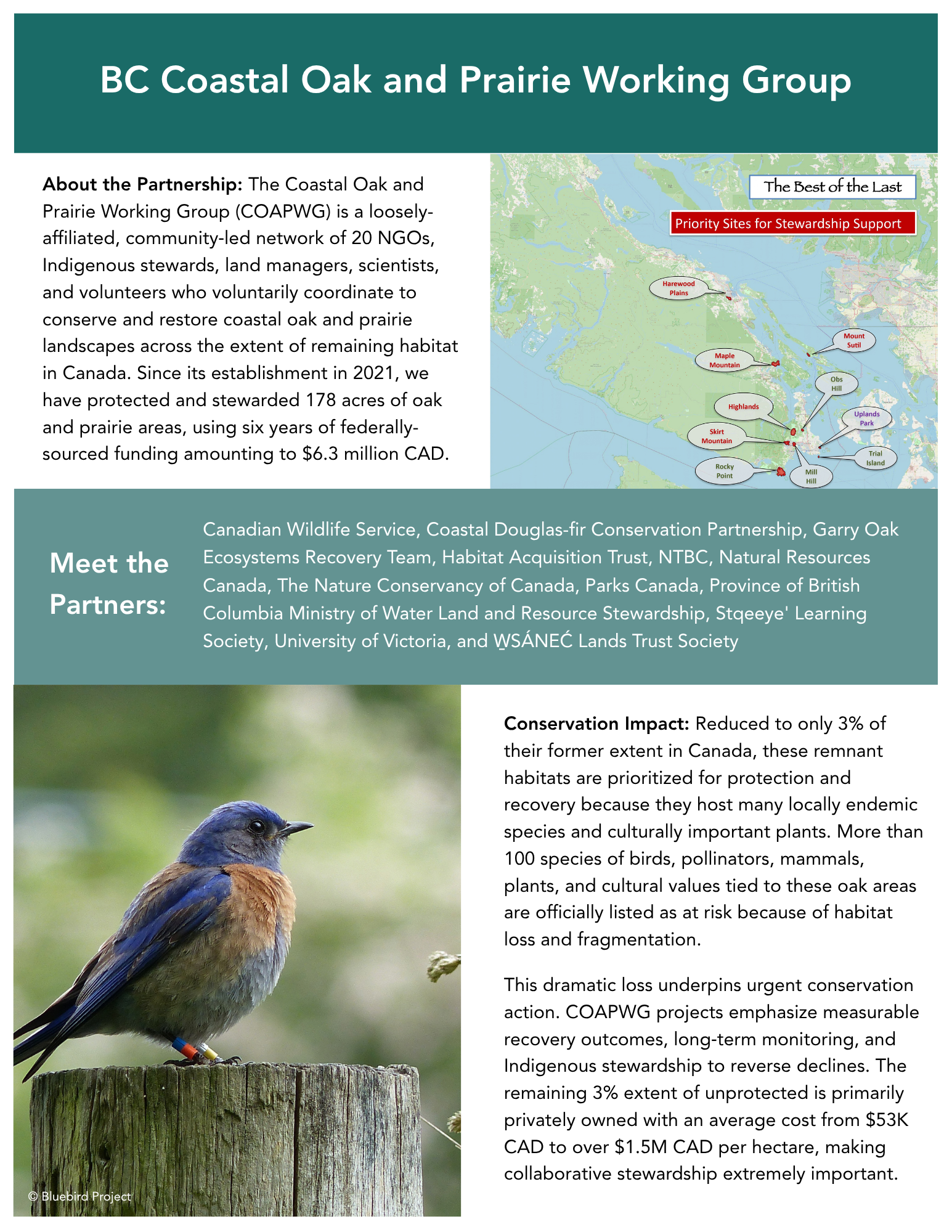
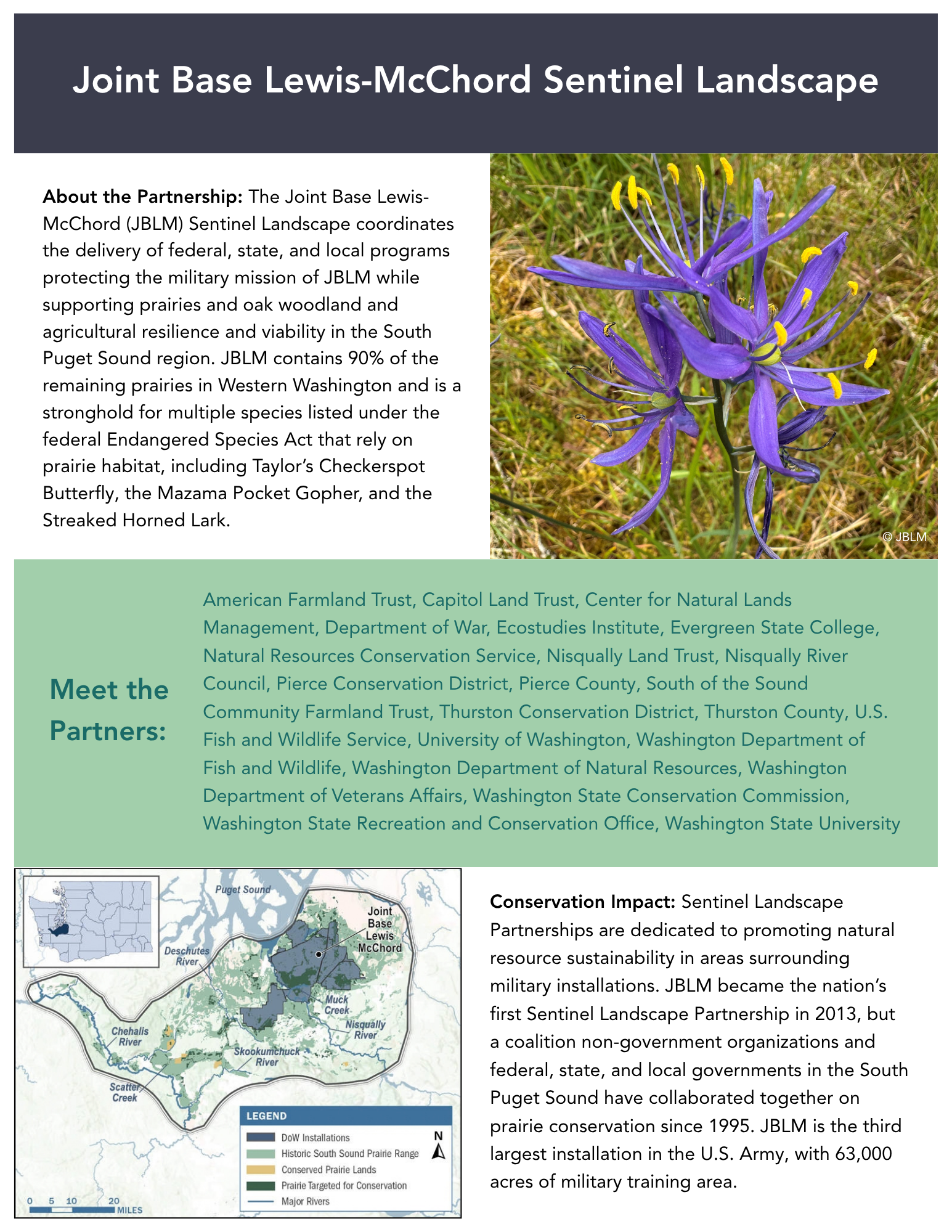
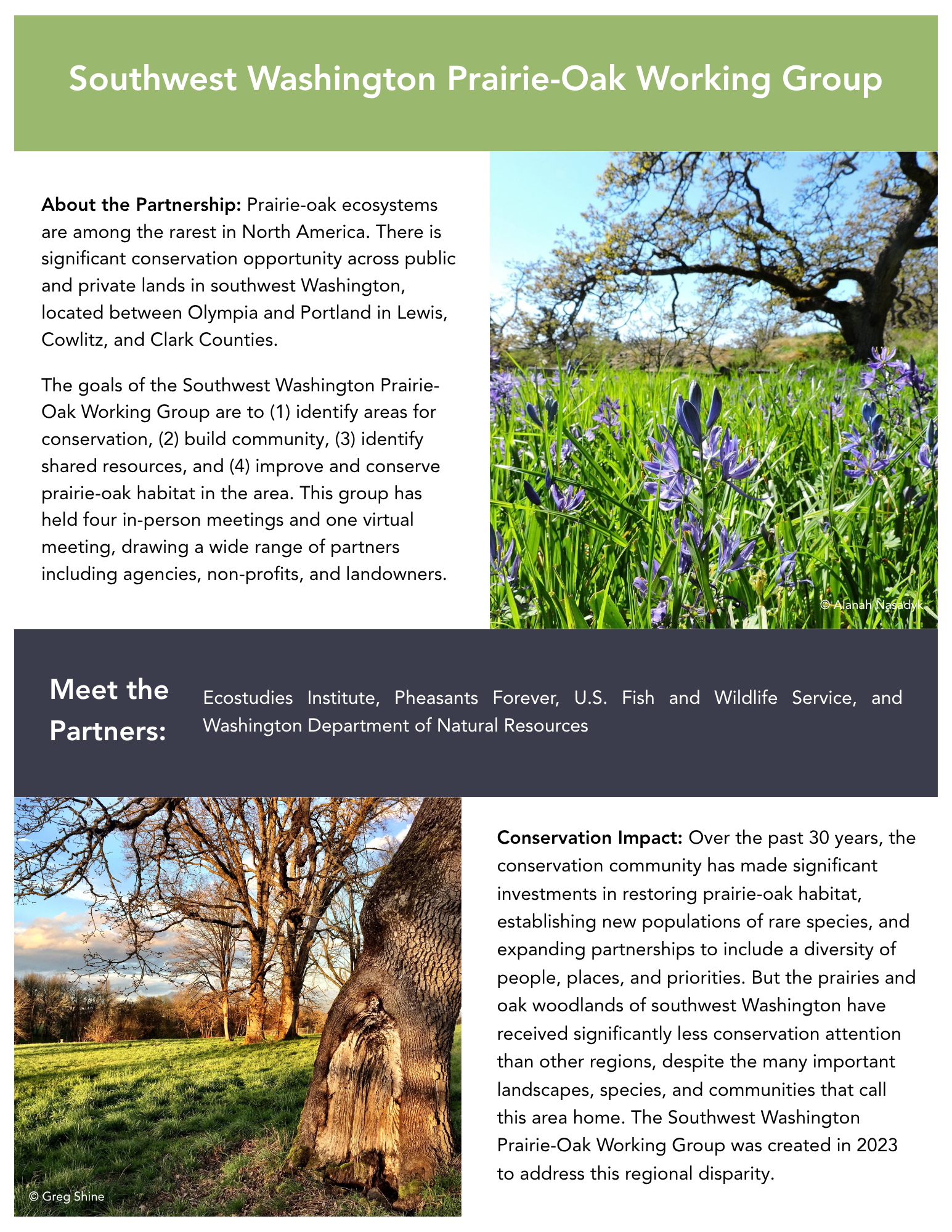
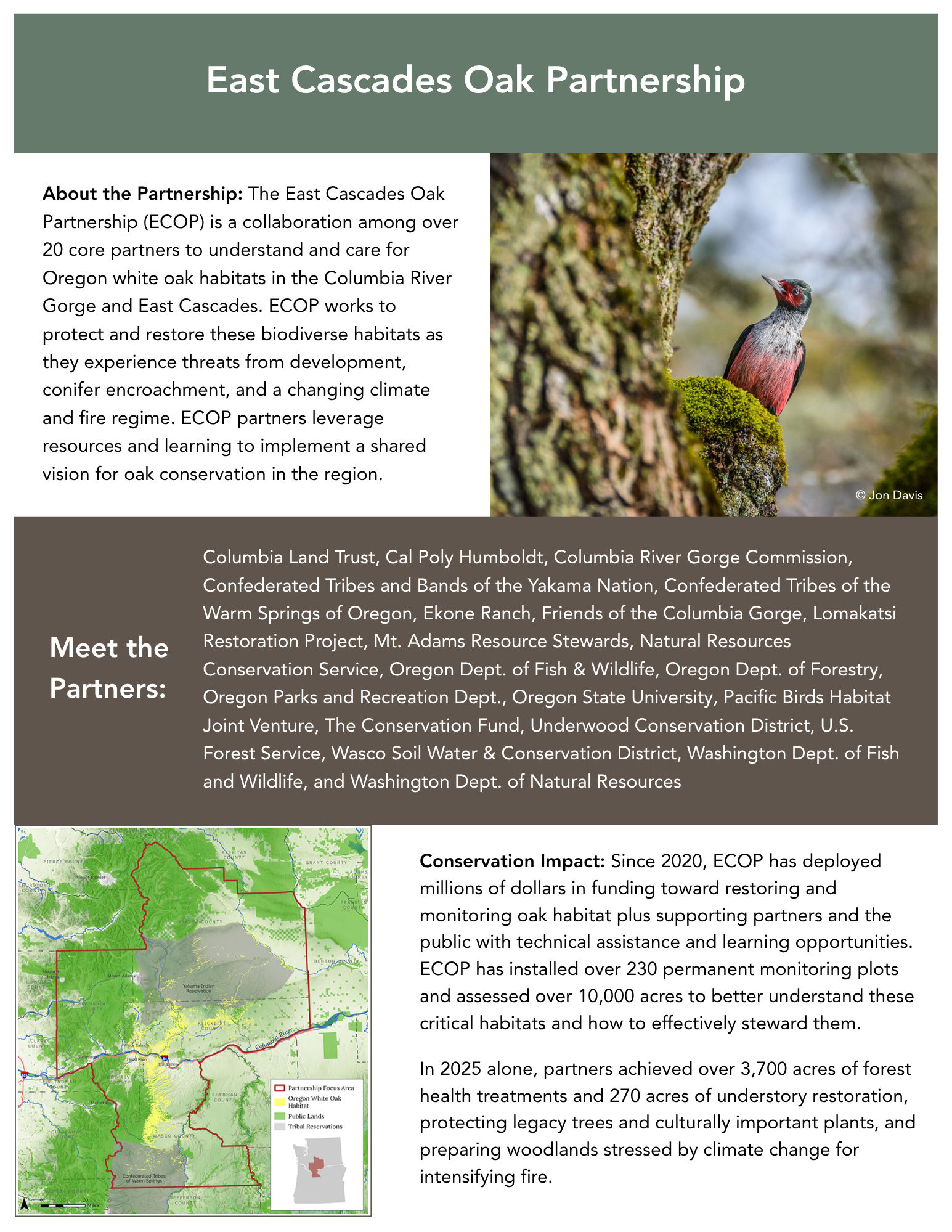
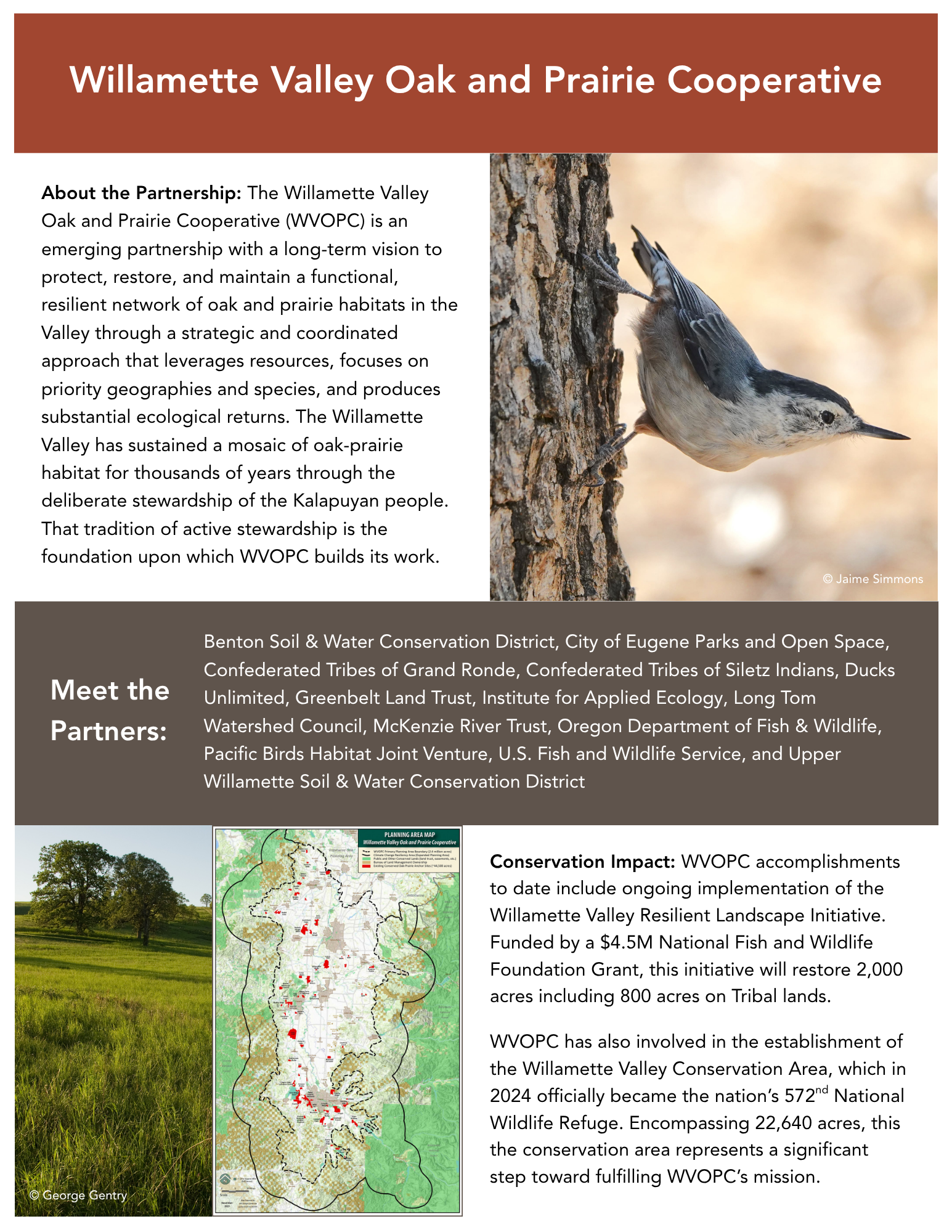
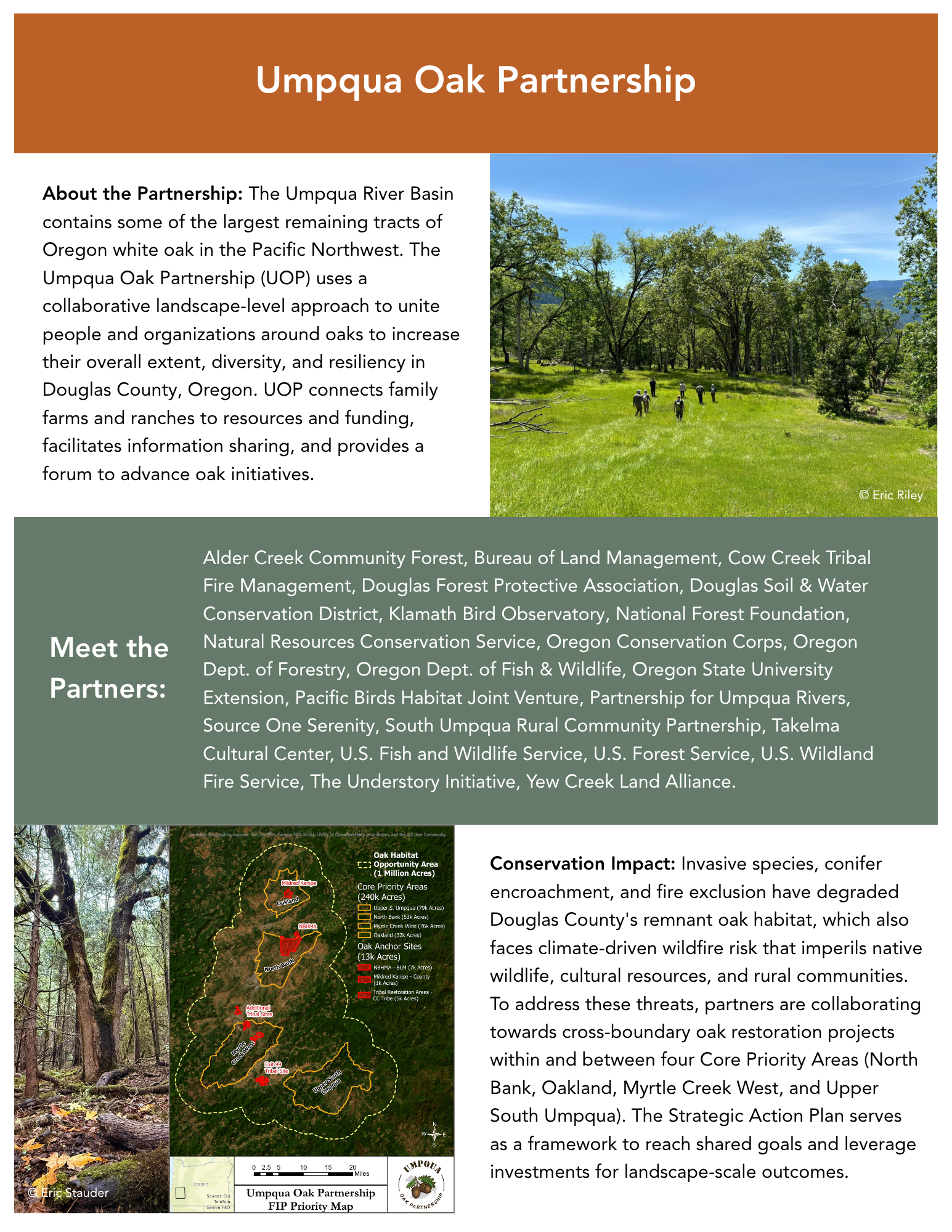
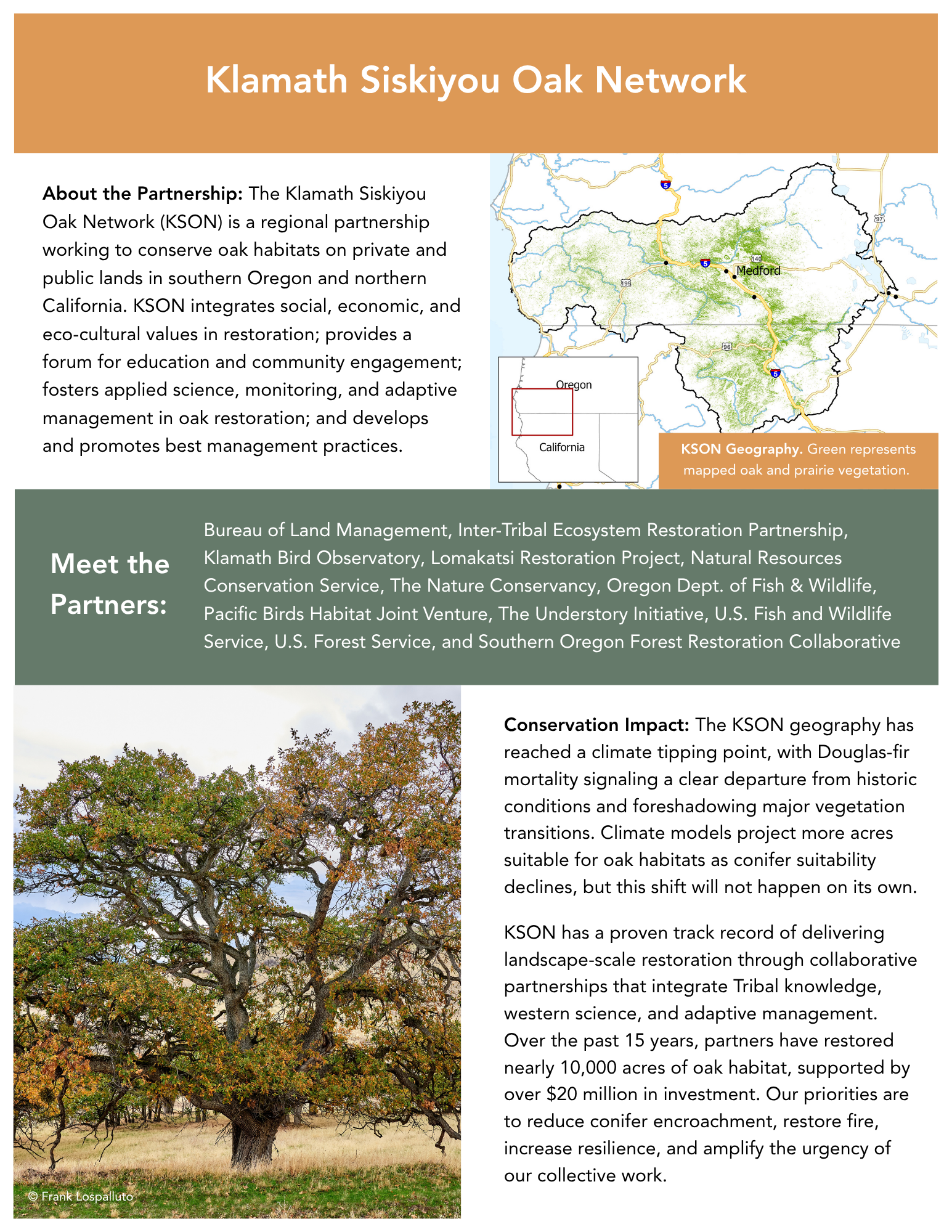
Thank you to partnership coordinators Paige Erickson-McGee (British Columbia Coastal Oak and Prairie Working Group), Lindsay Cornelius (East Cascades Oak Partnership), Tom Kaye (Willamette Valley Oak & Prairie Cooperative), Eric Stauder (Umpqua Oak Partnership), Dan Calvert (Joint Base Lewis-McChord Sentinel Landscape), Elspeth Kim (Southwest Washington Prairie-Oak Working Group), and Jaime Stephens (Klamath Siskiyou Oak Network) leading the World Cafe stations!
After lunch, we visited oak restoration sites across the Willamette Valley and heard directly from conservation practitioners. At each field trip visit, we saw conservation in action, which provided valuable opportunities to connect strategy with practice and discuss what it takes to get this work done.
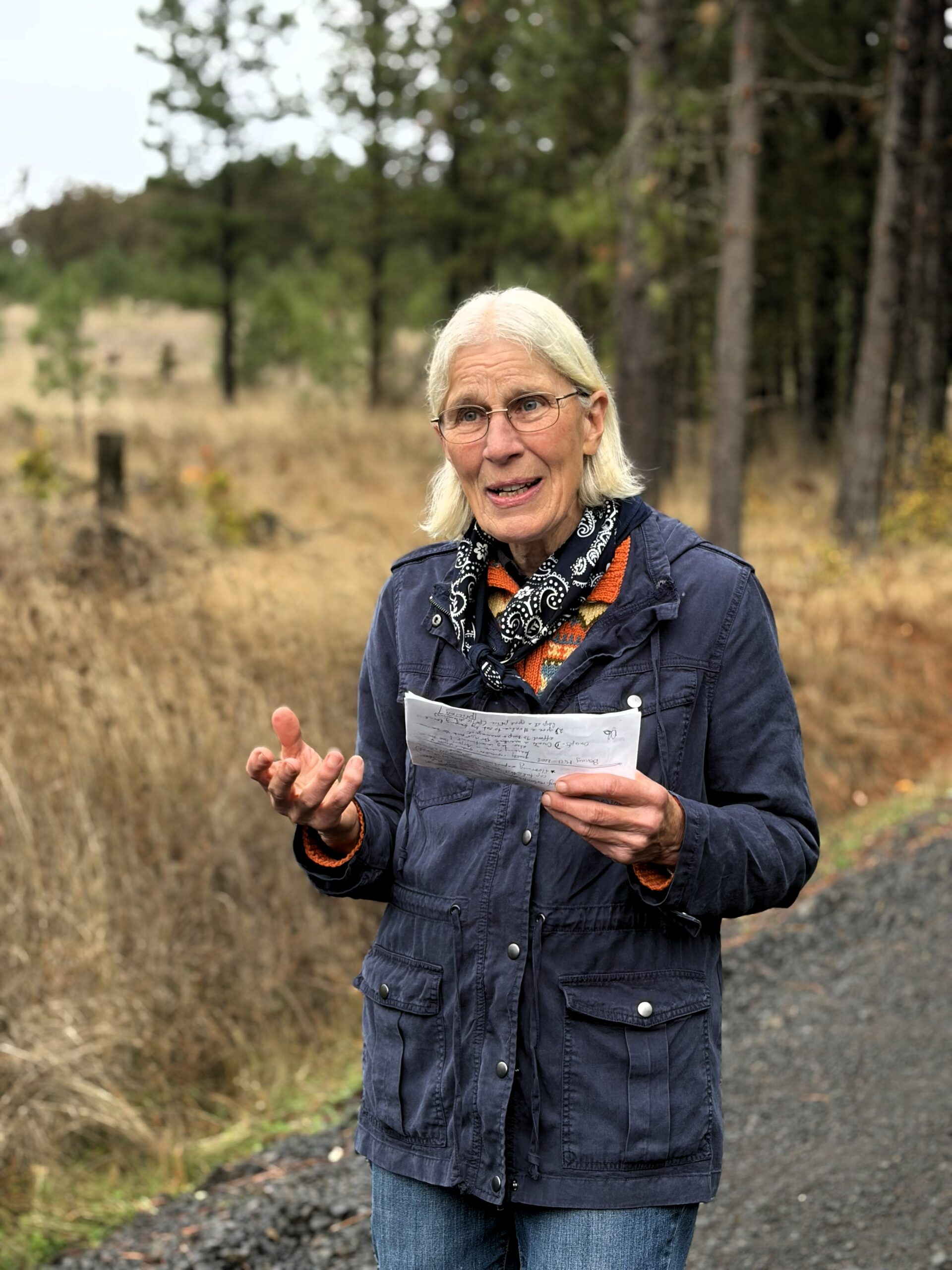
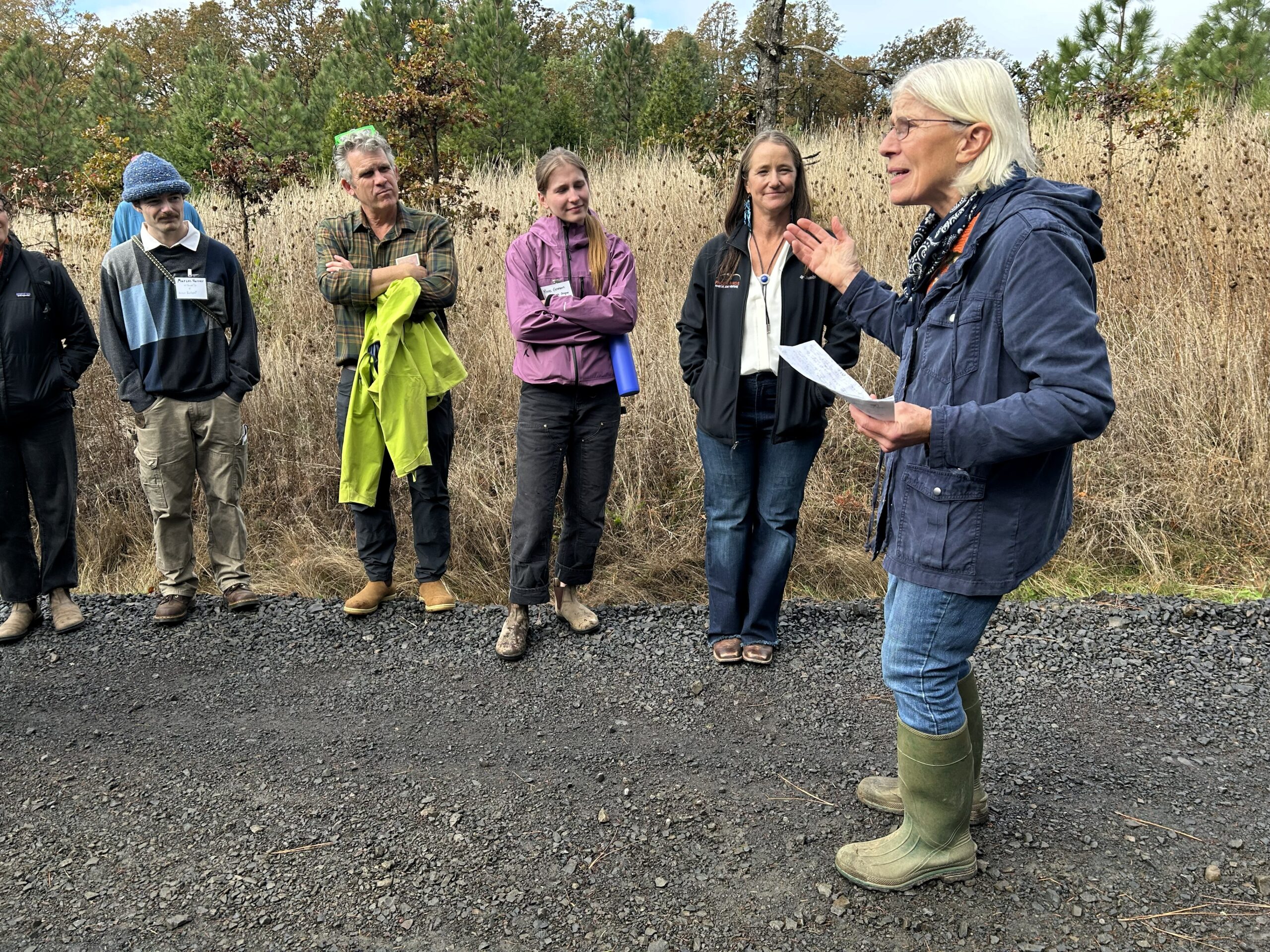
We first visited Zena Forest, which is a working family forest that sustainably manages oak woodlands and produces high-quality flooring. Owner Sara Deumling (above left) described how this multigenerational family business has responsibly stewarded the land for over 30 years, which includes the largest contiguous block of forest in the Willamette Valley plus the headwaters of the Rickreall, Yamhill, and Spring Valley watersheds.
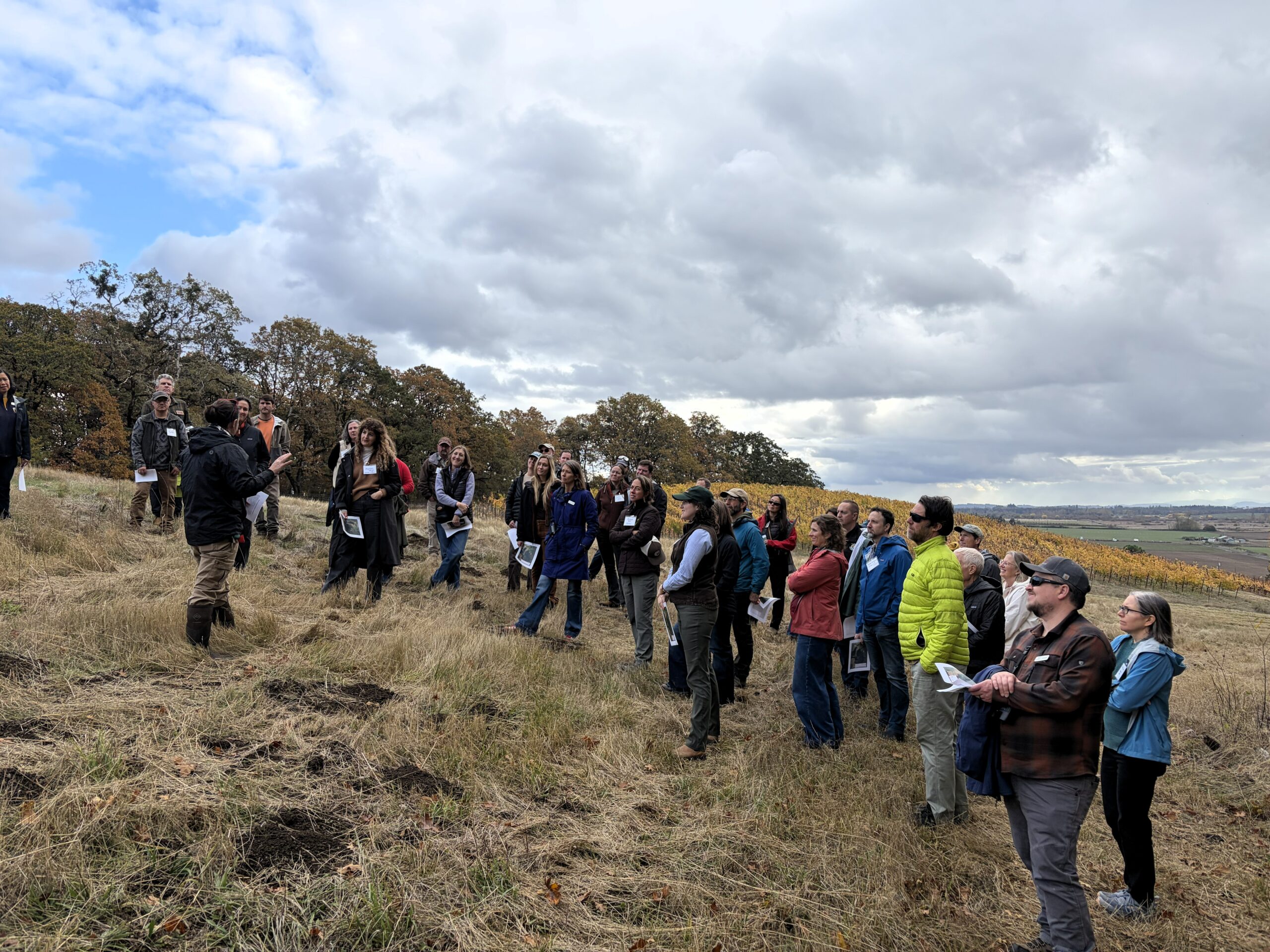
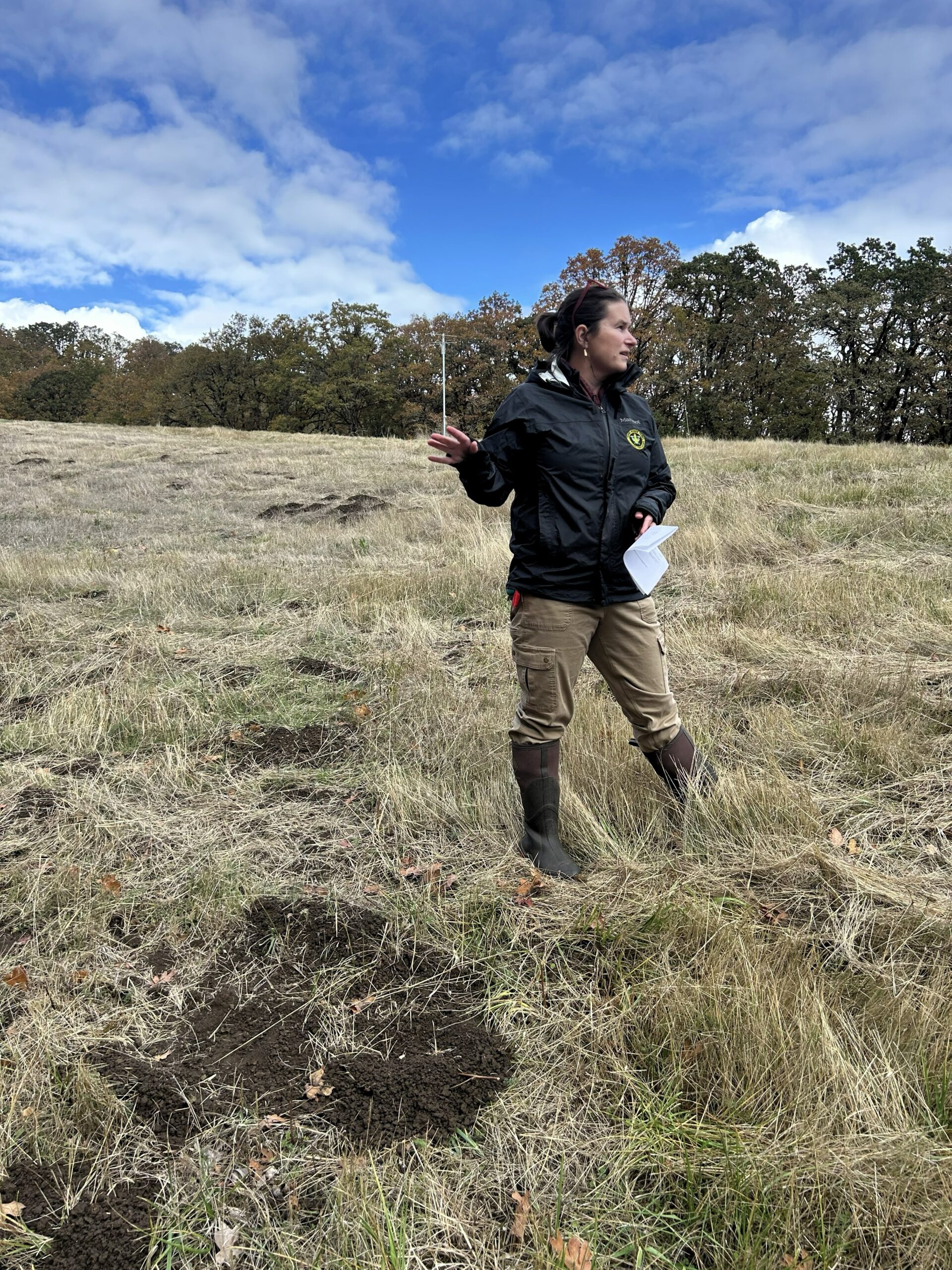
Next, we traveled to the Ahsney conservation site, a nearby 62-acre property within the Rickreall watershed. The Confederated Tribes of Grand Ronde acquired this land in 2019 using funds from the Bonneville Power Administration’s Willamette Wildlife Mitigation Program. Natural Resource Specialist Anna Ramthun (above right) described how the Tribe is stewarding the site's native oak savannas and woodland, along with the native birds and other wildlife that depend on this habitat.
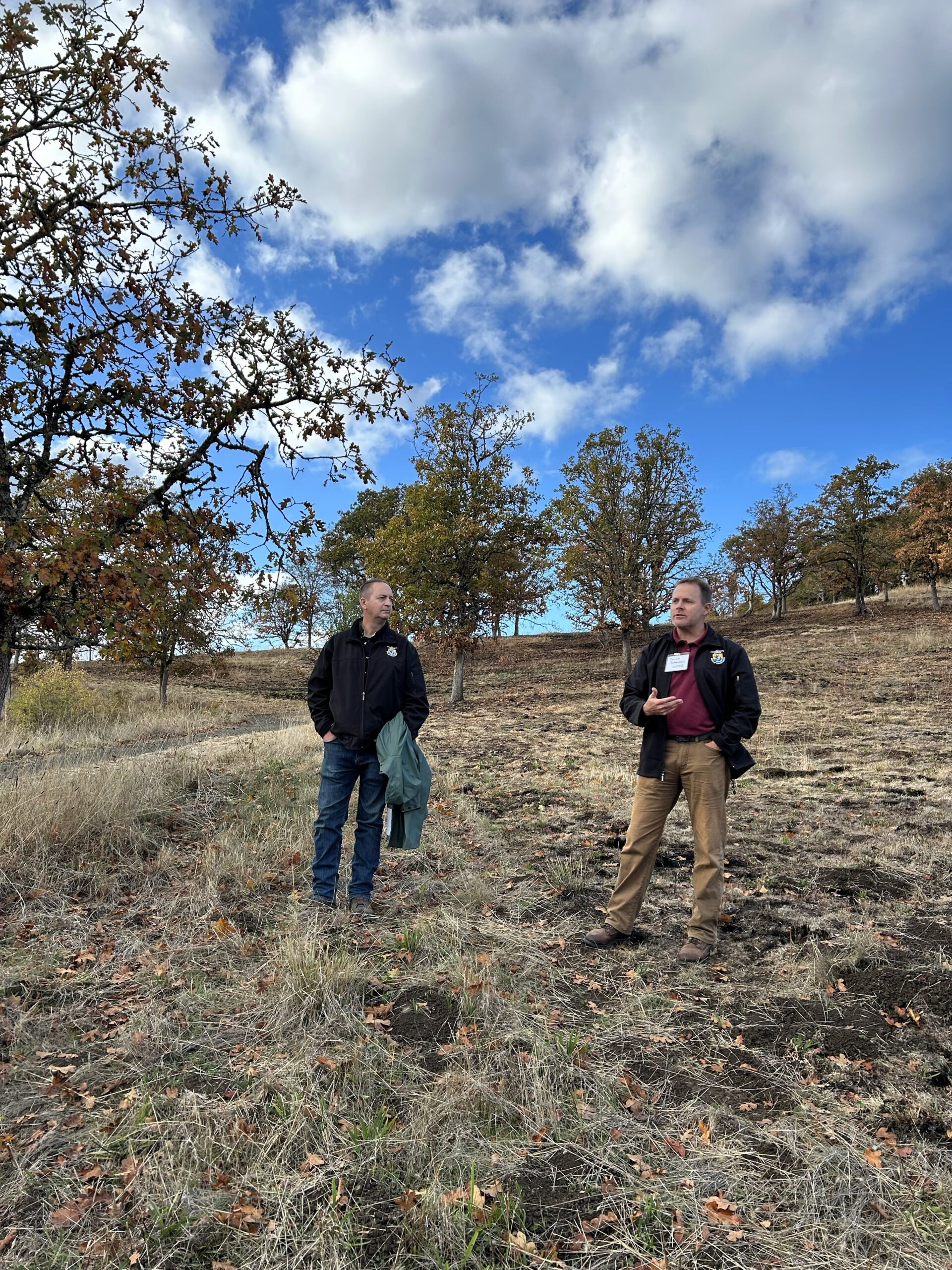
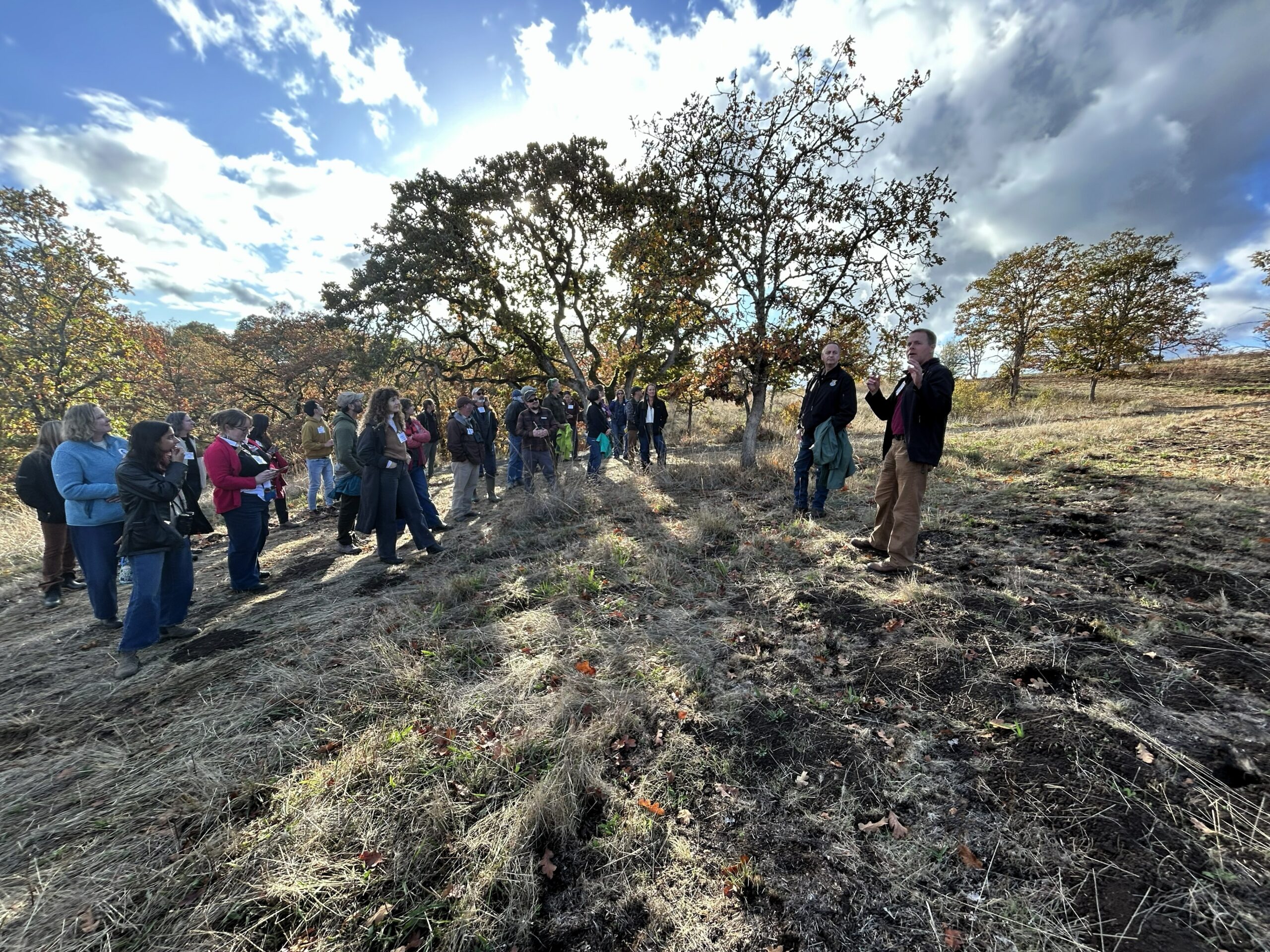
The Ahsney site is less than a mile from Baskett Slough National Wildlife Refuge, our next field trip stop. Refuge Manager Damien Miller and Private Lands Biologist Jarod Jebousek (both above left) toured us through multiple restoration projects at the refuge, including the footprint of a recent prescribed fire. They also explained how the U.S. Fish and Wildlife Service's Partners for Fish and Wildlife Program has helped neighboring land owners obtain the technical and financial assistance needed to improve wildlife habitat on their property as well.
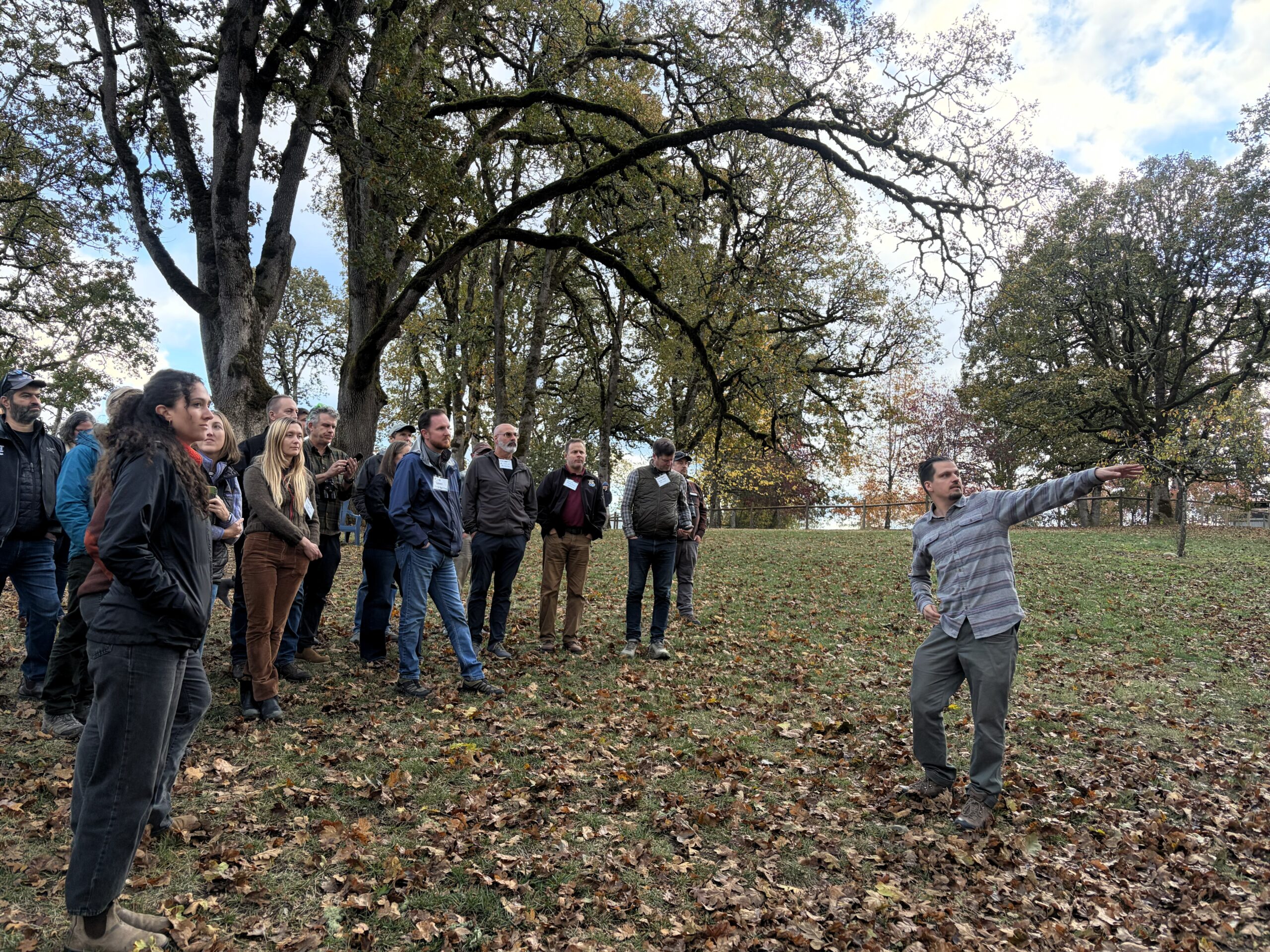
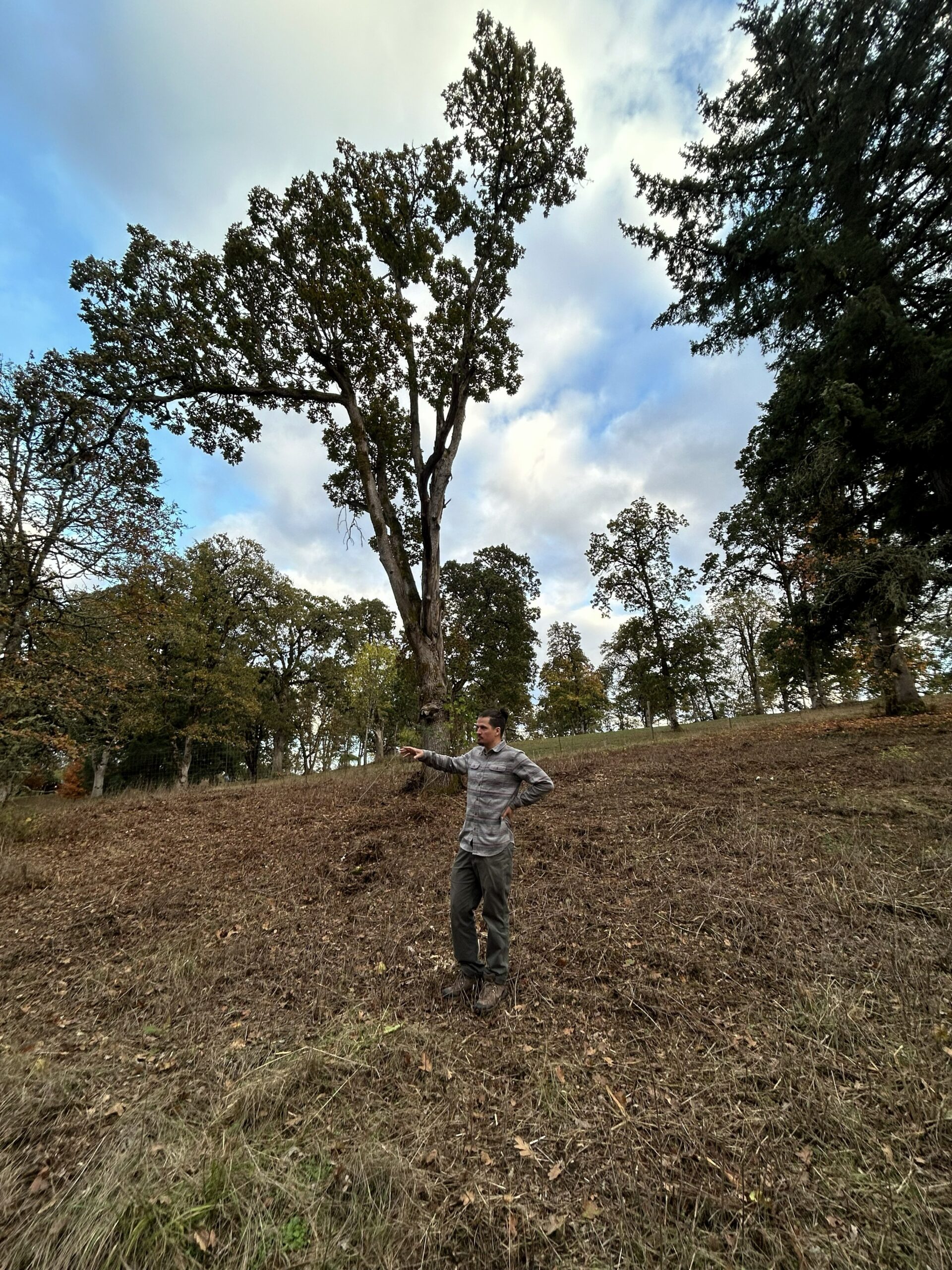
We wrapped up the day with dinner at Left Coast Estate, where the winery's CEO Taylor Pfaff (above right) shared how this family-owned vineyard prioritizes sustainable viticulture and oak conservation on their property. Chris Serra and Isabelle Tobe of LIVE Certified, a non-profit that certifies environmentally-responsible wineries, announced the upcoming relaunch of the Oak Accord. This voluntary conservation agreement incentivizes vineyards to preserve native oak habitat. Finally, Pacific Birds staff and Board presented our annual Local Conservationist Award to Lindsay Cornelius, the East Cascades Oak Partnership Manager at Columbia Land Trust.
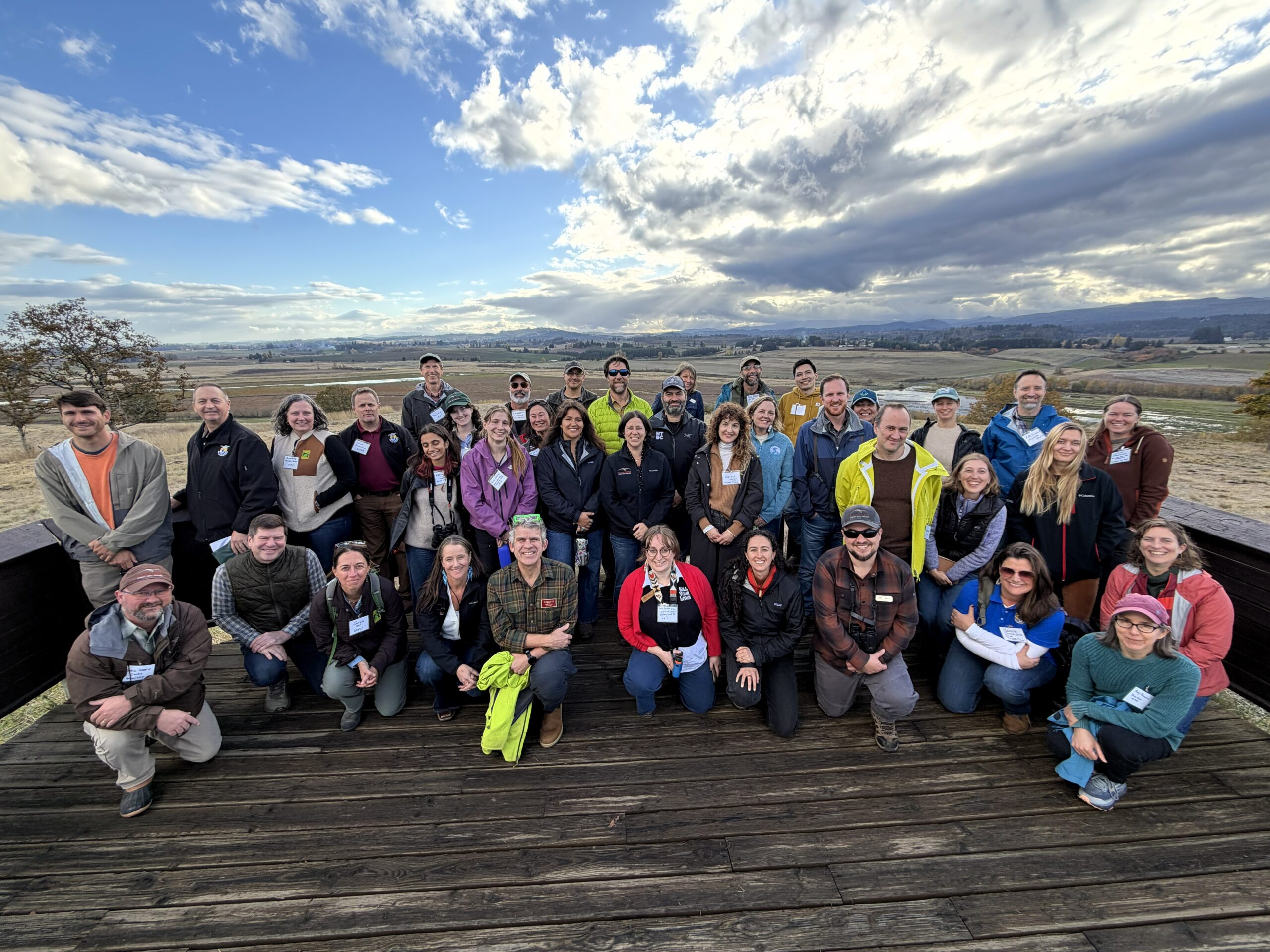
Thank you to everyone who attended Partnerships in Place! We also extend our deep gratitude to Willamette University professor Dr. David Craig and students Rose Grimson, Mae Sauntere Hernández, and Marcus Varner for helping throughout the day and representing the next generation of oak stewards.
