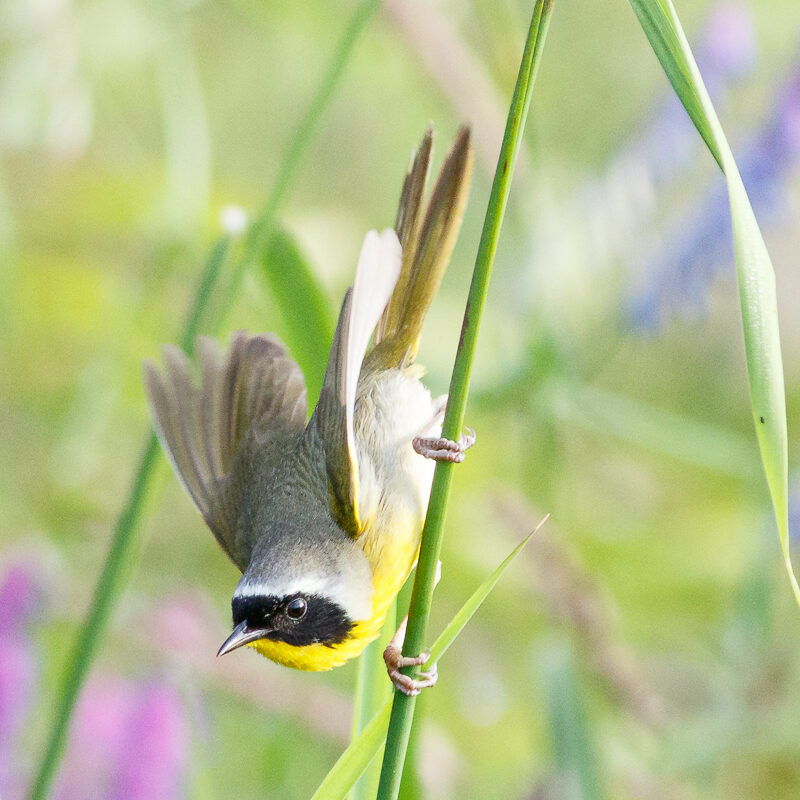
Riparian forests are wooded areas of land adjacent to the banks of streams, lakes, and wetlands and the adjacent upland vegetation.
These ecosystems host incredible levels of faunal and floral diversity, help stabilize streambanks with vegetation, regulate waterway temperatures, and provide a source of nutrients and debris to waterways. They serve as key corridors connecting habitats and facilitating wildlife movement throughout the forest, linking ecological zones.
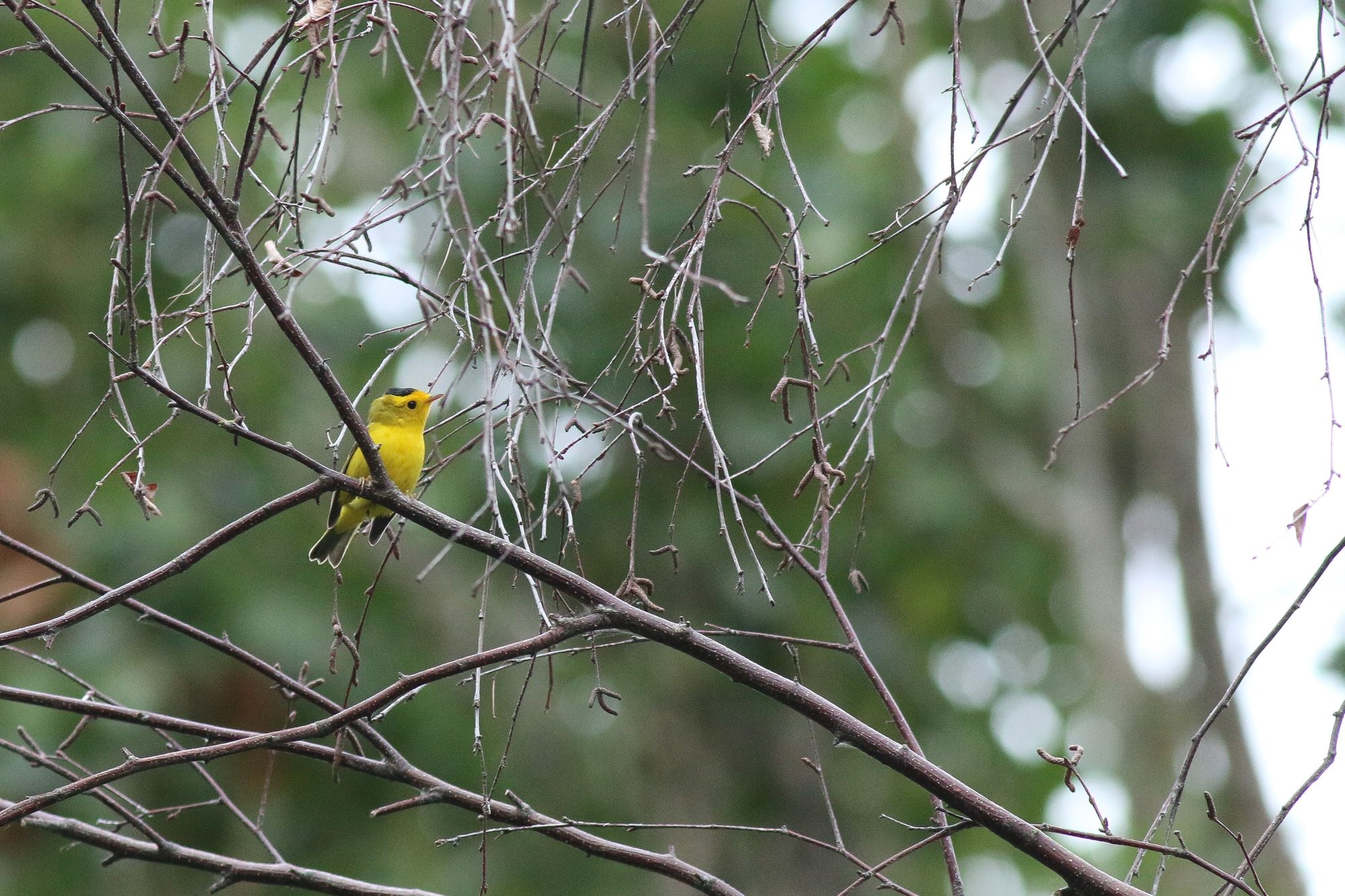
Many passerine species, including Pacific Birds priority species in British Columbia, such as Pacific Wren, Golden-crowned Kinglet, Townsend’s Warbler, and Varied Thrush, are tightly associated with forested riparian areas. And despite their small representation across the Pacific Birds landscape, riparian areas support a disproportionately large number of bird species and greater densities of birds than other forested habitats.
The Case for Conservation
Threats to Riparian Forests Include:
- Residential and Commercial Development
- Non-compatible Agriculture
- Climate Change and Severe Weather
- Invasive Non-native, Alien Species and Problematic Native Species
- Pollution (Effluents, Oil Spills and Overuse of Pesticides)
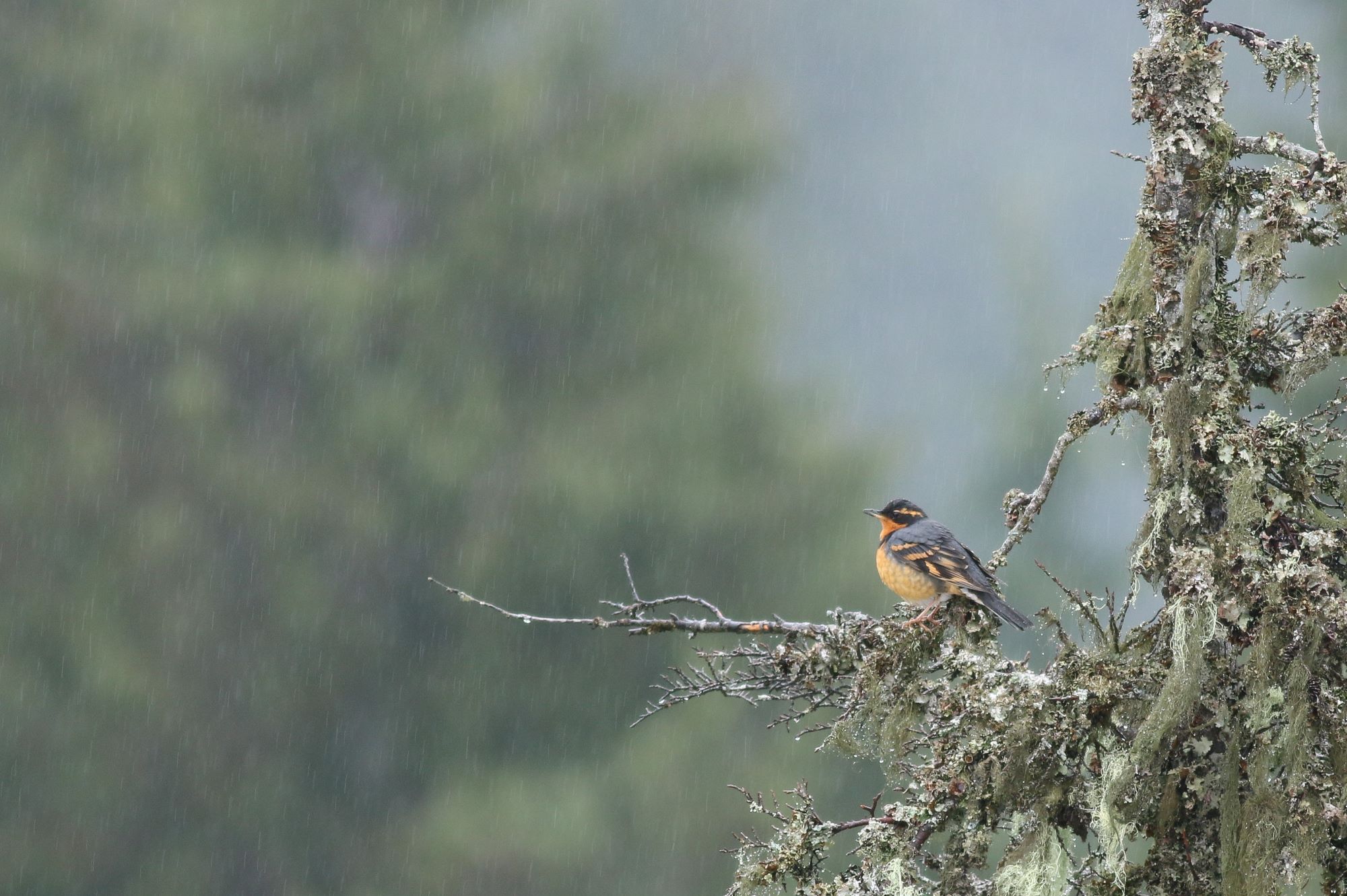
Benefits of Conserving Riparian Forests for Birds Include:
- Riparian habitats serve as important migration stopover habitats for a variety of passerines, including warblers, flycatchers, sparrows, swallows, and thrushes.
- Marine-derived nutrients from Pacific salmon can be transferred to riparian forests, fertilizing forests and increasing invertebrate abundance, which then ultimately provide an important food source for songbirds.
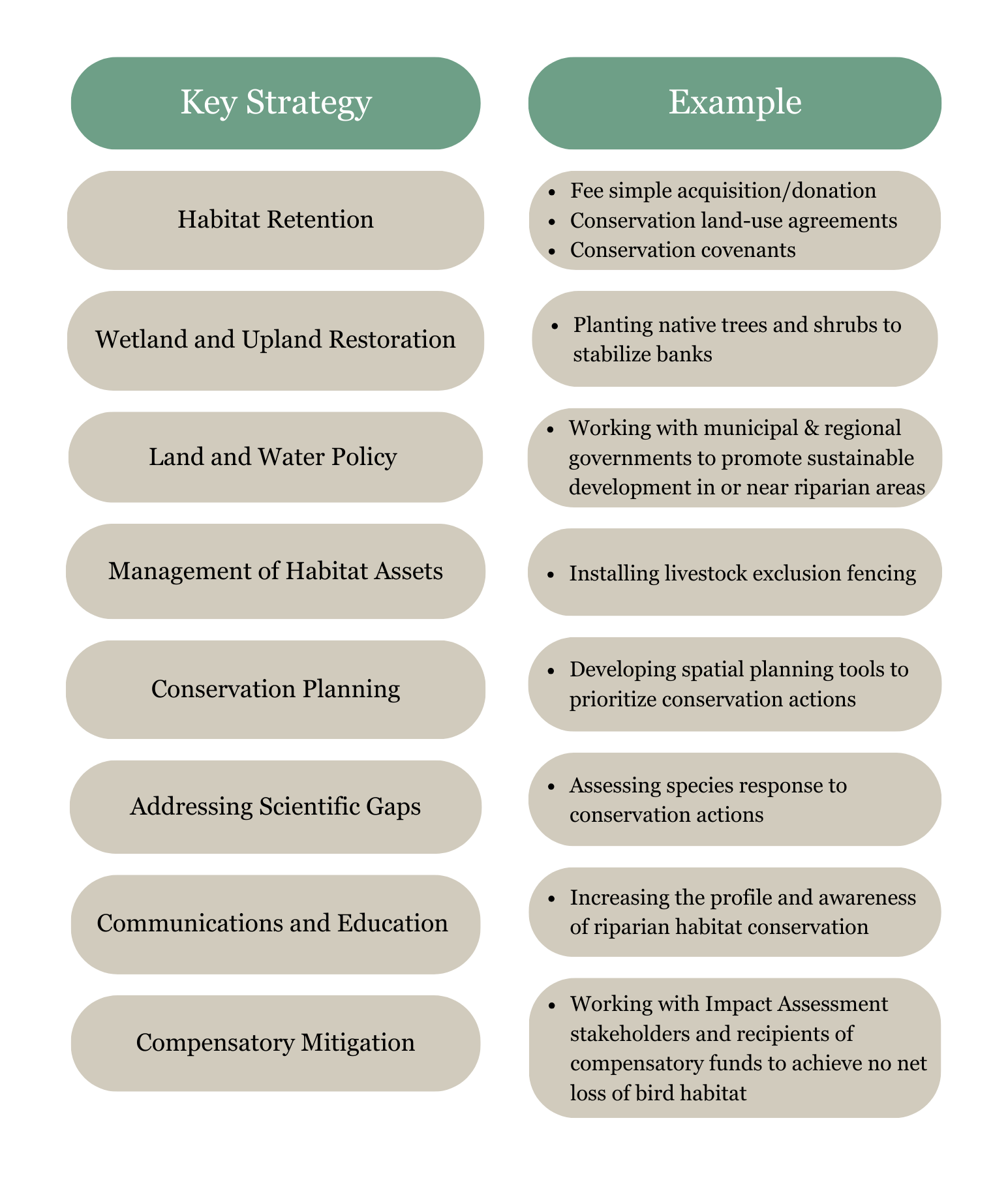
Top Conservation Strategies in British Columbia
The following section lays out key strategies for conserving riparian forests developed by the BC technical committee during Open Standards planning workshops and team meetings between 2018-2021. Broad strategies were developed with specific, measurable, and priority objectives.
Implementation Plan for British Columbia
To learn more about our conservation objectives and goals for riparian areas, please see the Pacific Birds Habitat Joint Venture British Columbia Implementation Plan 2020-2030.

Recent News About Riparian Forests